By Russell Jones
On 11 March 2020, I buried my last remaining grandparent – my Nan. She was in her 80s but maintained her dark sense of humour, and even in her final months we had to dissuade her from buying a pushbike so that she could cycle across town to visit her sick daughter.
At the wake, we mourners stood around the buffet table awkwardly, worried that the deadly SARS-CoV-2 virus might be transmitted via finger foods and small talk.
On 24 March 2020, the first national lockdown began. We stayed inside, cut off from society except for those within our households, which later expanded to support bubbles. Bubble seemed about right – invite the wrong person in, and watch that flimsy protective surface pop. It was a time of immense change, loss and confusion. And for many, fear and loneliness.
I was (and am) a self-employed writer. Just before lockdown, I had intended to write a dystopian novel. But writing about a dystopia when living inside one seemed one too many. “Too many dystopias spoil the Soylent Green!” – as the saying goes. While contemplating my alternatives, I noticed something – although the pandemic was causing a lot of suffering, there were positive changes too. Green stems sprouting through the dung. . .
People were rallying to support the NHS (despite the risk of denting their favourite pots and pans). Neighbours were helping one another, delivering medicines and groceries to those in need. Family members were having chats and cups of tea through open windows (with a two-meter measuring stick between them, of course). As dystopian as life may have been or seemed, these small kindnesses reminded me of something important – there are reasons to be positive even in the darkest times. Friendship, camaraderie and community matter.
And so with that new enthusiasm, I wrote Bucket List – a novel about an isolated and lonely 70-something widow (Dot) who steals houseplants and Christmas ornaments despite her dodgy knee. Dot wins the lottery and befriends an equally isolated and lonely 19-year-old (Max), who is trying to overcome some anger issues while completing community service. Together, they devise and complete Dot’s bucket list, a list of all the things she’s had always wanted to do in her life but never had the chance before her big win.

Bucket List was the fastest novel I’ve ever written (insofar as it took me about 4 months to complete the first draft, rather than winning gold in the 100 meters) and I think that’s partly thanks to my nan. Her dark sense of humour taught me to find something to laugh about when times might seem tough, and so the relationship between Dot and Max felt natural – they were just two loners who liked one another’s sense of humour.
Despite their ages, they got each other. And as trite as it sounds, as cliché as it’s become, I think it’s true that “we have more in common than that which divides us” (recently attributed to Jo Cox, but the sentiment echoes from many walls). Why can’t an older woman and a young man be friends? Why can’t they be best friends? There’s really no great reason why not, other than rigid applications of societal expectations. And “rigid applications of social expectations” – as the philosophers say – “suck.”
In Bucket List, Max comes to a similar conclusion after reading William Blake’s poem, ‘The Tyger‘:
‘I was reading about zoo animals and got to tigers, then I dived down this Wiki-rabbit-hole and read this poem about a tiger. It was questioning how a good God could make something as fearsome as a tiger. I can’t remember that much of it, it was old. But it was decent. It started like this: ‘Tyger Tyger, burning bright / In the forests of the night / What immortal hand or eye / Could frame your fearful symmetry?’
‘Is it by William Blake?’ Dot asked.
‘Yeah, that’s him! Do you know him personally?’
Dot felt like slapping Max. ‘He was around hundreds of years ago!’
‘Exactly. So, did you know him?’ Max winked.
Dot cuffed his shoulder gently. ‘Cheeky sod. We read him at school.’
‘I didn’t like poetry at school, but this was pretty interesting. It made me think about how we think we’re meant to be one thing, but maybe deep down we’re something completely different. Then I got this voice in my head, like this little fire crackling. It made me want to write, so I wrote my own poem about a caged tiger and how we’re all trapped behind invisible bars.’
(Bucket List, p.144-145)
I was interested in the idea of cages. What are the cages we construct around ourselves, or the cages that society puts around us, that prevent us from achieving what we want or need? For Dot, her painful past, her loss of loved ones and the loss of her community have trapped and isolated her. For Max, his lack of positive role models, his lack of peer support and aspirations have trapped and isolated him. Poverty has only made their situations worse, because poverty means a lack of opportunity.
But in finding and confiding in each other, in realising they are stronger and happier together, their lives begin to change for the better. In turn, they become more integrated in their communities, helping others to break the bars of their cages. Tygers, burning bright, indeed!
Although on the surface Bucket List may seem somewhat fanciful or fantastical (even a tad cheesy), I believe the core message – that “connection” can liberate us from our cages, even in our darkest moments, rings true. In fact, some readers have told me that Bucket List made them think about their isolated parents or grandparents, their children or friends, and encouraged them to visit or call. What greater hope could I have for a story, than to have it inspire readers towards kindness and to better their lives and the lives of others?
As I begin the promotional trail for Bucket List, I am also leaning about the UK’s loneliness epidemic, which The Independent describes as “a crisis that’s so tremendously complex, and yet so personal”1. While loneliness can often affect the elderly, this is also a problem facing younger people for whom “social media has largely replaced in-person interaction”2. Even people close to us, who may seem to be surrounded by people, who seem to have life by the reins, can be lonely.
And so I hope that stories such as Bucket List can show them a way out, and that it isn’t necessarily the number of people we know, or the money in our bank accounts that makes the biggest difference to our lives, but the quality of our relationships. Friendship can be forged between the most unlikely people, even between a bonsai-stealing widow with a bad knee, or a young offender with some anger issues. . .
Read on for an exclusive extract from Russell’s latest novel, Bucket List. After Dot has tried to save Max from a potential gunman with an air rifle, armed only with her rolling pin, they are visiting the pandas at Edinburgh Zoo.
‘Do you think you’d want to live in a zoo?’ Max eventually asked. ‘If you were an endangered animal, I mean.’
‘Probably not. It seems quite boring,’ Dot said.
‘But nature’s scary. Most wild animals are either killed by another animal, or they die of some horrible disease. And they’re always looking for food and trying to avoid danger.’
‘So you’d rather be in a cage, where it’s comfortable?’
‘I dunno. Maybe. I was reading about zoo animals and got to tigers, then I dived down this Wiki-rabbit-hole and read this poem about a tiger. It was questioning how a good God could make something as fearsome as a tiger. I can’t remember that much of it, it was old. But it was decent. It started like this: “Tyger Tyger, burning bright / In the forests of the night / What immortal hand or eye / Could frame your fearful symmetry?”’
‘Is it by William Blake?’ Dot asked.
‘Yeah, that’s him! Do you know him personally?’
Dot felt like slapping Max. ‘He was around hundreds of years ago!’
‘Exactly. So, did you know him?’ Max winked.
Dot cuffed his shoulder gently. ‘Cheeky sod. We read him at school.’
‘I didn’t like poetry at school, but this was pretty interesting. It made me think about how we think we’re meant to be one thing, but maybe deep down we’re something completely different. Then I got this voice in my head, like this little fire crackling. It made me want to write, so I wrote my own poem about a caged tiger and how we’re all trapped behind invisible bars.’
Dot hadn’t expected an existential crisis from their zoo visit, and she was taken aback by Max’s sudden philosophical musings.
‘You’re a poet?’ Dot asked. ‘You’re full of surprises, aren’t you! Can I read it?’
Max shook his head. ‘It’s the first one I’ve ever written. I sent it to my dad, as part of his letter. I thought he might get what I was trying to say because he’s literally pacing behind bars, desperate to get out. But we’re all a bit like that, too, aren’t we? We’re just animals that want to break out, but we’re held back.’ He bit his lip. ‘But you’re not. I mean, you’re not held back anymore. You can do whatever you like.’
‘Can I? I feel like I’ve got my own cages, too. My knee keeps giving me gyp, for example.’
‘Sure, but you don’t have to work and you don’t have to worry about money. Why aren’t you out there, just doing whatever the hell you want?’
It was a sharp question, it cut.
‘You might be right,’ Dot said. ‘I was thinking the same thing, recently – what would make me happy?’
‘What did you decide?’
‘I’m not sure. But . . .’ She wasn’t sure whether she should be so candid – it could scare Max away. But then again, he’d proven himself to be much deeper than she’d expected. He’d surprised her several times in the short time she’d known him. ‘Maybe having a friend to do things with. Fun things.’
His voice softened, as though he didn’t want the people around them to hear. ‘You don’t have any friends?’ he asked.
Dot felt her eyes well. Her loneliness had seemed like a whisper, and she didn’t want to admit it aloud.
‘No,’ she finally said. ‘Not really.’
They watched the pandas sleep.
‘Me neither,’ Max said. ‘Not really any proper friends since I left school. They’re all busy at work, or looking after their kids, or in jail, or somewhere else.’
They continued to watch the pandas sleeping, their fat bellies slowly rising and falling. Dot’s sadness and concern began to fade. She wasn’t the only lonely person, then. Max was like her.
‘I’ll be your friend,’ Max said, not taking his eyes off the sleeping pandas. ‘If you want to be friends. We could do a lot of things.’
‘Really?’ Dot asked.
‘Yeah. You seem nice, I think we could have fun. Plus, you’re loaded.’
Was he just joking? No, he wouldn’t be cruel enough to joke about this.
‘Okay, then.’ She smiled. ‘I’d like that.’
Max adopted a husky, old-fashioned New York accent.
‘Louis, I think this is the beginning of a beautiful friendship.’
‘Casablanca?’ Dot asked.
‘Correct.’
‘Okay, then,’ Dot said. ‘We can meet up whenever you’re free. My diary’s pretty much empty, in between doing nothing and zilch.’
‘I’ve still got community service and I have to keep looking for work, but otherwise I’m the same.’ Max’s capuchin-like smile reflected in the glass of the panda enclosure.
‘How about we try a bucket list?’ Dot asked, the idea swiftly becoming more enticing to her with the promise of Max’s company.
Max raised an eyebrow. ‘Isn’t that a list of things to do before you die? Are you planning on killing me, after all? Where’s your rolling pin?’
Dot laughed. ‘Not murder, not this time. But we’re all dying, aren’t we? I want to get a head start on my list. I don’t have a lot of time to waste, you know.’
‘Yeah, all right then!’ Max beamed, holding out his hand.
‘You think up some ideas, since it’s your list.’
Dot was unable to contain her excitement. ‘I hope you’re ready!’ She shook his hand so hard and fast that she worried it might tear off.
‘Bring it on.’
Bucket List is available now, from Polygon Books and all good booksellers.
About the author

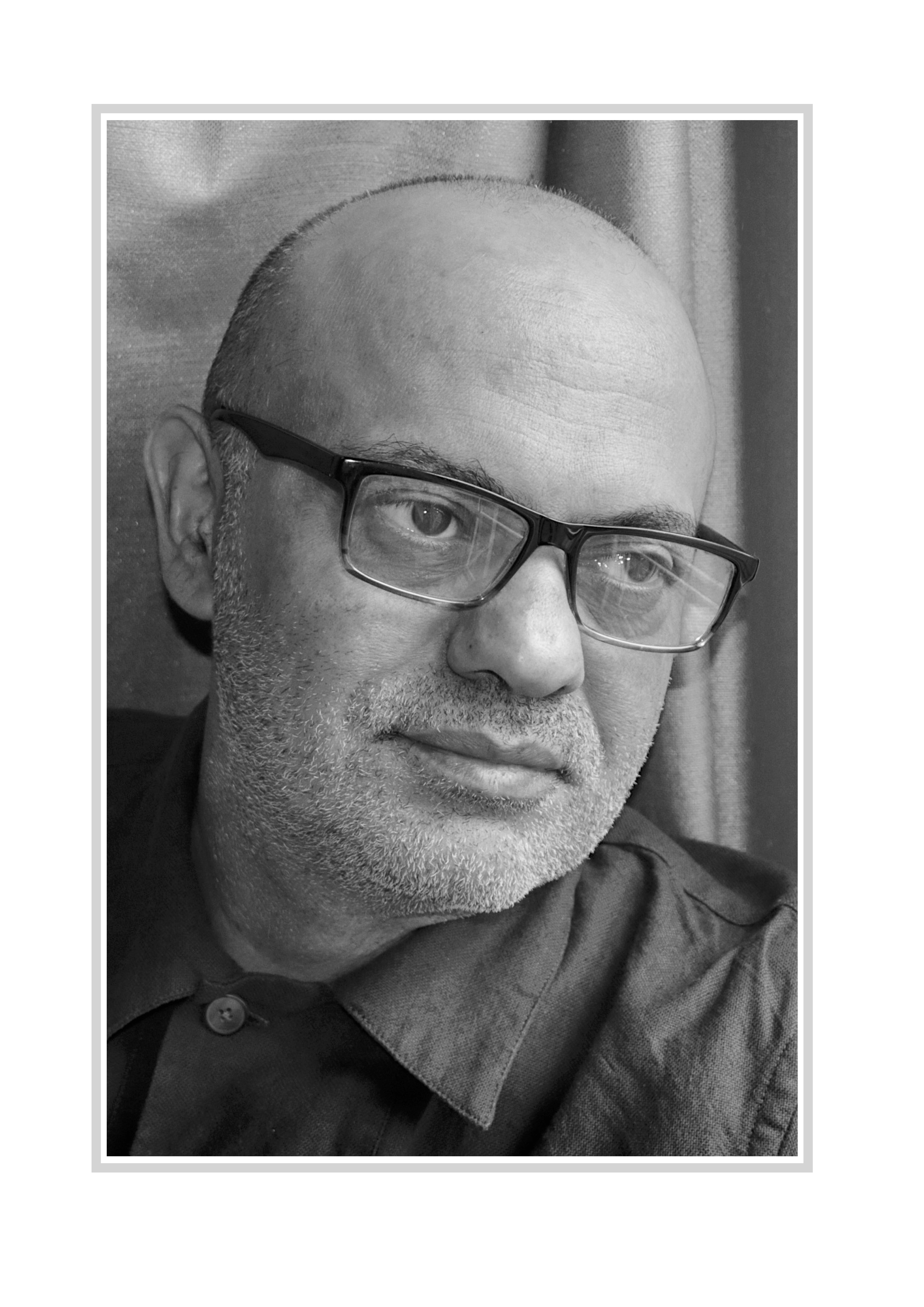
Russell Jones is an Edinburgh-based writer and editor. He has published six collections of poetry, four novels and a graphic novel. He has edited three writing anthologies and is Director of Black Blade Literary (a consultancy for writers of genre fiction). He has a PhD in Creative Writing and was the UK’s first Pet Poet Laureate.


Leave a Reply