Interview by Taylor Strickland
What can we learn from the world’s most linguistically diverse city? This is the central question behind Ross Perlin’s new book, Language City, a towering achievement of applied linguistics, ambitious thought, and passionate storytelling.
Throughout the book, we not only walk along teeming streets, and peek into the offices of an organization striving to understand and strengthen urban multilingualism, but we globetrot through rich speaker stories, retracing their migratory routes, and ultimately discover how diversity nurtures intercultural stability.
Glasgow Review of Books (GRB): Language City has an outstanding angle. The book investigates linguistic diversity in New York City, and it champions that diversity, despite monoglot legislators, as an essential character to and history of The Big Apple. But there is more to Language City. Will you please give us a summary of the book?
Ross Perlin (RP): So, this book is about the past, present and future of the world’s most linguistically diverse city, New York, probably the most linguistically diverse city in history. But it’s also about languages in cities more generally, and New York is not alone in being at an unprecedented level of linguistic diversity today because of a variety of factors.
I hope by focusing on the least known languages – primarily oral, endangered, indigenous and minority languages, which make up the majority of the world’s 7000+ languages – to change the way we think about cities and languages both. In the case of New York, this was a Lenape-speaking archipelago of dozens of islands, which exactly 400 years ago, the Dutch West India Company came into, creating an unusual place that differed from the other twelve colonies of English-speaking North America.
This was the place where Dutch became the lingua franca, but other languages spoken by enslaved Africans were also present. Additionally, there were European minority languages and something like eighteen Native American languages from the get-go. That really set the template for the multilingual city that has developed in the last four centuries and only deepened over time. There have been cycles to that and patterns of immigration from around the world, and a lot of the story here is what’s happened since the 1965 Immigration Act, which opened America’s doors to the world in some ways.
The book then talks about the present by focusing on the work of the Endangered Language Alliance (which I co-direct), which is the only organisation, as far as we know, that’s focused on urban linguistic diversity. Six speakers of different languages that we’ve worked with from around the world are profiled in the book, who in different ways try to maintain and develop their mother tongues here. Finally, the book concludes by thinking about the future, which is centred around some questions, such as: ‘Is this going to be peak diversity? Where do we go from here? And what would it mean to build a kind of linguistic infrastructure for New York and other similar ‘Babels’’?

LANGUAGE CITY: THE FIGHT TO PRESERVE ENDANGERED MOTHER TONGUES, by Ross Perlin,
published by Grove Press UK £12.99
GRB: How long did it take to write the book, and did you have any specific aims from the outset that you wanted to achieve, or did those emerge as you were writing?
RP: It took about a decade. The Endangered Language Alliance was founded in 2010, and at that time, I was still finishing up my PhD research in China. I worked on languages of the Himalaya, so the research behind the book and the relationships and everything that went into it took a lot more time. In fact, that took longer than the writing.
The writing took years also, but a lot of things emerged and changed over the course of the project. The rise of Trump, COVID, various threats to the lives and languages of immigrant and diaspora communities here changed my thinking at many stages, and exposed some of the deeper vulnerabilities, which, at first, I didn’t notice so closely. I thought initially that I was going to write a kind of linguistic portrait and a linguistic history of the city with its ever-deepening linguistic diversity, but as time went on it became more and more complicated.
GRB: Can we talk a little about the Endangered Language Alliance? The organization, as I understand it, seeks to document and advocate on behalf of lesser-used languages in NYC. What are some of the achievements of the ELA? What limits does the organization face? What does the future look like for the organization? It would be excellent to establish a UK-based branch in the future . . . (I promise I’m only indirectly hinting at a Glasgow branch . . . )
RP: Well, we’re a small organisation working on a shoestring composed of linguists, language activists, language lovers, and ordinary people. New York is our focus, and we came into being in answer to the question of what we can do to appreciate, document, and support the extraordinary linguistic diversity in New York. Our work does connect to other places, especially places where communities in New York are from originally.
There is so much to do just with the communities that are here – we try not to overextend ourselves. Our language mapping work, for instance, which is has been a big part of what we do – mapping over 700 languages here to all kinds of different sites around the city – is now being picked up in other cities like Berlin and Nairobi. So, we hope to inspire linguists and language activists working in other cities too, to claim that cities can be places of linguistic survival, as well as linguistic loss.
The ELA’s work has changed over the years, but it covers everything from more academic documentation, recording, dictionary making, recording and archiving narratives, stories, songs, to more public-facing activities holding events that put languages on stage, classes, and languages that aren’t usually taught, publishing children’s books and encouraging literacy by community-request. There’s a whole range of options, depending on what people are interested in doing, and I try in the book to chart the workings of this strange and wonderful organisation.

GRB: With that response, you addressed most of those questions, although do you foresee a UK branch?
RP: There really should be. I mean, there’s so much in the cities of the UK, obviously. I’m most familiar with London, having done some of this work there, and London in many ways has all kinds of interesting diaspora connections with New York. Manchester is a place where unimagined levels of linguistic diversity have also been revealed by linguists, and Glasgow itself clearly has so much as well. It would be amazing to see UK branches of the ELA.
GRB: While Language City is about NYC, the book has immediate relevance to Glasgow, but of course there are core differences between the two cities. How do you see Language City speaking to other urban contexts, and in particular Glasgow?
RP: New York seems to have facilitated hyperdiverse immigration for longer than almost anywhere else, partly because of how it was founded, as this commercial entrepôt 400 years ago by the Dutch West India Company. The city has always been defined by immigration. But immigration has taken many forms and now is a pervasive fact of urban life everywhere. I think the issues we’ve been thinking about and dealing with here in New York with varying degrees of success are now defining other places as well. Urbanisation is one of the major planetary phenomena of our time. Every group is going into diaspora.
I want to know more about the history of Glasgow, but my understanding is that immigration and industrialization have been fundamental and are ongoing processes in the history of the city. Linguistic diversity has been a defining but also under-recognised feature, which is like New York. What I hope people can do with Language City and the work of the ELA, and our language mapping, is apply this idea of listening more deeply to linguistic diversity, especially the oral, and lesser-known, and unofficial, and unstandardized languages that are all around, building them and putting them back into an understanding of the urban context. Rethinking city history should change the city future.
GRB: In the 18th century, a demographic shift occurred in burgeoning Manhattan, whereby the Anglican Church, according to Language City, ‘intensified the pressure to switch to English’ from Dutch. Around this same time in Scotland, the Highlands experienced similar, with English and Protestantism being taught in traditionally Gaelic and Catholic areas by the Society in Scotland for the Propagation of Christian Knowledge (SSPCK). I assume the Highland shift is partly related to the New Amsterdam/New York shift?
RP: It’s a fascinating connection that I hadn’t thought about, and I haven’t investigated, since it’s more of a historical question. But I could say that what happened here was an English takeover in 1664 of this Dutch zone, and Dutch as a lingua franca, even if a lot of other languages were simultaneously spoken here. Fascinatingly, the Anglican church plays into this takeover, affecting education, which pushes out Dutch in favour of English, thus making this area more of an English-speaking zone. There must be something in terms of the history of English and the propagation of English, and the role of religion happening around the same time here and in various parts of the world. It’s a fascinating connection.
GRB: I ask because the great Scottish Gaelic poet, Alasdair Mac Mhaighstir Alasdair, spearheaded the first Gaelic-English vocabulary (or dictionary) for the SSPCK. He then made a dramatic shift to Catholicism and Jacobitism. But events in the 18th century would trigger mass Highland migration south. Just a century later, we see Glasgow become an industrial powerhouse, largely built on linguistic diversity. In the 20th century, all kinds of people arrived: Jewish, Italian, Polish, Nigerians, Ghanaians, West Indians. Yet Glasgow continues to identify as Protestant/Catholic and Scots/English. Does Language City address the problem of oversimplified civic identity?
RP: It’s one of the central issues that I try to think through, that people’s narratives about their cities are oversimplified, anachronistic and usually focus on a few large religious or national groups, when the makeup is much more complex. And historically people would have been coming, and even today are coming, with highly disparate identities, which I think are best understood through language. Of course, there’s sometimes a tendency to think in these macro categories and, to some extent, the macro categories are produced over time through conflict. But the actual makeup of the city, the actual processes of migration, and what language shows us, is that there are much deeper local identities which people bring to cities.

GRB: Much of Language City contains ‘speaker stories’, and I was quite drawn to Karen’s and her native language and culture of Lenape. Lenape was the original language spoken in what is now Manhattan, and I’m sure readers here would love to know what ‘Manhattan’ means. Can you brief us quickly on Karen’s story?
RP: Manhattan is probably the most famous Native American place name that has survived, even if transformed for over four centuries. I try to talk about some of the controversies around its etymology, but it seems like the most convincing one derives from a Lenape phrase, which means something like ‘the place where we get bows’ (like for bows and arrows), and this phrase is said to have actually referred to a stand of particularly hard hickory trees that would have been good for making bows. The location of that group of trees is what we now call the whole island of Manhattan. Lenape itself has miraculously survived a series of displacements that have driven most of its speakers far away from the city, hundreds of miles away into Oklahoma, and Ontario, Canada, and elsewhere.
Through the story of Karen, who is a Lenape woman, who passed away just as the book was being finished, I talked about how her people’s linguistic survival happened. Although native speaker numbers have dwindled (and today there is just one native speaker left), a growing group of revivalists like Karen, who are teaching the language, have brought Lenape back to Manhattan, perhaps for the first time in centuries.
Karen took part in this as a teacher here at the Endangered Language Alliance. In many ways the story is both the inverse of the story of New York’s diversification. It’s sort of the founding story at the centre of this history, but it’s also emblematic of what’s happened with Native American languages more generally, both the way that they experienced enormous pressure, but also the way they have survived and are reviving in extraordinary ways.
GRB: What stood out about Karen’s story is perhaps unsurprising for minority language keepers, but the emphasis on ‘Residential Schools’ driving out native languages to replace them with English reminded me of the experience of Gaelic speakers. Even through the mid-20th century students were being punished in Scotland for speaking both Gaelic and Scots, either by embarrassment or physical abuse.
Gaels will have a memory of beltings and the maide crochaidh, or ‘hanging stick’ like a big wooden lanyard that marked out students, but there was also the infamous leather tawse by which Scots speakers and Gaels were belted. Now I should add for sake of clarity, the experience between Lenape people and Gaels is not at all being equated here, but rather overlap in their experience is observable. Do you feel such intercultural observations to help establish connections or distort realities?
RP: The suppression of native languages is a global story. It reminds me of the so-called ‘Welsh Not’ which was used at schools in Wales to discourage children from speaking Welsh at school. These stories are global. Of course they have different valences, and with different histories and degrees of suppression.
But the speakers of a small number of dominant languages, through education systems, through religious systems, through legislation, and through a variety of means, have been driving languages out of existence. They’re not dying natural deaths, for the most part, and if it looks like that today, that’s to ignore the whole history of aggressive and thorough shaming and punishment. School systems and, in particular, residential schools were these total institutions where the lives of students were controlled and forced through cultural assimilation. Really, these stories are connected and it’s important to see all of it in a global context, I think.
GRB: The mass child graves associated with residential schools and mentioned in Karen’s story just destroyed me.
RP: Yeah, this is something that in North America we’re just beginning to reckon with and understand.
GRB: Following this, Scotland now has Gaelic-medium schools that operate with some success, and much investment in Gaelic is educational. In your research, is education as effective at growing/saving languages as it is at minimizing them?
RP: For all the role that education has played in suppressing languages, I’m not sure if it can always be the solution to the problems that it’s created. We are, in some ways, in a golden age of language revitalization. There are exciting movements going on, which I touch in Language City, that people are trying to enact in cities. We’re seeing what’s going on in places like New Zealand, Hawaii, the Basque Country, Wales, and people are looking at Scotland as well.
There’s a variety of movements around the world which, to different degrees, do try to make use of education systems and some are more education-focused than others, but from the linguist point of view, the home is still in some ways more fundamental than the school. Schools can bolster and reinforce a language and help to drive a language of utilisation and movement. Schools alone can’t do it. The home and the community are still fundamental.
GRB: Yes, especially in Gaelic, as I’m sure with all minority languages, there is also this question of ‘the living tradition’ being compromised through language policy and education due to dialectical standardization and utilitarian deployment.
RP: Yeah, this is a widespread issue.
GRB: Glasgow and neighborhoods like Govanhill are linguistically rich. What do you recommend the city does to preserve linguistic diversity? What do you recommend small outlets like Glasgow Review of Books do to represent languages like Urdu, Punjabi, Romanian, Slovak, Nepali, Vietnamese, etc?
RP: I can’t wait to take a stroll around Govanhill sometime! I hope the neighbourhood and city can continue developing in whatever ways that make them what they are today. It’s news they are diverse, but it’s tricky to try to bottle or promote or hold on to a particular linguistic ecology that develops in one place. Generally speaking, we found that to celebrate it, enjoy it, crystallise it and kind of make connections between communities and make people feel more comfortable with with using and affirming their languages is always good, of course. Other factors like housing and jobs and policy are vital, though complex.
The Glasgow Review of Books also can play a role by knitting together different literary communities using different languages and authors and traditions that may be present there. Institutions and journals, theatres, clubs and spaces – they all play a role. So, I hope that the sort of the recognition that there’s something special going on in this even small area that’s worth celebrating and documenting and experiencing – that alone helps.
GRB: Towards the end of Language City, you have an excellent manifesto-in-miniature that addresses linguistic discrimination:
There is no reason, linguistically speaking, why we shouldn’t all be speaking Lenape here in Lenapehoking. Of course it would now take a magical justice. But no feature of any language, other than the power of the people who use it, makes it any more or less adaptable to the life of a great city… Any society can run in any language… Someday English, too, will be down to its last speaker.
‘Magical justice’ is too right. But if you substitute ‘Lenape/Lenapehoking’ with ‘Gàidhlig/Alba’ and ‘Scots/Scotland’, the message more or less holds. But you are speaking linguistically, that all languages are capable of prestige, and all are adaptable to various environments. I am curious, how do you respond to those less sympathetic to the message of your book? There are people, for example, who oversimplify the situation as ‘languages have always died and will always die. There is nothing we can do about it’.
RP: Yeah, I try to address this in the book. I often talk to people about this at events and interviews. From a linguistic point of view, no linguist would argue against the idea that every language is communicatively and structurally just as sophisticated as any other, and that we can’t say that any language spoken natively is broken or lesser.
Those kinds of judgments really come down to issues of politics and power and history. We have to recognise that. Loanwords are used if necessary, but in terms of the essence and the structure of every language, they’ve evolved to communicate with their speakers. Of course, it’s in some ways normal for people to think that their own language is somehow better than others – it’s the language they know. Monolinguals especially tend to think monolingually.
Sometimes there’s this very idealistic notion that if we all spoke one language, there would be peace on Earth, and everything would be fine. So many civil wars and other conflicts show that that’s not the case. And I hope that Language City demonstrates that in places like Queens, in New York, people can live with deep difference and coexist peacefully, and while speaking hundreds of languages. The deeper the difference goes, in some ways, the more we’re able to stabilise.
Which is not to say that lingua francas are not important. We could think about the role of English or Spanish or Russian today as that of a lingua franca. To the extent that we’re able to have shared languages in which common ground can be achieved – that’s very different from imposed languages that people are forced to switch to, and that are officially mandated.
Multilingualism has been historically the norm in most parts of the world. It’s a totally natural and thoroughgoing phenomenon. I think that we have a lot of work to do just in reconceiving how we think about language, especially among multi-monolingual speakers of dominant languages.

GRB: Before we go, do you have a favourite literary work from Scotland, prose or poetry?
RP: I want to read more of Scotland’s literature in all its languages. I have to say that my brilliant editor, Peter Blackstock, who was at the centre of this book, in so many ways, is also Douglas Stuart’s editor. Shuggie Bain was deeply moving to me.
I grew up hearing the poetry of Robert Burns even though my family is not Scottish. I’ve been wanting to read more Gaelic poetry. I have a volume of Sorley MacLean, with some translations by Seamus Heaney, and that volume, and others, I hope to get deeper into.
About the author

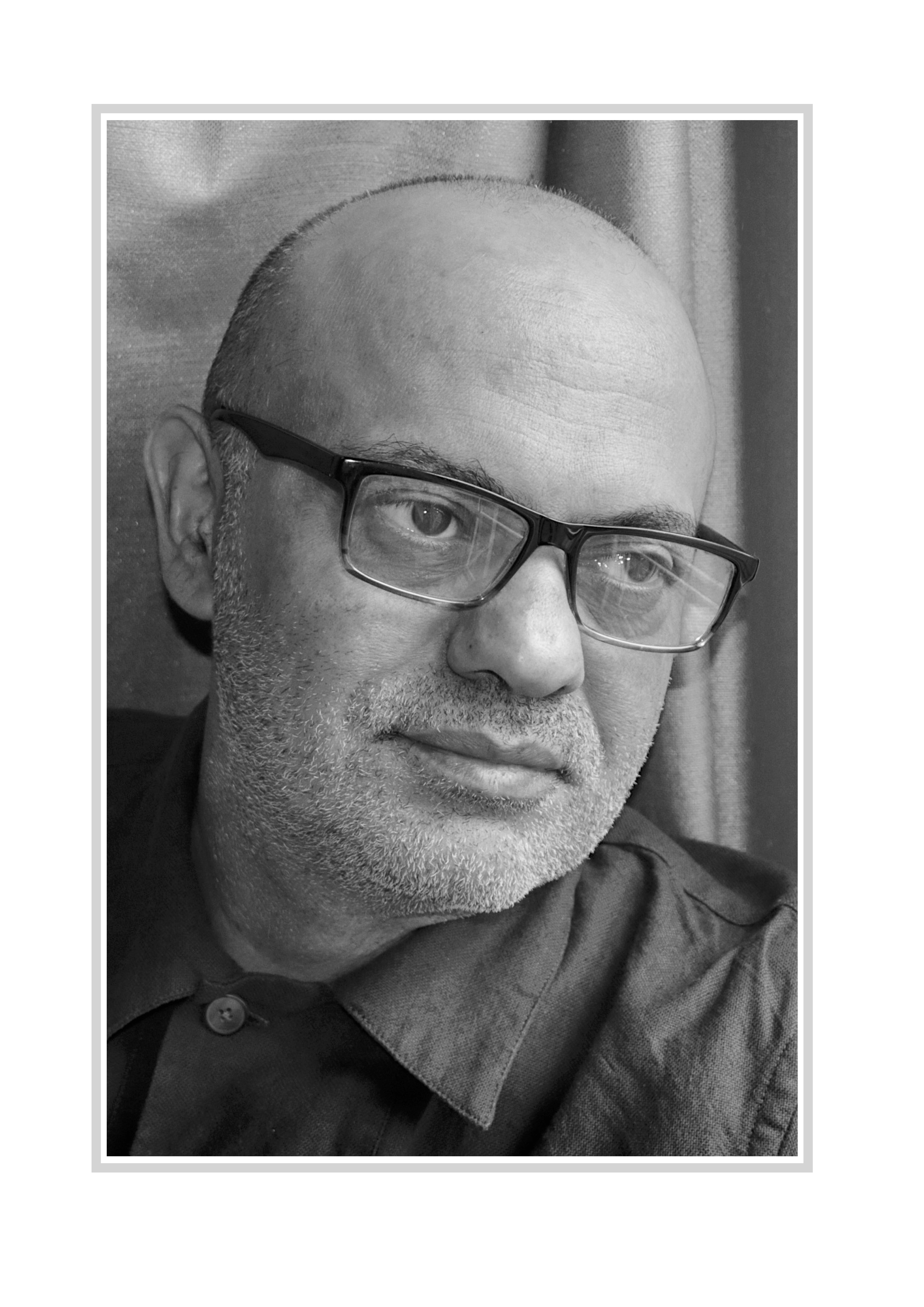
ROSS PERLIN is a linguist, writer, and translator. He has written for the New York Times, The Guardian, Harper’s, and n+1, and the Endangered Language Alliance has been covered by the New York Times, the New Yorker, BBC, NPR, and many others. He is also the author of Intern Nation: How to Learn Nothing and Earn Little in the Brave New Economy. Perlin was a New Arizona Fellow at New America and is a native New Yorker.
Your message has been sent

Leave a Reply