By Lindsay Johnstone
“I wanted nothing more than to make you happy. As you poured the tequila, I cut the limes using your knife. The sharp blade felt dangerous in my hands, as I forced myself to concentrate so as not to dismember my own thumb. You asked for the instructions because you wanted to do what was culturally appropriate. So I guided you: lick the salt, shoot the shot, bite the lime.
‘¡Arriba, abajo, al centro, pa’ dentro!’”
White-silvery agave pulsed through my veins and burned behind my eyes. We bit the lime.”
A tequila ritual. A moment – acid-sharp – shared between two fledgling college students on a late-summer camping trip. One that affords time to explore a desire that neither can yet fully articulate.
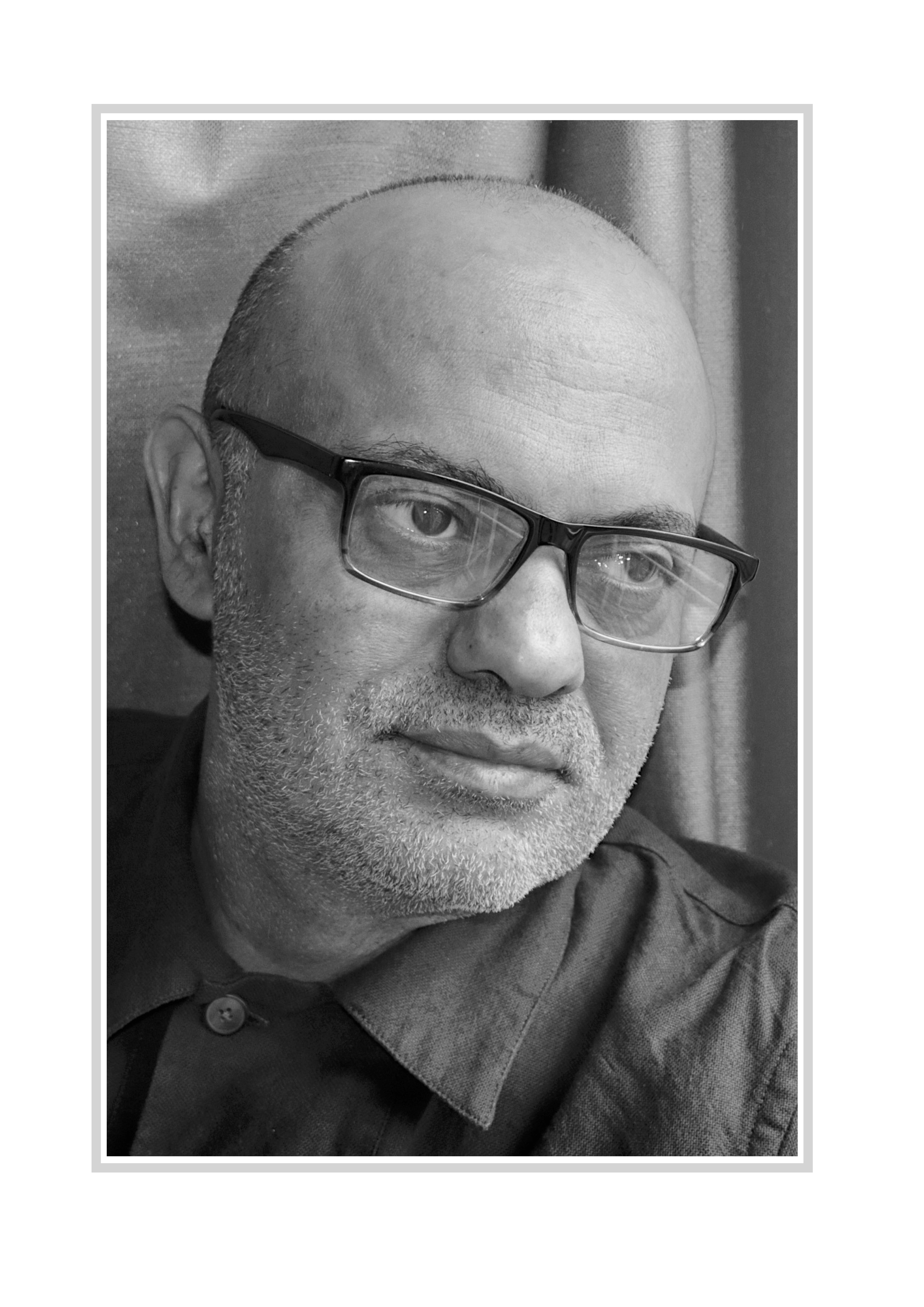
How We Named The Stars, by queer Latinx writer and poet Andrés N. Ordorica, was published in the UK by Saraband, on July 4th. It’s a contemporary queer novel, yet somehow already feels like a period piece capturing a fleeting, progressive moment for LGBTQI+ folks coming of age in Obama’s America.
Ordorica is a queer, Latinx writer living in Edinburgh whose work explores legacy, belonging, sexuality and otherness from a bipoc perspective. Ordorica draws on their family’s immigrant history and third culture upbringing on the west coast of America, mapping the journey of diaspora to interrogate what it means to belong when you feel you are from neither here nor there.
Ordorica’s writing has been shortlisted for, among others, the Morley Prize for Unpublished Writers of Colour and the Saltire Society’s Poetry Book of The Year for the collection At Least This I Know, published by 404Ink.
How We Named The Stars is Ordorica’s first novel and has been widely lauded on both sides of the Atlantic, chosen here in the UK as one of the Observer’s debut picks for 2024.
The novel follows Daniel in his freshman year at an elite east coast Ivy League-esque college, Cayuga. He’s a first-generation scholarship student from California – the son of Mexican immigrants – and initially feels completely out of his depth. However, his roommate – All-American Sam – becomes instantly significant to his settling in, as does a cast of friends drawn from the margins.
This is a post-AIDs crisis cohort. Sex-positive and sex-literate if not yet sexually experienced, they speak a language of consent that feels fresh and aspirational. Could first-year undergrads really speak so openly about their emotional and sexual wants, needs and desires? Really?
Initially, we aren’t sure who the diary entries that open each chapter belong to – another Daniel, writing in the late 1980s and early 90s. It soon becomes apparent they belong to Tío Daniel – Uncle Daniel – who died aged 22; twenty years or so before the events of the novel.
We sense the weight of expectation on Daniel’s slight shoulders. It’s not only his scholarship place, but his mother’s. His father’s. His grandfather’s. His long-dead uncle’s. It’s also, for a moment at least, his supervisor’s. A person of colour, she encourages him to ride out the first bump in the road. He’s told to fight for his place in honours classes that other students – “Charity, Cassadee, and Chad” – automatically slot into.
The novel, then, is about claiming space as much as it’s about loss; grief. It asks questions about how we honour the dead with or without the comfort of ritual. Family. Language. These themes – already familiar to us in Ordorica’s poetry – are given fresh expression in this American campus novel, which takes its place in an emerging queer canon alongside the likes of Seán Hewitt or Taymour Soomro, to name just two. Older writers, such as Edmund White, Alan Hollinghurst and Christopher Isherwood have passed the baton – now Ordorica is running with it.
Please be aware – this interview contains plot spoilers for How We Named The Stars

Glasgow Review of Books (GRB): Hi Andres, thank you so much for taking the time to speak with me. I wanted to talk about How We Named The Stars, of course, and also the broader themes of your work including the interplay between your poetry and your prose as well as a little bit on form and a wee bit about voice.
It’s been so interesting getting a sense of where this novel might sit within the current or emerging queer canon as I think that’s quite a rich landscape right now. I’m also really keen to talk to you about writing desire and writing sex! But, to begin with, How We Named The Stars came out in the United States in February this year, with Tin House . . .
Andrés N. Ordorica (ANO): Yes, at the end of January.
GRB: What was that like? Because you would have been here (in Scotland) at the time it was published – or were you over there?
ANO: Luckily enough, I was able to be there for the publication date, and I was brought over for a very small, jam-packed book tour on the east coast. It was strange, because it’s a novel so set in place, both upstate New York and the north of Mexico but very much written here in Scotland, and very much through memory and a bit of desk research.
To be there for the launch was very surreal because, I probably didn’t appreciate this before, the US is just such a big country. I was very fortunate to get a bit of attention with it especially through Barnes and Noble’s Discover Series where they choose a debut novel a month and they make a big song and dance of it. That was wild because it meant I was getting randomly tagged on Instagram from Barnes and Nobles all over the country – Columbus, Ohio or Phoenix, Arizona. But then small places and states that I’d never been to and that I really had no deep connection with.
In the middle of the tour I was able to go back to my Alma Mater, to Ithaca College, in upstate New York, and do a few class visits and then a public reading because that felt like the homecoming. Daniel was coming back to where he was birthed. Returning to the UK has been interesting because it’s now been five months or so and most of that has been watching from afar.
GRB: I’m mindful of the American campus novel tradition and I know, too, of the writers you’ve said were important to you in the writing including Edmund White, Christopher Isherwood and Alan Hollinghurst. I’m wondering to what extent you consider yourself to be part of the continuation or perhaps a rebirth of the queer canon? I’m thinking about other books that I would see sitting alongside yours – Other Names for Love by Taymour Soomro and All Down Darkness Wide by Seán Hewitt. It’s like a new wave: queer lit 2.0. I wonder where you see yourself within that? Do you, even? As a person of colour – somebody who is living and working in Scotland – do you feel a part of that sort of group or do you still feel somewhat separate or apart from any notion of a new canon?
ANO: Oh, that’s such a generous question! I think it would be to my own disadvantage to say that I am a part of any sort of canon but I like what you say about a new wave. You know, I think it’s very interesting because in a few weeks I turn 35, and my experience of coming out, or a queer awakening will be very different from someone who was going through their late teens and early adulthood in the eighties or nineties, during the AIDs crisis. Or even before same-sex marriage in the UK, or in the US [where] it was not long ago that it became a law across the nation and not just devolved to States. I think it’s very interesting from that perspective, because then it’s unique. And then I immediately think, what will Gen Z. write?
We have to be mindful that what we have could very easily be rescinded. Become a society that starts locking down rights or questioning rights that come up for debate once more. I love that you mentioned Seán because his memoir is just one of my all-time favorite books of the past five years. It’s just so incredible, and I think it writes to a certain aspect of queerness that I had not really seen represented. Not someone who grew up in a way of self-hatred, but that touches on very rich subject matter like religion, and what it’s like to have religion in the background or talking about mental health.
I think there’s a lot of rich storytelling coming out of the queer community. Another book I can’t stop talking about is Griffin Hansbury’s Some Strange Music Draws Me In, which came out this year. It’s a beautiful coming-of-age story. I think, for me, if there is a canon I’m writing to, it’s one that won’t exist in study, hopefully, until I’m long gone.
Edmund White, Christopher Isherwood and James Baldwin were very influential in the final few months of getting what ultimately is the version (of the book) that is now out in the world. But then, of course – someone like Alan Hollinghurst is just such a masterful storyteller in the different aspects of society he covers through a queer lens, through a queer male perspective.
It’s interesting, this idea of queer canon. I think it’s something that I’ve only become aware of in my late twenties and early thirties and so I can say that I’m still learning what that canon is and trying to read voraciously.
I’m in a period right now where I’m trying to read a lot of gay cult literature; a lot of small mail order presses based out of London or New York City. Where it was once very hard to come across queer literature, I’ve just been really fascinated by how bold a lot of these novels are, and what they write about and how sensuous and even sometimes explicit they are. It’s an amazing time, and I feel very honored to have this novel out there, and there is a part of me that is aware it is sitting in something bigger, beyond myself.

GRB: But you don’t quite know what yet. I think what you said there about learning the canon – for me, that points to the sort of loneliness that sits at the heart of those older stories . . .
ANO: Yes.
GRB: I was thinking about the candle that features in Edmund White’s A Boy’s Own Story, and how you’ve recast that image in How We Named The Stars, in the scene where Sam and Daniel are together around a fire early in their friendship. It’s not like a candle being snuffed out or that lonely suppression of desire as Daniel steps away from the fire. He’s able to take a step back from a situation that has heat and expectation and potency. It’s a relationship he hopes might go one way, but he’s not quite sure:
“It was cold away from the flames, warm but majestic. As I looked up I wondered whether my parents were watching the same moon as me three time zones away from us. I longed to know what shade of dark their sky was, if it was shining romantic for them. I wanted to ask if they missed me, if they could explain what it was like to fall in love?”
We know that about Daniel, that he’s on the edges. He’s trepidatious. He doesn’t want to step into anything in case he’s read it wrong. Like he’s saying, “I wasn’t sure,” or, “Did I make that up?”As his parents come to mind, there’s that sense of lineage and also rightness. The novel takes that old imagery, and reinvents it, I suppose, for the sense of possibility you mentioned earlier about this being a post-AIDs landscape that that you were writing into. I picture young men (who’ve maybe watched or read Heartstopper) coming to this novel needing to see a positive portrayal of desire, consent and sex. Do you feel a responsibility that this had to be a sex-positive story to give young people a sense that this is what you deserve? This is what it should be and could be?
ANO: That’s such an interesting question, and an adept reading. I totally take ownership that it is heightened and a bit of it is idealized, but I think when I was going through my undergrad it would not be unheard of for people to say, “No means no.” I think that generation was really starting to get into discussions around consent.
I think nowadays, speaking to much younger people than me, their concept is just so much more intelligent and informed and confident and I think that’s just wonderful but I would definitely say that my straight girlfriends during my undergraduate days were way more clued up on things than I was, and I was late to the party, if you will. Having [the characters] Rob and Mona was a way of paying homage to those friends who really helped guide me, because I just had no blueprint.
You know, I really didn’t know any gay people going into my undergraduate degree, and so I was very shy about making queer friends. It really was my straight girlfriends who helped me. I think we know that Mona is not straight. I think if anything she’s bi. But it’s very much day one. In the first few minutes of meeting Daniel, she is advocating for sex positivity, I think.
I think there’s like such a rich – rightfully so – wealth of queer literature, specifically gay literature that acknowledges the unglamorous, un-idealized version of sex, and I think that’s so true and so valid. It was important for a novel so steeped in grief that I didn’t add trauma and it’s very important to not add the trauma of sexuality. I thought that that was just going too far, and it would have just been something else altogether.
That connection to Heartstopper has been mentioned to me quite a few times, and how wonderful to think that there might be new adult readers come to this and get something out of it that feels like a possibility and a blueprint in a way that I did not have at that age, you know. It’s not perfect, you know, but I do think that it was intentional to allow Daniel and Sam to have something that blossomed without too much of the outside world impinging upon them. And I think it is beautiful.
GRB: The scene where they have full penetrative sex for the first time I felt was so deftly handled. It was slow, and it was beautiful. I pulled out a book because I felt that there was something I wanted to chat to you about in Melissa Febos’s non-fiction book, Body Work: The Radical Power of Personal Narrative. She’s saying:
“I found that those of us fucking in the margins are often policed by our own communities to represent our sex in an idealized way, and I get the logic. There are so few representations of our sex out there that we find any kind of spotlight must speak well for the whole community, but that idealization, marketing the marginalized sexual experience as wholesome or perfect, is a great argument against the argument for our depravity, but it also raises so much of our humanity.”
I think what you did with the character of Diego where the reader gets a hint towards the end of the novel that maybe there’s a darkness; a story that could have gone to a different place. It doesn’t, because you’ve got Daniel now able to advocate for himself in a way that maybe he couldn’t earlier in the novel . . .
ANO: I think, we have to remember Daniel is telling this retrospectively, so there is an enriched quality. But I do think the next day when Sam goes away on his soccer trip and Daniel bumps into Bernie-Bernice, he is experiencing this Catholic guilt of like, “Oh, do I have AIDs? Should I go to Planned Parenthood?” That felt important, too. I didn’t want it to be just totally seamless for Daniel. It made sense that someone like him would have joy and desire in the moment but then the next day, left on his own it’s like, “Oh, my gosh! I’m trying to go back through my memory. Did Sam wear a condom each time?”
GRB: I also wanted to touch on the way in which men are represented, and thinking about your poetry alongside your prose, brought to mind the work of Michael Pedersen, specifically Boyfriends, and its relationship to The Cat Prince and Other Poems. You are both poets exploring in prose, a story of alternative manhood. I was curious noticing that, though you’re coming at it though a very different lens.
You see the relationship between the grandfather and young Daniel, but also, I think the relationship having echoes of whatever was between his uncle Daniel and the grandfather. How important was for you and to explore that within the context of legacy, thinking about ancestry; to be able to explore that different version of manhood, maybe a version that, is not often explored?
ANO: I think for me it was a means of addressing machismo, which is pervasive in Latin American culture and just how, often, Latin American men are represented and, you know, that’s sort of fake news. These stereotypes. It’s very true in Mexico, where my family originate from, that femicide is rampant.
Before lockdown there was a now-infamous case and it descended into lots of women and non-binary people taking over the capital and marching in their thousands. It’s not to say that machismo does not exist, but what I wanted was to create a relationship that portrayed manhood in a more positive light. A lot of it is based on my own experience with my grandfather, and so I think for me, I wanted to write to that truth or that personal history.
I think for me, I liked the idea of not having the parents there, because it ups the stakes a bit, or the possibilities of what could happen – especially because the reason why Daniel goes to Mexico in the later part of the book is, he jokes, to be a watchdog for his grandfather who’s escaped.
He’s going through a bout of depression, loneliness, so it made sense that it would be the grandfather rather than the parents who might be a bit more “all up in Daniel’s business.” You know, his grandfather very much wants to hang out with him and be around him but is also there for his own means and his own needs, so it just worked from a plot point of view, but in terms of the portrayal of masculinity.
I wanted Daniel to be experiencing the summer free of too much outside trauma or pain, because we know what is about to come. We know from the beginning of the novel that at some point this summer Sam is going to die and so Daniel needed to have this safety net of people, and for someone like his grandfather, who lost his own son, it created a rich possibility of one generation helping another generation through their first real mourning experience.
GRB: And honouring tradition. That sense of being back in Mexico together; able to experience family on a different scale. Daniel receives the terrible news about Sam while so far removed from the place they inhabited together. The narratives finally start to rub up against each other and we get a deeper sense of exactly what it was that happened to uncle Daniel. I felt there was a connection to the final poem, Mis Raíces (My Roots), from your collection, At Least This I Know.
I feel that the poem and the novel are speaking to each other. In the poem, there’s that moment of magical realism where the persona is planted in the dust, and the grandfather walks away, allowing him to grow where he’s planted himself. Then you’ve got a different version of that situation in the novel where they pack up together and they both leave the homeland behind. But they’re taking that culture and that history with them. Young Daniel now has those roots, but he can now package up the diaries and take that away with him into his life. He’s Daniel, but he’s also Tio Daniel, and he’s carrying the grandfather’s expectations, those of the mother and the father, and then also his director of studies. But I feel he’s lighter by the end.
Lastly, I know that you’ve played around with structure quite a bit, exploring dual narrative and arriving at the diary entries for chapter openings which jar or coalesce with young Daniel’s experience. It also took me a while to work out that narrator Daniel is chronologically very close to the events that unfold and which he reflects upon. Was there a decision there for you as to whether young Daniel could be quite a bit older, reflecting back on that freshman year? Or is it important that he’s just about to embark on the next stage of the journey when he’s in that reflective mode?
ANO: I think that’s such an acute observation. I don’t think at any point had I ever thought to add time between Sam’s death and Daniel beginning to write their story or write to Sam. I think for me, it made sense in terms of the last time Daniel sees Sam is May, so there’d been at least three or four months before he starts writing to him and had already mourned part of their relationship.
What I wanted to get across was this idea that when we grieve someone, even someone very close to us, whether it’s a parent or a child or a lover, often you don’t get that much time to think about them, considering employee rights and depending on how close you are to that person. You might get one day off, three days off. But the idea was that Daniel is always going to have to get back to his life. It was about articulating that kind of loss, and that, whether fairly or unfairly, life does go on. There’s this expectation.
And ultimately, Sam is not Daniel’s husband. You know, there would be really no sort of mechanisms in place that would allow him to step away for a bit from his studies, and so I wanted to portray what that is like, then to have to mourn someone in this very strange way. Just get on with life, and my hope in that last chapter of the book is not to say that Daniel is totally fine, but that he’s on his way.
And you reflect so brilliantly and beautifully about this idea of all the different weights that he’s had to carry. I think that last chapter is him trying to tell Sam, “You don’t have to carry my grief.” I was trying to capture that at this point he has learned enough about his uncle. His grandfather has helped him. He has his friends, he has Mona. He has Rob, he has Bernie-Bernice, he has Naomi. He has this new writing group at the LGBT Wellbeing Center in Ithaca and these are the mechanisms that are going to see him through. It’s not saying that it’s perfect, or that he’s not going to struggle, but that he doesn’t want Sam to worry about him.
GRB: Andrés, thank you again for being so generous with your time and for answering these questions.
How We Named The Stars is available now from Saraband and good booksellers.
About our interviewer

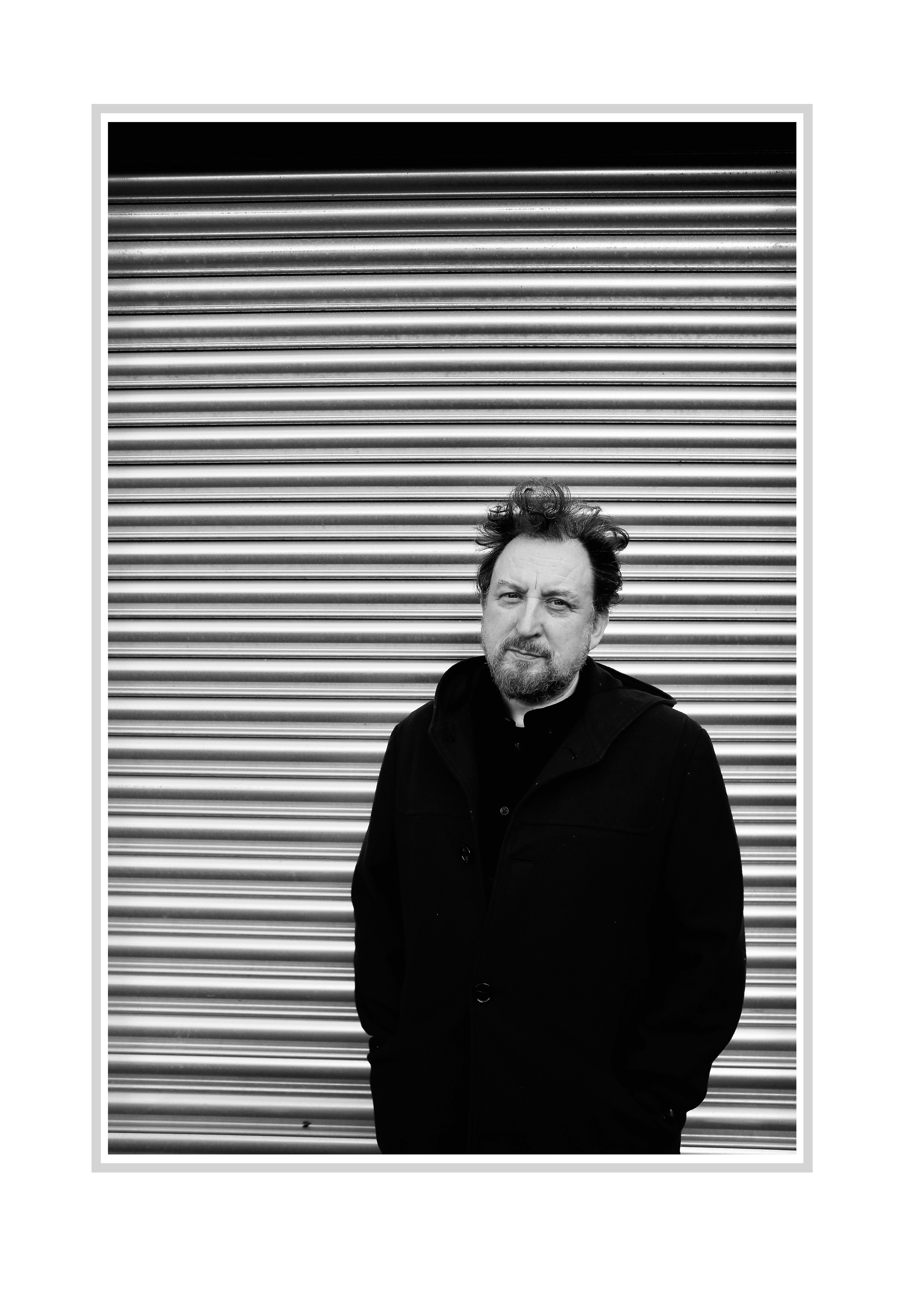
Lindsay Johnstone [she/her] is a writer based in Glasgow. Her roots are firmly in the west coast, though she has been known to travel when the occasion calls. She writes about motherhood, the impact of intergenerational trauma and the interplay between the natural world and our mental health. Lindsay was the recipient of a John Byrne Award in June 2023, was shortlisted for a Writers’ Award at the Scottish Mental Health Arts Festival in 2022 and was supported by Creative Scotland and ASLA’s emerging writers’ programme, Our Voices, in 2021. In her former life as a high school English teacher, Lindsay wrote for the Herald and BBC Bitesize. She is a regular voice on BBC Radio Scotland, and can (mostly) be trusted with a microphone. She works at the Scottish Book Trust and moonlights as one fifth of Glasgow band, Wall Sun Sun. Her memoir, Held in Mind, is currently on submission with UK publishers while she works on her first novel. She also writes a Substack where readers can expect some of the above and more besides:


Leave a Reply