
By Pippa Goldschmidt
Spooky, isn’t it?
The first memorable image to emerge from the new discipline of modern physics at the end of the nineteenth century is that of a hand. In 1895 Bertha Röntgen either volunteers or is persuaded to place her right hand on a photographic plate while her husband, the physicist Wilhelm Röntgen, directs an invisible beam of radiation at it.
Grey tones indicate bones and surrounding flesh with identifiable rings on the wedding finger. When Bertha sees this x-ray of herself, she exclaims, “I have seen my own death!”
A few years later, in 1907, Hans Castorp (according to the fictional narrative of Thomas Mann’s The Magic Mountain) is visiting his cousin at a tuberculosis sanatorium in Davos, Switzerland. Ironically, Castorp also succumbs to the disease, and as part of the diagnosis his hand is placed under a fluoroscope (a real-time x-ray imager). Mann describes Castorp gazing at his hand; “He saw his own grave. Under that light, he saw the process of corruption anticipated, saw the flesh in which he moved decomposed, expunged, dissolved into airy nothingness – and inside was the delicately turned skeleton of his right hand.”1
The real-life Bertha Röntgen and the fictional Hans Castorp have, with the aid of x-rays, been able to view themselves and the hitherto distinction between observer and observed is dissolved. ‘Spooky, isn’t it?’ the director of the sanatorium in The Magic Mountain comments.
In 1922, the physicist Erwin Schrödinger, accompanied by his wife Anny, also goes to a sanatorium in Arosa, a short hike from Davos. He is also suffering from tuberculosis, but apparently makes a full recovery. In Christmas 1925, he returns to the sanatorium and during a two-week stay he formulates an equation that explains the structure of the atom.
In Schrödinger’s equation, the electron orbiting the atomic nucleus is characterised as a standing wave similar to that of a plucked violin string, and not, as was previously thought, a particle. He comments that this is “very beautiful” because it solves the problem of why electrons can only have specific, or quantised, energy levels.
According to the official biography,2 during his 1925 trip to the sanatorium, Schrödinger left Anny at home and was accompanied by a ‘mystery woman’. His biography compares this muse-like woman to Shakespeare’s ‘dark lady’ and goes to some lengths to consider and reject various identities before asserting that this “must remain forever unclear”. In contrast, Anny “left behind” is not worthy of comment, what she does by herself is not deemed interesting.
The story of this mystery woman has been repeated so often in popular accounts of quantum physics it has become a perfect imitation of a historical fact. But the closer I look at it, the more tenuous it appears, arisen out of rumour, hearsay and assumptions. There are no credible observations, just gaps.
I find myself returning to this unsolvable problem, over and over again, reading and rereading about Schrödinger’s work, imagining and reimagining what Anny might have done. Perhaps my work constitutes a thought experiment, an attempt to say something about reality that cannot be known from any lab experiment. What has propelled me onwards in this work is the sense that fiction might fill those gaps, and might also investigate the assumptions in the historical record, showing how they are constructed.

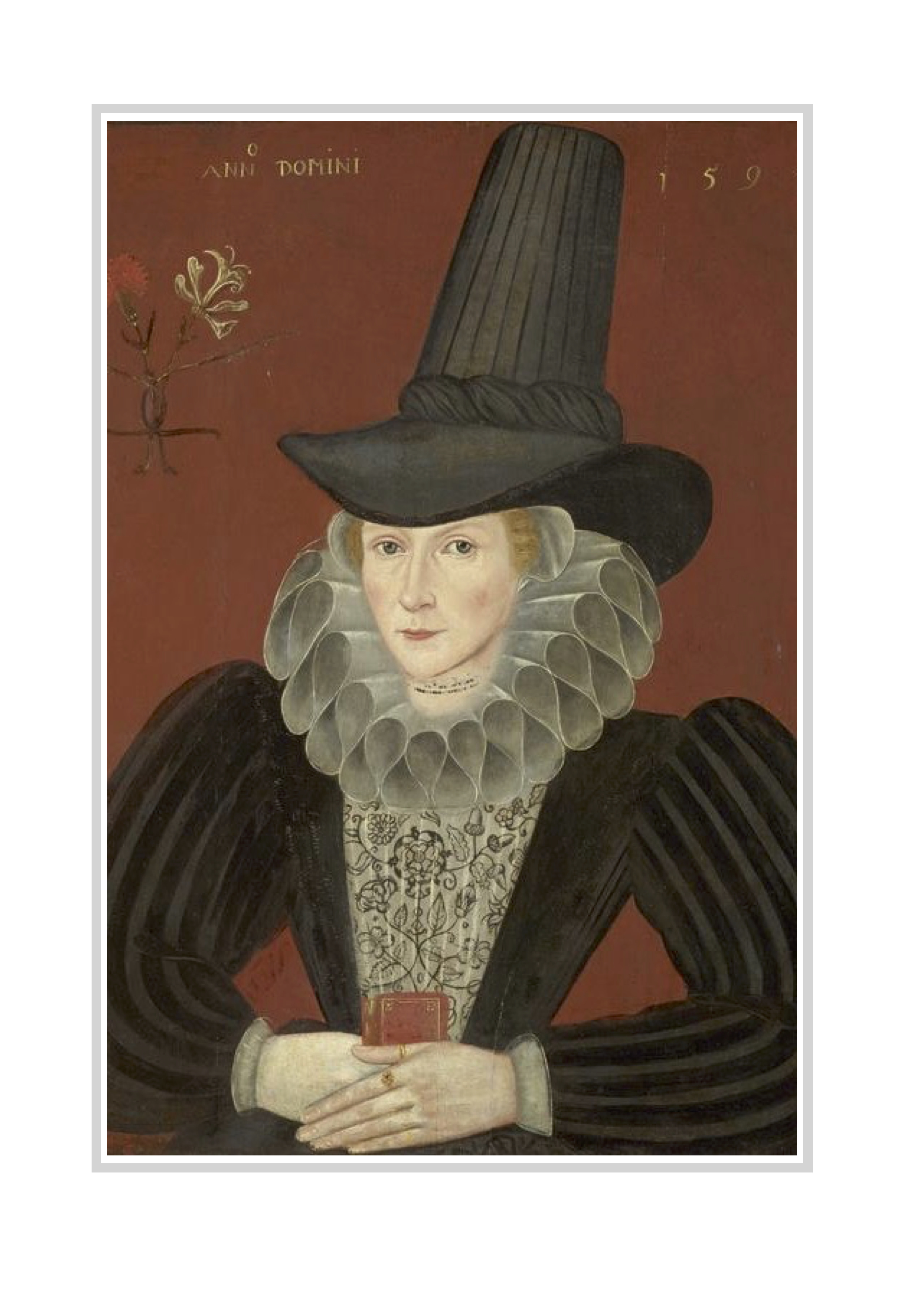
(Image retrieved 13/10/2024)
And while other physicists straightaway recognise the elegance and usefulness of Schrödinger’s equation, they don’t agree with his interpretation. It’s soon demonstrated that a much better explanation of what it represents is not a physical wave but rather a mathematical one which can be used to predict the probability of where the electron might be located. But Schrödinger is not the only physicist whose work crosses the boundary between the real and the made-up.
It is 1900 and in his study in the west of Berlin, Max Planck is attempting to derive an equation that predicts the amount of energy emitted by a lightbulb. The only way he can reconcile this equation with what is actually observed is by assuming that the energy is not continuous, but only capable of being emitted in discrete particles.
He admits this is a desperate step, nothing more than a mathematical sleight-of-hand, and he does not for one second really believe that energy is actually quantised in this manner. But the quantum is here to stay and Planck (the reluctant architect of modern physics) appears to be fundamentally mistaken about the ontological nature of his own work.
Shine a beam of light through two narrow slits and observe the coherent pattern of bands on a screen some distance away. A pattern that can only be formed by the diffraction of light – thus proving that it’s a wave, with diffuse properties such as an associated wavelength spread out in space.
Shine a beam of light on a metal plate and detect a current of electrons liberated from that metal by the light. A greater intensity of this light results in more electrons being liberated, but not in those electrons having more energy. This so-called ‘photoelectric effect’ can only be explained if light is made up of particles, as Einstein explained in a paper written in 1905 and for which he was awarded the Nobel Prize.
So, particle or wave? Mysterious lover or abandoned wife? Neither represents the fullness of reality, but only what we choose to see, what our social limitations allow us to see, what we assume we can see, what the experimental set-up permits us to see.
Unlike classical physics, quantum physics shows that our concepts of waves and particles are inherently limited in helping us understand the world. Light sometimes behaves like a particle, and sometimes like a wave – all that means is that it demonstrates these different aspects to us depending on how the experiment is set up. Its apparent nature is performative, its true nature cannot be known. According to Niels Bohr, quantum physics is only concerned with what we can say about the world, not about the world itself.
Schrödinger’s equation can be used to calculate the probabilities of an electron (or any other entity) being in different states, and these probabilities are derived from the ‘wave function’ in the equation. We can only know with certainty the state of the electron after we have observed it. This is the currently accepted interpretation of Schrödinger’s equation and it is this that he criticised in his famous thought experiment involving a cat and a vial of poison in a sealed box. Classical physics would describe the cat as either alive or dead but, according to Schrödinger’s equation, it is in a superposition of both states – unless and until we open the box and observe it.
Schrödinger thought this was self-evidently ridiculous, but nothing in quantum physics argues against it. An observer in the modern quantum world clearly has a lot more power than they used to have in the classical world (at least with respect to the fates of cats), but what constitutes an observation? And if the cat has associated probabilities, then doesn’t also the observer themselves?
In fact, these wave functions can be ‘entangled’, so that nothing is outside the experiment – neither the cat nor the so-called observer. If I have once been part of the same quantum state as another entity, such as a cat, then even if we are subsequently separated we will still be connected. Two electrons that have shared a quantum state can be observed to respond simultaneously to each other over large distances – it is this aspect of the quantum world that Einstein called “spooky action at a distance” and refused to accept.
Anny’s and Schrödinger’s lives are entangled and, by repeatedly writing about them, I have managed to entangle myself too. Partly inspired by The Magic Mountain, my initial attempt was a novel about the two of them in the Arosa sanatorium, about Schrödinger’s anxiety over his illness and Anny’s attempt to live on her own terms as a healthy woman in a place organised for ill people.
The novel included sub-plots about twins with mutable identities, post-WWI German hyper-inflation and the related craze for gambling. Also inspired by Thomas Mann, I felt that fictional tropes could be used to explore this subject matter, in particular that of the unreliable narrator whose version of events the reader knows not to trust, thus setting up a sense of irony. (Science writing attempts to convince the reader of its correctness, and is inherently opposed to the idea of the unreliable narrator.) Such narrators remind the reader that the events on the page are being censored.
After I finished writing the book and my then-agent tried and failed to sell it, my German publisher (who had been fairly interested, but not enough to actually commit to it) sent me an article about Schrödinger in which he was unequivocably described as a paedophile. “Thank goodness we didn’t publish it”, she said. This did not make me feel good about spending several years writing a book that nobody was likely to ever see.
Schrödinger’s disturbing pursuit of under-aged girls isn’t a new story, it’s there in the biography but presented in such a contorted manner that neither the biographer nor the reader has to face up fully to what happened. His predilection is identified as a “Lolita complex” and as a “fascination for girls on the threshold of puberty” – even when he gets two teenaged girls pregnant, even when he’s warned away from an even younger girl.
Had I treated this issue properly and with the seriousness it deserved in my novel? Probably not. Although I attempted to show how Anny herself might have been a victim (she was only 16 and six years younger than him when they first met), I had still written far too much from Schrödinger’s point of view, and on the page my fictional version of him came across as a witty, sometimes sympathetic character, albeit clearly overly controlling and self-centred.
Perhaps I had simply spent too much time in his company. If you study physics, you can’t avoid the work of people who were morally dubious (and worse). Einstein treated his wife Mileva Marić appallingly, Heisenberg collaborated with the Nazi regime by directing their atomic bomb programme and after the war, tried to claim some moral ground by arguing that he had secretly undermined it. Even Isaac Newton did all he could to destroy the reputations of his rivals Leibniz and Hooke so that he would be seen as the one true genius of the age.
Entanglement is a word rich in imagery conjuring up meshes of meaning, the world snarled around the experimenter, and both irreversibly marked by this encounter. The entangled observer is no longer free or autonomous, becoming morally complicit in what they observe. But one can at least recognise this entanglement, see how the complicity is constructed and enabled via personal charm, via scientific authority.
I repeated the thought experiment, and wrote another version. This time, I didn’t give Schrödinger the chance to insinuate himself in my (or the future reader’s) imagination, I kept him firmly in check. He could talk about his work, and he could feel anxious about his illness, but that was it.
In my story, Anny declines to go to Arosa in Christmas 1925 and decides not to read letters from him, or to write to him while he’s away. But in his absence their home seems haunted by physical presences that logically can’t be there, so she goes to stay in a hotel. She walks through Zurich – a woman who is neither young nor conventionally attractive and is thus unseen, unremarked. But, according to Schrödinger’s equation, to be unseen means she has possibilities.
Then I extended this thought experiment by wondering what might happen if Anny herself ironically understands the nature of his equation better than he does himself, and uses it to picture various futures for him. Maybe even to get revenge on his treatment of her.
In all, I have written about twenty different versions of Anny and Schrödinger, and the latest is the title story in my recently published collection. An experiment needs to be repeated in order to have any validity, but sometimes repetitive behaviour can tip over into the compulsive, leading to a loss of agency.
It’s also inextricably linked to death. Bertha Röntgen’s x-ray is a mechanism for doubling her body, as well as foreseeing its death. There are still twins in this version of the story, whose identities are connected over long distances. In real life, Max Planck had twin daughters, Emma and Grete. Emma got married and died in childbirth, and soon afterwards her widower married Grete, who subsequently also died in childbirth.
I don’t know if I’ve written myself free of this story, yet.

Schrödinger’s Wife (and other possibilities) by Pippa Goldschmidt is available now from Goldsmiths Press and other booksellers.
Her short story, ‘Lise and Otto’ appears in Nova Scotia, a new anthology of speculative fiction from Scotland, also available now.
About our contributor

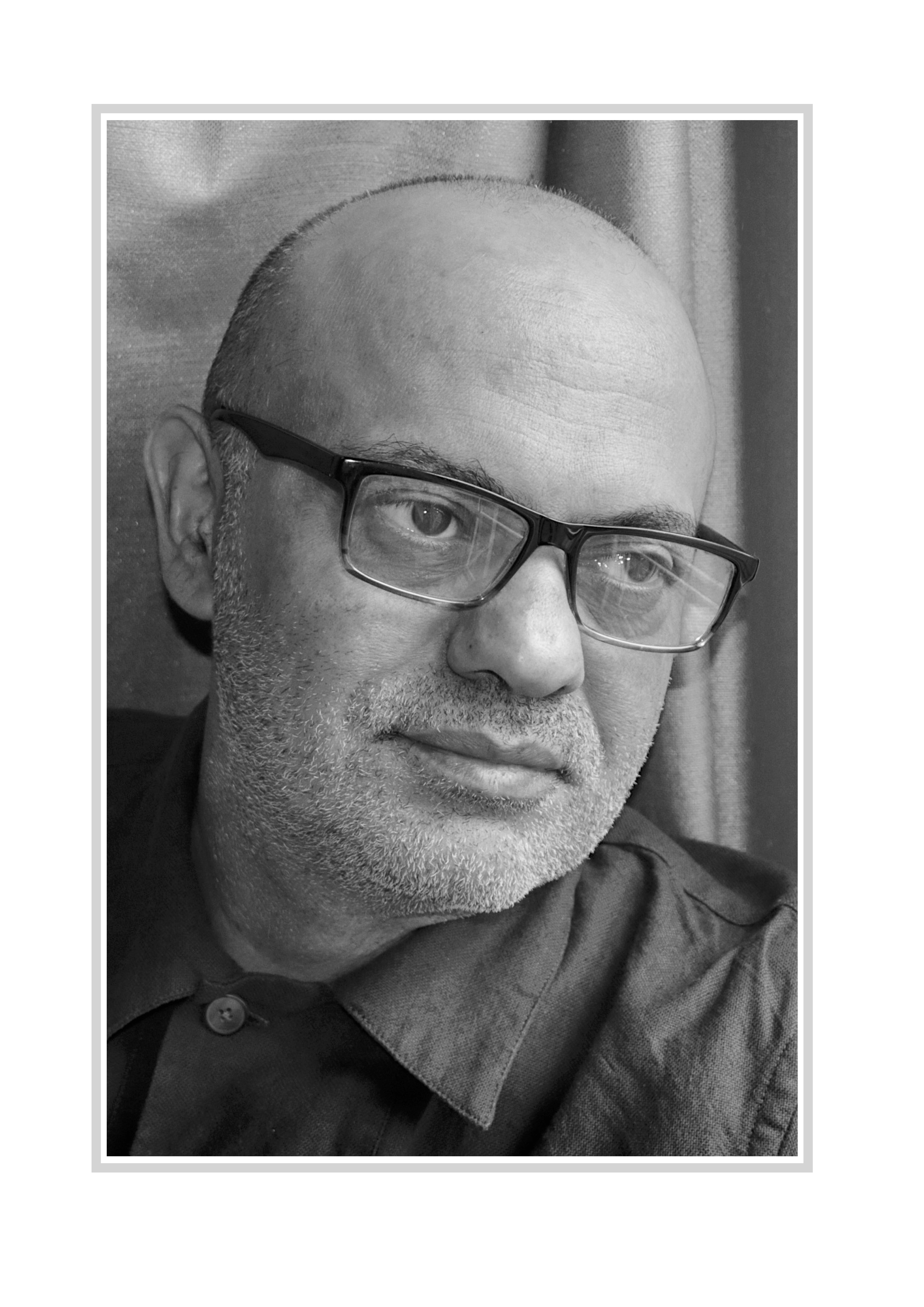
Pippa Goldschmidt lives in Edinburgh and Berlin, and she’s an Honorary Fellow at the Science, Technology and Innovation Studies unit at the University of Edinburgh. Her stories, reviews, essays and poems have been broadcast on BBC Radio 4 and published in ArtReview, Times Literary Supplement, Gutter and Magma.
Her 2024 essay Night Vision (Broken Sleep Books) examines our social and cultural relationship with outer space and is long-listed for the Saltire Book Awards 2024.



Leave a Reply