Interview by Jess Smith
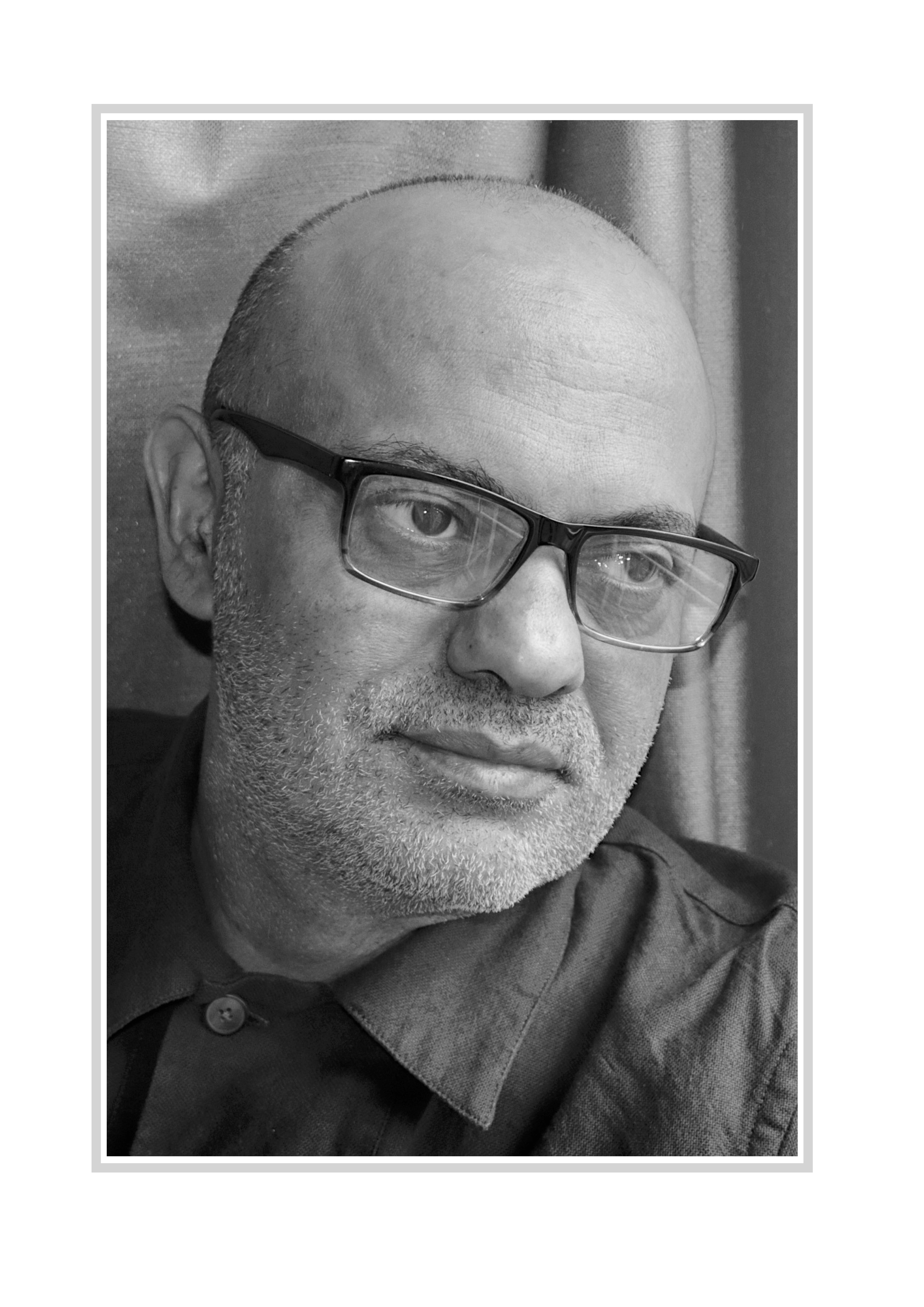
Following on from her review of Michel’s latest book (and first non-fiction publication), The Glasgow Review of Books is delighted to share this interview by Jess Smith with author Michel Faber, in which Michel shares insights and talks about his approach to ‘Listen: On Music, Sound and Us’, favourite moments from his books and the continuing adventures of The Intrepid Blonde.
Glasgow Review of Books (GRB): In the introduction to Listen, you refer to music as your “oldest love” and say “Listen is the book I’ve wanted to write all my life.” What made you decide that now was the time in your life and your career for this book?
Michel Faber (MF): For ages, I had other books to write. Novels are tremendously time-consuming, or at least they were for me. After The Book Of Strange New Things was done, however, the space opened up for me to do non-fiction. I’m glad I waited so long, because if I’d attempted Listen in my thirties, I would’ve still been clinging to the notion that music can be objectively good or bad – a notion I’ve since realized is delusional.
GRB: In the past you’ve written reviews and essays – so, non-fiction isn’t at all new to you but Listen is your first long-form non-fiction work, the first time you’ve spoken to your reader directly, as yourself. How does it feel to write in truly your own voice? Do you find that non-fiction facilitates a different relationship with your reader?
MF: I’m sure each reader has a different relationship with me, just as each listener has a different relationship with music. But Listen has things in common with my fiction, I think. I’m interested in tackling questions that matter. I want people to see the world differently as a result of reading my books.
GRB: Whilst Listen has been mainly categorised as ‘Music Theory’, ‘Music History’, ‘Musical Philosophy’ and the like, I have seen some readers refer to the book as a memoir. Do you consider Listen to be a memoir – and, if so, do you feel that understanding your love for music is somehow important to understanding you as a writer, and indeed as a human being?
MF: At first, I was determined to keep any personal stuff out of the book, because so many music books are exercises in self-aggrandizement on the part of their authors, showing off how cool their taste is and what adventurous lives they’ve led.
So my policy was to keep the reader in the dark about what music I love myself and how I came to love it, so that the focus would be on you, and why you love what you love. But after a while I realized that this coyness wasn’t helping the book. Listen is quite a challenging read, and I think that getting more access to my personal life helps the reader engage. Also, I’m never going to write an autobiography, so Listen is as close as we’ll ever get.
GRB: Reading across your work, I can’t help but notice the importance of character. Your novels and short stories all feel very driven by your characters and their relationships and their unique interiorities, and you treat the people in your stories with a great deal of compassion.
Even in Listen, a book about music, people are really at its heart, and you’re always returning to reflections on subjectivity and humanity. When it comes to writing character, there are all these different schools of thought. Some writers view character as simply a tool at the writer’s disposal, there to be used; other writers talk about their characters as if they are their own people, with their own independent will, and not always within the writer’s control. How would you describe your approach to character?
MF: When some authors talk about their characters “taking over” and having “independent will”, I’m sure they know damn well that these imaginary people have no real agency. There are things it would’ve been wrong for me to make Sugar or Isserley do, but that doesn’t mean I wasn’t wholly in charge of what happened to them. The key word in your question however is “compassion”. I’m not interested in ciphers whose sole function is to advance plot or allow me to show off my beautiful prose. I take humans seriously. They all matter.
GRB: There are so many complex and interesting people in your fiction. Do you have a favourite character you’ve ever written, or a character you still think about?
MF: No, I have favourite moments, favourite interactions between characters. One of them is in The Crimson Petal when Sophie wakes in a wet bed expecting to be punished and Sugar says “Trust me.”

GRB: In Listen, you refer to “prestigious orchestras” and performers of classical music as “nothing more than tribute bands”. This raises some interesting questions about not just music, but also literature and art as a whole, and about notions of originality. Are we all just imitating each other? To what extent do you think art can ever truly be original?
MF: That’s not for me to say. All I know is that when I help out in the sorting room at the back of my local Oxfam bookshop, I see lots of books which were luminously meaningful to people in 1932 or 1966 or 2002 but which nobody wants to read now. They’re no less wise or insightful or well-written than they ever were, but they’ve lost their relevance to the zeitgeist, and readers nowadays need to get those same insights from a fresher crop of writers. The wheel has to be reinvented. The point I was making about classical music is that its core repertoire is not about reinventing the wheel but making replicas of a wheel somebody else made long ago.
GRB: Your novel The Crimson Petal and the White has been described as ‘postmodern’ – a term which often infers the capacity for self-reflexivity, or an openness to multiple potential, equally valid iterations of truth and reality. In today’s ‘post-truth’ media spaces, where things are only either ‘real’ or ‘fake’, how important is it for fiction (and the novel, in particular) to show that multiple, shifting, sometimes contradictory perspectives are not also true, but arguably the only existential truths?
MF: I’d have to talk with you longer to know if we’re really on the same page here. I do think there’s such a thing as truth, which is more valid than the concept of “my truth” that conspiracy theorists and corrupt politicians espouse. People may come up with all sorts of justifications for their actions, reframing them narratively, but their actions are still real-world facts. People lie, steal, murder, sexually abuse partners, neglect children and so on. And they can be brave and selfless and kind and competent.
In The Crimson Petal, William Rackham regards himself as a tragic hero. The reader is unlikely to share that view. Agnes regards Dr Curlew as evil incarnate, whereas we later see him treating her with gentleness and decorum. But he’s either molesting her or he isn’t.
GRB: You also have a poetry collection called Undying: A Love Story, which follows you through your experience with grief and loss. It’s such a beautiful collection, and it’s so honest and raw in its expression it can be quite overwhelming to read at times. You are primarily a prose writer, and in the foreword of Undying, you admit that you typically write poems very slowly – and yet, at that time, you instinctively turned to poems. Why do you think that is? Did poetry do something for you that prose or fiction perhaps couldn’t?
MF: Evidently, yes. I think one of the reasons I avoided prose in dealing with that loss is that I’m a very experienced fiction writer and would’ve been tempted to “shape” and reimagine Eva’s illness and death. Whereas the poetry allowed less scope for that. There was a point, about a year after Eva’s death, when poems were still occurring to me but I felt they were too elegant, not raw enough. So I stopped, for fear of falsifying.
GRB: The writer and academic, Rodge Glass recently made you the subject of his recent book, Michel Faber: The Writer and His Work. Has this book (or some else’s analysis or criticism of your work) identified anything in your writing to you, that you weren’t fully conscious of before? If so, how has it changed your approach to writing – does it make you feel obligated to conform to your own literary traditions, or to resist them?
MF: Rodge’s book is about my fiction and I don’t see myself writing much more fiction. There are some good uncollected short stories like ‘Bye Bye Natalia’ and ‘Slipping’ which may come out in book form one day. I don’t feel obligated to conform to anything, or to resist. I’m just trying to give each thing the care it deserves. Right now, that’s mostly my photography.
GRB: Though you were born and raised elsewhere, you’re considered a writer who is ‘Scottish by formation’ (as per the eligibility criteria for the Macallan Short Story Prize, which you won in 1996). How would you describe your relationship with Scotland, and what influence do you think living here has had on your work?
MF: If ‘Fish’ hadn’t won the Macallan, and if I hadn’t lived the life that inspired Under The Skin, and if Canongate hadn’t been looking for authors who were simultaneously “Scottish” and “international”, I wouldn’t have had the career I’ve subsequently had.
So, in that sense, my quarter-century in Scotland was crucial. But I don’t miss places. I miss people. When I visit Edinburgh, I don’t feel a rush of reconnection with the city. I just look forward to spending time with my friends; the Robinsons and the Gillanders.
GRB: I think one of my favourite parts of Listen is when you say: “I am a sensitive human, vulnerable to despair as I survey the toxic forces that infest our planet [. . . ] As an antidote to all that toxicity, I want to see kind, gentle people doing kind, gentle things. I’m fighting for a hopeful view of my species.”
I mentioned before about the importance of people in your stories, and your compassionate approach to character. I wanted to know if writing such deeply human characters into existence, inventing these moments of genuine connection between your characters (or at least their attempts to connect and understand one another) is part of this “fight” for you? Do you find that writing “kind, gentle people” gives you a more hopeful view of your species?
MF: The bit you quote is from a chapter which examines the way humans fervently want to believe that animals appreciate music, when all the scientific evidence is that they don’t. So it’s quite a dispiriting chapter really. But we can’t help wishing that the world was better. When we stare too long at Ukraine or Gaza or even Westminster, we are vulnerable to despair, and despair doesn’t help anyone.
GRB: Finally, without betraying any important secrets, do you have any projects or writing in the pipeline that our readers should be looking out for?
MF: I have no secrets. I’ve been writing about photography in the magazine Studies In Photography. I had a story in a recent issue of Extra Teeth. I’d like to finish some more of Eva’s unfinished short stories, with the aim of eventually putting out a collection credited to both of us. And I continue to celebrate the Instagram adventures of The Intrepid Blonde.
GRB: Thanks so much for taking the time to answer these questions!
MF: Thanks for asking!

About our interviewer

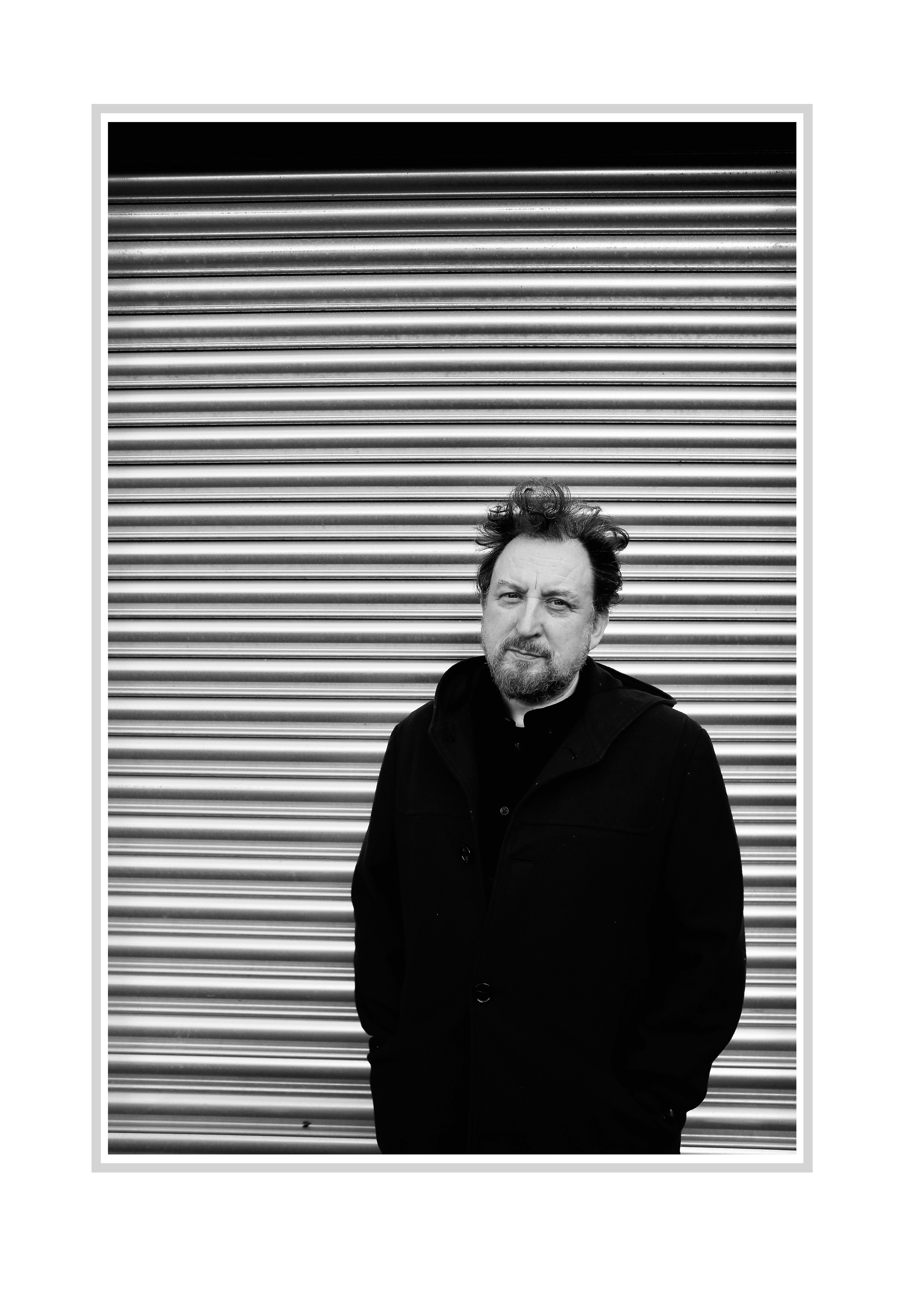
Jess Smith (she/her) is a writer based in Glasgow. Jess graduated from the University of Strathclyde in 2022 with a BA in English Literature and Creative Writing. She has been published in streetcake magazine and Free the Verse, and was runner-up in the UK Film Festival’s 2022 Short Script Competition. Jess primarily writes screenplays and short fiction in a range of different genres, and with a particular interest in themes like class, capitalism, identity, and human connection. She is also the leader of Kelvingrove Writers, a community writing group based in Glasgow’s West End.


Leave a Reply