
By David Kinloch
Pearl
In this dream, my grandmother swims up the salmon’s leap at Pitlochry clad in a faux afghan coat. The soaked fabric makes her look like an otter and she leaps with extraordinary athleticism up the wattery ladder towards the dam. She is in search of a single pearl in a triple necklace which ruptures one famous holiday as we cross the dam en famille and descend towards the car park. No-one has witnessed the pearl’s plunge but it is the only plausible explanation. Henceforth, Granny becomes an aquatic creature, the swish made by the friction of her tights like that of a tail as she thrashes against the current, staring into the pasty eyes of fellow fish in case one should reveal itself to be the missing jewel. Indeed, in a moment of indiscretion, she has admitted that the strings of pearls are essentially made of fish paste. Good quality, she insists, but fish paste.
Pitlochry was always full of high drama. Literally so, for we were regular patrons of the early tented version of the Festival Theatre. In the days when the theatre goers themselves dressed in costumes as extravagant as the performers, I would arrive in my blue velvet jacket, topped by bow-tie while my father stepped out in his Hunting MacKinnon, knees polished for the occasion. This was often Shakespeare, Noel Coward or Terence Rattigan. Adaptations of Agatha Christie were tolerated indulgently.
One time, it was The Tempest. I was sixteen and had never seen the play before. It was a ‘coup de foudre’. But the object of my delight is not so much Ariel’s poetry or Caliban’s grotesquerie as the meeting of the young lovers Miranda and Ferdinand. That year of revelation I fall headlong in love with Ferdinand, or rather with the young actor who plays the part. The moment the two characters meet for the first time in the play is one of wonder: “I might call him/A thing divine, for nothing natural /I ever saw so noble,” remarks Miranda of Ferdinand. I have to agree and the play’s director – as if he has my adolescent soul on pulleys – engineers everyone’s afflatus by pairing the encounter with a crucial passage from the third of Richard Strauss’s Four Last Songs entitled ‘On Going to Sleep’. As the exquisite crescendo mounts on its ladder of sound I am in a waking dream, awake to the brown pools of Ferdinand’s eyes, in complete agreement with Miranda that ‘there’s nothing ill can dwell in such a temple’.
For days afterwards I spend much time ‘cooling of the air with sighs in an odd angle’ of our holiday cottage until eventually I announce to Mum and Dad that I’ll come north again in the autumn on my own to see a final performance of the play before it closes. It is very important to me that I do this on my own. My father, however, who is an amateur thesp and delighted at this unexpected theatrical passion on the part of his eldest son, insists he will come as well, to witness the witnessing as it were. I’m mortified but agree on condition that I will be allowed to take the train there on my own and return on my own. Dad is mystified. The event takes place. Ferdinand conquers again.
Now, as I look into ‘the dark backward and abysm of time’, it is pearls such as these that gleam from the depths. The pearls ‘that were my father’s eyes’, he who so shortly afterwards sunk ‘full fathom five’. As Ferdinand’s arpeggios ascended so Dad slipped back down the salmon’s leap, uncomprehending, banished like an unwanted King or lover, his offer of a lift back to Glasgow haughtily refused. Today, still, I would give the pearl of any price to have taken that journey with you. I would tell you about Ferdinand’s eyes, of my longing to be hugged by him as by a big brother and as I longed to be hugged by you as you were never able to do. Granny’s pearl was never found. But later, I discovered that the Maharaja of Mysore, whose patronage made the first performance of Strauss’s Four Last Songs possible, rarely appeared in public without a string of pearls.
David Kinloch’s latest collection Greengown: New and Selected Poems is available now from Carcanet and was reviewed in The Glasgow Review of Books by Mandy Haggith. The following is an excerpt from Mandy’s review.
We are welcomed into this extraordinary collection of poems by ‘Dustie-Fute’, a nomadic misfit spirit, part clown and part rebel sage, who journeys between and among communities, bringing kindness and insight from marginal and unexpected places, “veering between dilettantism and dynamite”.
He is introduced in the opening prose poem, which sets out the many dimensions of David Kinloch’s poetic exploration: from the medieval era to the present day; from the quotidian live culture of a yoghurt on a window ledge to the intellectual dustiness of old Scots books; from Paris (and beyond) to Forfar; from freedom to prostitution, and ultimately to the awful collision of youth and terminal disease.

Bison
Two sets of images: a number of pigs’ heads with balloons of homophobic abuse emerging from their snouts; drawn with talent by a person who has screwed all his hatred of ‘faggots’ into the fine point of his nib. Those frescoes, created in the early 1980s, were located in the basement toilets of Glasgow University and sketched on the walls and wooden doors that shielded tiled cubicles as large and lonely as a Pharaoh’s tomb. They were designed to terrify and ward off the no doubt craven spirits of solitary gay students passing through. Cracks in the tiles had been ingeniously deployed to help form the grimaces and teeth of the piggy faces. You could hear faucets dripping and the occasional shuffling of distant feet.
And then, further off in space and time, there is the head and rump of a bison etched in ochre and charcoal, just one of the many animal drawings that illuminate the walls and ceilings of the prehistoric Altamira caves in northern Spain. Such is the profusion of images that it is as if stone itself is bison and bull and deer. It curves down towards the spectator like the shoulders of the animals themselves. Even in the darkness it seems that our ancestors needed proximity to the fellow creatures that sustained them and which were given with abundance by day and by sunlight. There is something more than celebration or worship here: a claiming of kinship, of family, of amazed love. So the stone offers us bison which emerge from and make use of its natural contours and fracturings, drawing the very earth itself into the process of composition, asserting an equality of inspiration between artist and nature.
Both sets of images rhymed awkwardly in my undergraduate imagination during my first year at Glasgow University in 1982. From those toilets deep in the bowels of the earth I would trudge up a turreted stairway to visit writer-in-residence Alasdair Gray in his eyrie. There, I would inflict epic poems and unshort stories on the poor man with a frequency that elicited trademark Gray shrieks of ear-piercing pitch. He tried valiantly to erase every poeticism in my poetry until they became catalogues of plain statements and the only piece of my writing he confessed to actually liking was a bizarre story whose sentences he fixed before wondering aloud what it all meant. He had no idea who I was and neither had I.
Perhaps it was this shared bewilderment that attracted me to the prehistoric bison as a subject for poetry that year, an image apparently isolated from my post-adolescent angst. Alasdair focussed on just two stanzas in which I described the image in detail. ‘This is your poem’, he said. ‘These lines are accurate’. Subsequently they made it into Glasgow University Magazine as my first ever published poem.
But it strikes me now that they were ghosted by those obscenely smudged toilet faces; faces which emerged from a damaging mixture of shame and defiance. In his essay on the Lascaux caves, the Polish poet, Zbigniew Herbert, speculates about why those early artists focused almost exclusively on the depiction of animals and evokes a refusal of their own human difference which is sharpened to the point of pathos in the only image of a human figure to be found at Lascaux. This takes the form of a simple stick figure, complete with erect phallus and a head shaped like a bird. Herbert suggests there is shame here and a longing for a communion with the animal that has been severed by evolution.
Alasdair’s focus on the accurate description of the bison was typical of him and a quality I now find reflected in aspects of his own artwork; particularly in his hyper-realistic portraits of friends and family where you can see the stolid, everyday normality of individuals absolutely present to their moment in time and place. Strongly drawn men, especially strong women. No stick figures.
The world whose origins I first uncovered in those wonderful, far-off days was a world whose art was ‘at once distinct and vanishing’ as Herbert described it. And it was that quality of evanishing, poised between excitement and fear, that caught my attention most acutely and seems to have become a kind of unacknowledged — until now — touchstone for the kind of poems I would try to write. It has been a process over the years of learning how to write more quietly so we can more easily hear the thrumming of the bison’s hooves even when they are sunk in the deepest, darkest caverns; a quietness alert to the distortions of fear and misrecognition, where the fragrance of the bison’s distant grasses, the sudden onrush of their passing through a shared world, may just be seized, at least for the duration, the cadence of a stanza. Every poem I have ever tried to write since then has a small bison nesting at its heart, as delicate as the briefest speug, as hopeful as the heart itself.
About the author

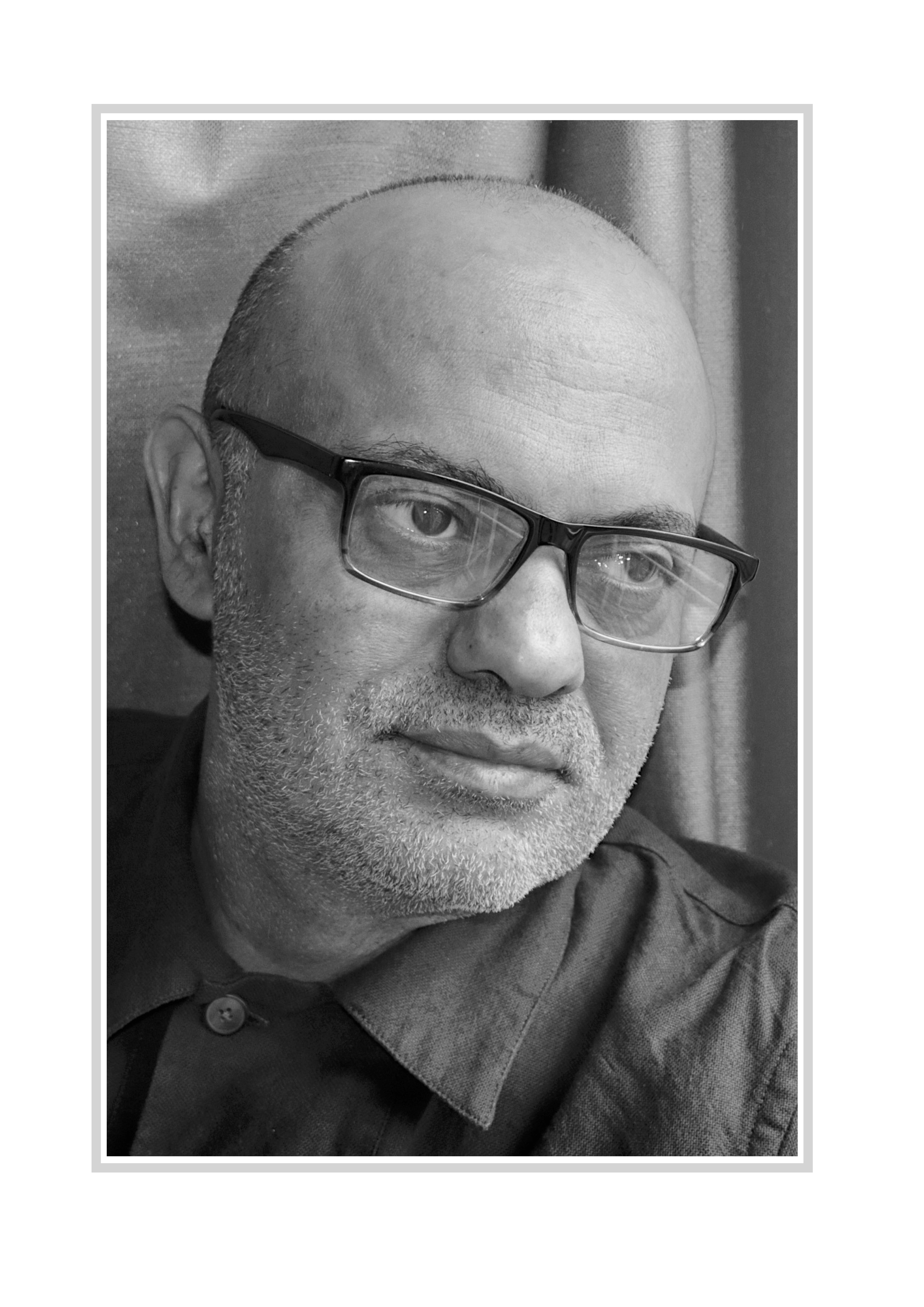
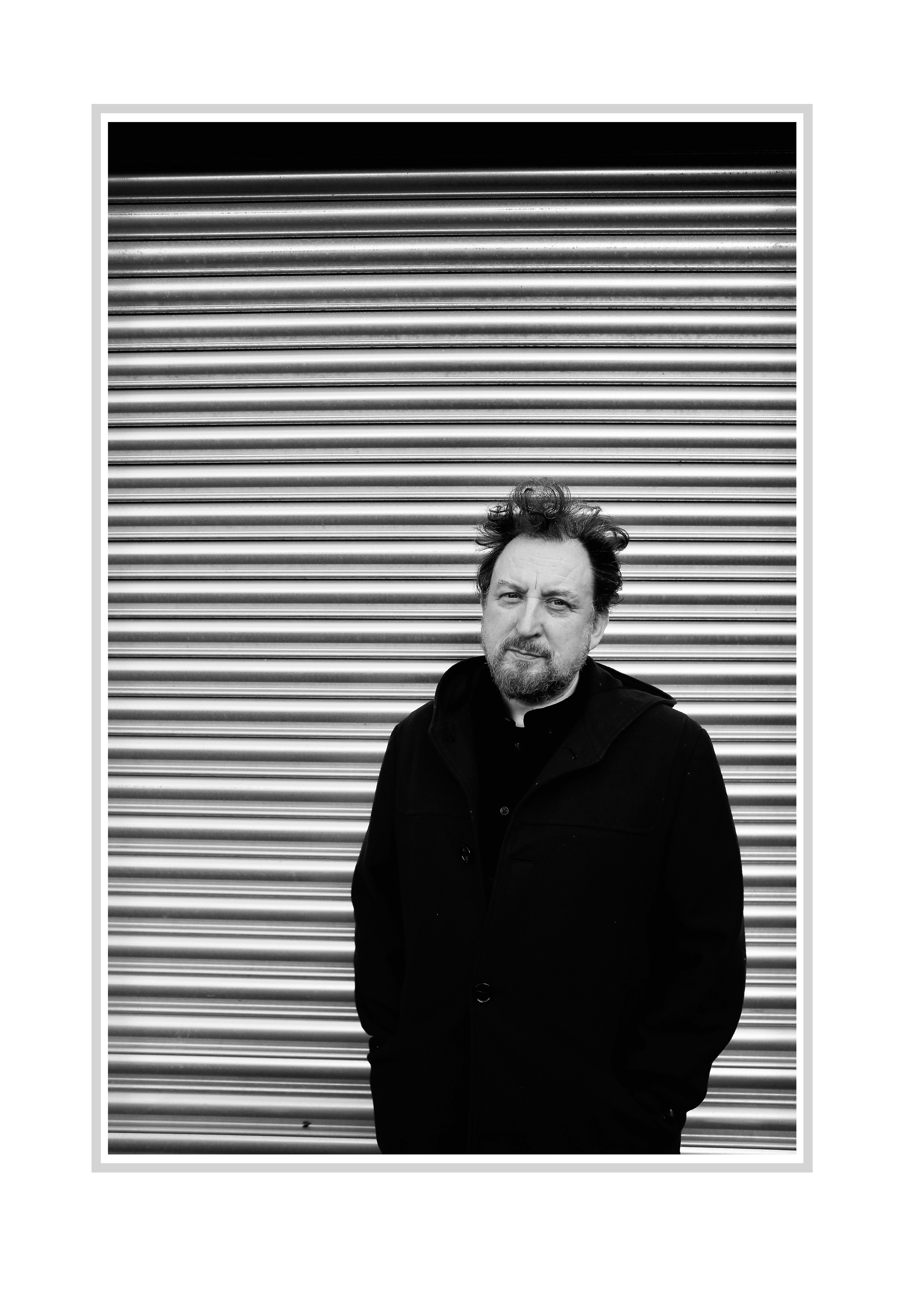
David Kinloch is a poet based in Glasgow. He has published six collections of poetry with Carcanet and a couple of pamphlets. He is Professor Emeritus of Poetry at the University of Strathclyde and the former chair of The Edwin Morgan Trust which he helped to set up in 2012. In 2022, he received a Cholmondeley Award from the Society of Authors in recognition of his work to date.


Leave a Reply