By Jim Ferguson
Note by the Editor: The Glasgow Review of Books’ is delighted to share this, our inaugural Burns Essay, published on the day dedicated to Burns’ legacy and memory – and also in the year (2024) that marks the 250th anniversary of the death of the ‘Weaver Poet’ Robert Tannahill (an anniversary that deserves to be marked more significantly than literary Scotland seems presently to allow for).
It is a long piece. While, ordinarily, we try to keep our content to a manageable length for our readers’ – on this occasion, we believe this essay’s substantial wordcount is justified.
Partly because length (or, perhaps, more appropriately, scale) is, to an extent, one of the subjects of Jim’s essay. Scale in the sense that Burns’ legacy (and the existing canon of writing about Burns) exists in vastly greater scale to that of any other Scottish poet.
If Scottish poetry can be imagined as a town – then Burns’ contribution to the architecture of that town overtops all else, at a scale that is imaginable but (apparently) illimitable. In terms of this metaphor, Burns is simultaneously monolith, monument, cathedral, factory and treasury.
But, how (and by whom) did this monolith come to be built, and grow to such scale? Who benefits? And what else, in terms of Scottish poetry’s architecture and population is obscured behind, or beneath the long shadow cast by the monolithic Burns?
All this (and much more) is addressed in the essay that follows. we hope our readers will find in it, things of interest and also that it will stand as a useful, and enduring contribution to the canon of writing on Scotland’s national bard.

In an address to a National Poetry Festival at Washington D.C. in 1962 the English poet and critic Herbert Read remarked:
It is one of the conveniences of history, or perhaps one of the limitations of human vision when we look down its long perspective, that to each nation is given one towering archetypal figure, one representative poet. Greece has its Homer and Rome its Vergil; England its Shakespeare and France its Racine; Italy its Dante and Germany its Goethe.
Herbert Read, “American Bards and British Reviewers,” in Selected Writings, London, 1963, p. 198.
In Scottish poetry we have the archetypal figure of Robert Burns. The existence of this singular towering literary archetype is both a blessing and a curse; providing in the present a model and a measure for poets, before and after Burns.
For a small nation Scotland has produced numerous writers of international standing and has a fabulously deep, varied and rich literary culture, arguably dating back for at least a thousand years.
The role of such ‘representative’ poetic archetypes is complex and multi-layered no matter in what culture they arise: the relationship that exists in the imagination between the Scots and Robert Burns is riven with complexities.
The full-blooded nature of the Calvinist revolution that occurred in Scotland makes matters still more complex, an issue explored by James Hogg in his 1824 novel The Private Memoirs and Confessions of a Justified Sinner, one the greatest works of art ever to come out of Scotland. At the time of publication this novel received rather negative notices and it was not perhaps until the second half of the twentieth century that its true genius began to be appreciated.
Hogg’s novel has little direct bearing on the writing of Paisley poet Robert Tannahill, but a common theme can be detected in the work of both writers in their rejection of a peculiarly Scottish-Protestant version of the theology of the elect and predestination. Such theological matters are also addressed in the work of Burns, yet the fact that Burns is seen today as the National Poet of Scotland and the Bard of the Masonic Lodge1 exemplifies the complexity of how we are to engage imaginatively with Burns the literary artist now.
Equally confusing was the adoption of Burns by the former Soviet Union as a symbol of a great anti-capitalist, humanist poet. Even though the Union of Soviet Socialist Republics no longer exists, the mind and the imagination are somehow affected by this historical fact and by the reciprocal identification of twentieth century Scottish Communists with both the Soviet Union and Burns. The first Scottish Communist member of the British parliament, Willie Gallacher, used the Burns poem “Holy Willie’s Prayer” to criticise one of the other candidates standing at the 1922 general election in Dundee.2
Another layer of complexity deriving from Burns’s archetypal status lies in Walter Benjamin’s idea of the posthumous creation of the historical, where the link with the past is placed firmly in the realm of the here and now; with every other Scottish poet being seen in relation to Burns.
Benjamin’s idea of posthumous creation can also help in understanding the social need for the creation of archetypes. This posthumous creation being political, social and ideological within a present assessment of causality for events which have occurred, but are now remembrances, in order to give the present a solidity which exists in the form of a mirage of social consciousness and stability that derives from a convenience of history, through which we carry a simplified version of the past.
In parallel with this, Burns can be seen as “foundational”3 in the sense Seamus Deane considers Edmund Burke’s text Reflections on the French Revolution a pivotal one, whereby texts and events before and after Reflections can be seen as relating to it. However, this notion is taken a stage further with regard to Burns.
It is not just his textual output that is “foundational”, but also his having lived a life in the Scottish political context as a nation without any real authority over the State which governs Scotland.
This makes for a somewhat shaky foundation and Burns the archetype serves to fill that gap of statelessness and lack of authority; perhaps indicating the roots of cultural inferiorisation and the so-called ‘Scottish Cringe’ mentality.
The lives of other poets, before, after and contemporaneous with Burns can be, and are, seen to connect with various idealised versions of the archetypal Scottish Bard: the political Burns, Burns the bevvy merchant, Burns the radical, Burns the Mason, Burns the progressive, Burns the Protestant, Burns the dialect poet, Burns the revolutionary, Burns the womaniser, Burns the Conservative… Burns the —–? [FILL IN THE BLANK].
It is not just that Burns happens to have lived at what seems to us now a great historical turning point in international politics, which saw American independence and the French revolution (and which much of the British Establishment including Burke recognised and resisted), but that Burns’ opinions, thought processes, deployment of poetic techniques, sex life and even the plaster-cast of his cranium, still have currency which is potent within the Scots as a tribe, regardless of how fragmented and artificial that tribe might be.
Indeed, Burns is now a man of so many sides that if one looks hard enough it is possible to find a fetish for each and every side. Within the academy can be found “Robert Fergusson’s Robert Burns”4 and “MacDiarmid’s Burns”5. These admirably illustrate the idea of Rabbie as “foundational” figure, with Fergusson being before Burns and MacDiarmid after. Burns the archetype takes shape.
Robert Crawford’s “Robert Fergusson’s Robert Burns” informs us of the fetishes before the Burnsian fetish, in his examination of the anatomy of that eighteenth-century institution the Scottish men’s club, particularly “the Beggar’s Benison of Anstruther, later transplanted to Edinburgh.”6
While Burns remains powerful, potent and “foundational” in Scottish literature and life, the rhizome7 of fetishism which houses the many versions of Burns must give cause for concern as to Scotland’s cultural health. Although this is a rhizome through which critics and academicians appear to travel freely from one Burns to another, we are ultimately left with many versions of just one man, Burns.
That being said, from a relativist position many different versions of the Bard are perhaps better than just the one. However, from the viewpoint of cultural plurality as a strength, many different actual poets in a more nuanced and detailed historical narrative, are healthier and more vibrantly concrete, than the one archetypal poet, regardless of how flexible and many-sided that archetype might be.
In his criticism of Shelley8, T. S. Eliot found his political views a barrier to an appreciation of the poetry. Eliot found it impossible not to be irritated by Shelley’s writing regardless of its literary qualities because (for Eliot) the opinions in the poetry obscured the art. Eliot’s view is a manifestation of the common-sensical notion that radicalism is youthful folly and that people mellow as they mature.
He considered Shelley’s politics to be those of adolescence, though one can equally point to the adolescent mind-set of Eliot – a man unable to put his own politics to one side in order to enter into an encounter with Shelley the artist on open, equal, terms across time and across the page.
From Eliot’s perspective, there are timeless literary and aesthetic values, not socially or historically based, to which an elite have access. Thus for Eliot, Shelley’s aesthetic did not embody the right values or wasn’t elitist enough. Terry Eagleton observed, “‘Value’ is a transitive term: it means whatever is valued by certain people in certain situations, according to particular criteria in the light of given purposes.”9
F. R. Leavis noted Mr Eliot’s involvement in a similar process with regard to “Milton’s dislodgement” from the canon around 193010. Eliot devalued Shelley in an act of politically motivated criticism, in the same way that supporters of the Conservative Burns might devalue ‘Burns the radical’, or supporters of the Scottish Nationalist Burns might devalue ‘Burns the British Unionist’.11
Culture is everything that has been created, built, learned, conquered by man in the course of his entire history, in distinction from what nature has given, including the natural history of man himself as a species of animal.
Leon Trotsky, On Literature and Art, Ed. Paul N. Siegal, New York, 1970, p.83.
Culture is a social phenomenon. Just because of this, language, as the organ of intercourse between men, is its most important instrument. The culture of language itself is the most important condition for the growth of all branches of culture, especially science and art.
Ibid. pp. 87-88
Culture is subject to the action of time; it is dynamic not static. Given that culture is a function of time, so art is not a unity nor is beauty an absolute value.12
In order to deal with this problem satisfactorily in the context of poetry, a reader must apply two contradictory processes that have to occur simultaneously. On the one hand, all of history has to be ignored and there has to be a personal engagement with the words on the page, whereby all that exists is the encounter with the artist in the imagination of the reader.
Yet on the other hand, without some knowledge of the history and society of the period in which the artist lived, the reader will only pick up fragments of the meaning the artist intended. The question which then arises is whether the artist’s intention really has any bearing on the experience of a reader? The answer to that question must be (contrarily enough), both ‘yes’ and ‘no’.
Even if a reader knows nothing of the time period in which the artist lived, by encountering a work of literary art something about the time will be communicated through the art itself. (The reader also brings their own intelligence and life experience to the text, so it is about more than authorial intentions.)
This simultaneous yes/no answer points to a reality that was understood quite simply in classical philosophy as thesis, antithesis and synthesis – or what we understand from Hegel as part of a dialectical process. There is a perceived bi-polarity between formalist and historicist methodologies regarding how people understand and interact with art – yet both are cultural-historical products brought into being by particular human collectives over time.

⎯ There is a common saying among musicians which describes the emotional responses evoked by music in major keys as opposed to minor: major glad, minor sad. Songs in major keys are generally supposed to be happy and uplifting, with those in minor keys engendering something of the maudlin.
⎯ Consider the congruencies of all of human knowledge occupying rhizones, sharing edges yet occupying a space in which they can function either discreetly or with infinite capacity for interaction. Inversion of that musical rule of thumb can be useful with regard to major and minor writers where literary history is concerned. This can also be applied in cultural theory with reference to the centre and the periphery, colonist and the colonised. In literary criticism to the canonical and non-canonical. By finding the activation energy to cause a reversal of these polarities another model of critical practice can suggest itself.
⎯ Take, specifically, congruencies between cultural criticism, literary criticism, history and the lives of artists. These areas of knowledge occupy congruent three-dimensional rhizones, and the rhizones also have the fourth dimension of time embedded within them which they simultaneously occupy. Assume the historical moment becomes “historical posthumously,” (the presence of intelligence or human mind) “as it were, through events that may be separated from it by thousands of years.” History is not linear but a “constellation” of relationships, between one’s present and a previously existing present establishing “a conception of the present as the ‘time of now’ which is shot through with chips of Messianic time.”
⎯ Time is central to history, to music and to the velocity of light in humanity’s entropic perception. Velocity is a vector and has full dimensionality in common with the rhizone. If velocity is distance travelled per second, the time component of velocity is the second. However, time is not of itself constant, therefore if velocity is constant then mass becomes variable violating the Law of Conservation of Matter, or alternatively if mass remains constant then the Law of Conservation of Energy becomes untenable. Where energy is unstable something must shift, change, something must alter state. Time is non-linear therefore non-presently-existing-time has a variable relationship with the now. A relationship which is, however, determined by the values of the now through the input of human energy; effort, labour-power, thought-power, work and will.
⎯ Every congruent edge is a place of disruption and change.
⎯ The rhizone grid is indefinite and infinite geometrically, existing in and saturated by space-time: moving randomly, unpredictably, it can only be comprehensible and apprehended as probability or a matter of probabilities.
⎯ The closer one approaches to the centre of the rhizone the closer one comes to a present that truly previously existed. All around it are various versions: the version encountered depends on the chance moment of where one happens to be.
⎯ As containers of energy it is possible for people to impact on the random nature of rhizones and the rhizone grid.
Congratulations if you got this far and are still reading!
The real as experience is not the same thing as the real as fact, though we also experience facts. It can be posited that such facts have an external existence in some way independent of human consciousness; so, to which of these therefore does one give the greater significance?
The real as experience is more violently over-powering psychologically yet the real as fact, or collections of facts, remains, stubbornly rooted in the external world as experienced when the external world is entered by the senses, therefore as phenomena.
The experience of facts as sense data allows one to consciously manipulate them by faculty of reason into a picture and story of life that appears to us as common sense in the everyday.
Where facts are difficult or appear irrational there is often a movement in human consciousness towards the mythical, the numinous, the archetypal and the mystical, or a retreat into silence and self-destruction. Such a retreat being pertinent for many poets including William Cowper and Tannahill, as well being the birthplace of German romanticism:
For the literary generation that matures in the 1790s – [Ludwig] Tieck, [Wilhelm] Wackenroder, Novalis – life is a dream, theatre or miracle. Thus the Romantic mentality is not, it seems, made out of politics [. . . ] More probably it is born from social experience, out of unemployment, frustration and rejection of the outside world.
Marilyn Butler, Romantics, Rebels and Reactionaries, Oxford, 1981, p. 74.
There is a certain necessity to be aware that these questions exist – though it is more the work of philosophers and others to answer them, than it is the task of literary artists. Any biographical study of any artist which ignores the problems of the relationships between art, history and society, time and temperament – and does not put these phenomena under some kind of scrutiny – has be less than honest.
Works of art cannot exist without a collective or community engagement with the painting, poem, novel or whatever form the work of art happens to take. That is, a work of art takes on a social meaning. It has meaning for people beyond its individual creator and this in its fully expanded form opens up the possibility, or likelihood, of an artist becoming an archetype.
An archetype is not a person who happens to be or have been an artist responsible for the creation of a body of work. It is in the societal response to the artist that the archetype takes shape as a social, political, psychological and cultural construct: a question of reception and representation.
In this sense Robert Burns and Shakespeare cannot be held responsible for what has happened regarding responses to their work after the fact. It is a case, as Samuel Beckett says in Not I, of “Out into this world [. . . ] no sooner had he buttoned up his breeches”13 and the work is gone to wander where it will. The artist has built the vessel but whither it will travel and where it might land cannot be known.
Indeed, the special significance of a true work of art resides in the fact that it has escaped from the limitations of the personal and has soared beyond the personal concerns of its creator.
Carl G. Jung, “On the Relation of Analytical Psychology to Poetry” in The Spirit in Man, Art and Literature, London, 1984, p. 71.
Thus, the phenomenon of the archetype is seen as a socially necessary expression in response to the needs of individuals and society overall. In relation to Eliot’s criticism of Shelley, an appreciation of the time in which Shelley lived can do no harm to one’s understanding of the poetry, quite the contrary.
Nevertheless, with the problem of temporality, one is further confronted with moral questions and questions of human nature which “have their roots in deeper structures of belief”13 evolving more slowly than the apparently everyday chains of historical events: chains that include everything from the radical and profound to the trivial and mundane.
For example, most presently living Scots do not much care that the Darien Scheme was a disaster but when told of the suffering and death of those unlucky enough to be aboard those ill-fated ships, an emotional response of sympathy can be evoked; and from there, other moral considerations regarding the motives for human action can come into play.
The problems of time and history are significant for everyone whether or not we consciously comprehend them, and sometimes we are only consciously aware in retrospect. This is rich territory for artists, even where artists do not consciously engage with these concepts directly14.
Thus one posits that:
- people make art but not in times of their own choosing;
- people are determined by circumstances but those circumstances are human and therefore determined by people themselves;
- creating art and experiencing art in any form is action, to be in the ‘audience’ or a reader is to be active, art is a sensuous activity of sentient human beings, living and thinking bodies: who are subject to the first two postulates, as well as numerous environmental contingencies such as the weather, availability of technologies, accidents of birth and death15.
This is a judgement of what might be used as the basis of constructing a useful methodology in relation to studying art as theory and practice. It is also a recognition that:
…‘thinking’ and ‘imagining’ are from the beginning social processes (of course including that capacity for ‘internalization’ which is a necessary part of any social process between actual individuals) and that they become accessible only in unarguably physical and material ways: in voices, in sounds made by instruments, in penned or printed writing, in arranged pigments on canvas or plaster, in worked marble or stone. To exclude these material social processes from the material social process is the same error as to reduce all material social processes to mere technical means for some other abstracted ‘life’.
Raymond William, Marxism and Literature, Oxford, 1977, p.62.

The influence of Robert Burns cannot be ignored with regard to the work of Robert Tannahill but neither can that of Cowper, Allan Ramsay, Robert Fergusson, Alexander Pope, John Barbour, Scott of Amwell and others.
In taking the influence of these other writers into account, “the limitations of human vision” remarked upon by Herbert Read at the beginning of this essay become expanded, to enable a viewpoint which moves beyond the archetypal towards a more particular and concrete socio-historical view – resulting in an apprehension of human creativity which has both depth and generality. In the words of Marylin Butler:
Literature, like all art, like language, is a collective activity, powerfully conditioned by social forces, what needs to be and what may be said in a particular community at a given time.
Marylin Butler, Romantics Rebels and Reactionaries, Oxford, 1981, p. 9.
We know we have agency, sometimes we think we know what for, but we don’t know why.
The multiplicity of voices and of artistic activity in Scotland today is very positive and “immensely rich.”16 It arguably parallels the great outpouring of European literary activity in the late eighteenth century. The archetypal Burns has both positive and negative influences with regard to the now – positive in that it arouses curiosity and the urge to inquire but negative in its reinforcement of archaic forms, political appropriation and an ill-understood romanticism.
For Tannahill and other Lowland Scottish poets writing at the end at the eighteenth century, the problem of archaic form is not great as such, the majority forms in their poetics were, to a large extent, contemporary for them.
Today, poetics is wider in scope, more subtle and nuanced to the extent that formal techniques in themselves can contain elaborate, extra-semantic visual meaning beyond the face value of the words. Engagement with pre-existing archaic forms is no longer seen as necessary in the making of poetry. This makes political appropriation of much contemporary poetry more difficult.
Yet there remains the fetishization of Burns, which morphs him as a misty romantic hero and an adjunct of tourism; part of a culture-industry geared to turning a profit from the dead which can be highly nauseating for writers presently alive. The poets of today are left like Walter Benjamin’s famous angel, looking at the catastrophe of the past while being blown backwards into the future.17
It is a miracle Scotland has any poets at all, as the precarious nature of writing poetry (financially, psychologically and socially), makes being a poet fraught with difficulties. If you aren’t making any money you must be rubbish – if you are making money, you must have sold out your Scottish identity, your politics, or prostituted yourself in some other way.
Where do you start with the self-censorship? Writing (in the actual creative moment) is, by its nature, a solitary activity – one does it in one’s head and writers must find ways to deal with that aspect of the kind of work they do. These considerations are not confined to poets and writers of today, certainly since at least the time of Abiezer Coppe and his Fiery Flying Roll; publicly and privately, political, religious and social pressures are present inducing poets to tread fine lines or take sides.
The possibility of earning a living from writing what the market ‘wants’ as opposed to writing what one seriously and honestly wants to express is a real and serious contradiction that many artists have had to, do, and will have to, contend with. A question of what public taste will tolerate and what will sell, of what will make life easier or more difficult. The case of Nigerian writer Ken Saro-Wiwa hammers home this point as an issue of life or death.19
Under the shadow of Burkean conservatism, poet Alexander Wilson left Paisley for America in the early 1790s, Robert Tannahill chose to tread the fine line and tried to avoid causing offence. He ended by killing himself in 1810. Perhaps there is a metaphor for all of this in James Kelman’s play, Hardie and Baird.
I was acquainted with three poets from Edinburgh, Sandy Craigie, Paul Reekie and Graham Brodie. They all died tragically young, they all lived near each other and knew each other, they all had difficulties with the anti-social nature of late 20th century capitalism. I think their deaths were to an extent related to the low esteem they felt their work as poets was held in in contemporary Scottish society, and I wonder if there is not some way to nurture and care for the artists among us who are vulnerable in these and other ways. Indeed for all of us, artists or not.
Never the less, the deaths of these three poets have always troubled me because I think there were certain social factors in their early deaths, factors that perhaps something could and should have been done about. But I don’t know exactly what, and I don’t know exactly how things could have turned out differently. Sadly I don’t hold out too much hope of capitalism reforming itself for the greater good of poets. Look how slow many corporations and governments are to take climate change on board.
The public imagination can only absorb so much but there is a job to be done which involves giving value to the past in ways which improve life in the present. Messages in literary form from the past should not be so easily ignored and writers so easily forgotten.
That work of recovery and memory, enacted by the archivist, critic and historian has enormous potential: it can liberate Burns the archetype by popularising other poetic voices such as Tannahill, Alexander Wilson, William Thom, Marion Bernstein;20 and leave us with a ‘Robert Burns’, who is a human being who happened to be poet. A man connected to communities, to family and localities: one poet amongst many others.
Starting from your own geographical location and surveying the world of literature around you might be a more productive use of time than taking the word of who or whatever cultural authority suggests exists as a canon of literary aesthetic/economic value. A different method of navigation through the texts of the past is required in which people get to make up their own minds and validate their own experiences.
If they are from around Dundee and have a taste for William McGonagall so be it. While some individuals will have snobbish aesthetic objections á la T.S. Eliot, it is at least another way of letting folk in, of letting a process of learning and discovery get underway separate from any Burnsian cultism which as yet haunts literature in Scotland. A little bit of digging will bring to light less talked about talents and encourage new growth, the way the actual Burns did when alive.
If there is one thing that can be said of Burns, it is that he was an innovator, modern for his time. Rather than go down the road of Enlightenment anglicisation he saw the vitality and energy that came from writing in his own local, ‘marginal’ voice and in using whatever forms he saw fit to make that work. He had no fear of using Scottish and English words and syntax in proximity, nor of rewriting old songs to suit his taste. A brief glance at The Jolly Beggars is sufficient to discover the playfulness and relish with which he uses bawdy musical language with joy and verve.
Another somewhat positive aspect of the archetyping of such writers as Goethe and Burns is that they can transcend narrow nationalism, by providing a clear point of entry into their cultural base and history. In crossing national and ethnic boundaries they can be beacons of hope against war and racism. They make a locality and (by extension) a nation for ‘real’ folk who might be reading about it from thousands of miles and hundreds of years distant, opening out to world the milieu from which they sprung.
To truly thrive artists require at least three conditions: appreciation, economic independence and relative freedom of expression or liberty, conditions similar to those described by Alexander Brodie as being necessary for ‘Enlightenment’.20
During Burns’s and Robert Tannahill’s lifetime, freedom of expression was not a universally applied concept (and neither is it now). If it applied anywhere it was in Revolutionary America, though not if you were indigenous or black, or indeed, almost anyone other than a white European male:
We hold these truths to be self-evident, that all men are created equal, that they are endowed by their Creator with certain unalienable Rights, that among these are Life, Liberty and the pursuit of Happiness.–That to secure these rights, Governments are instituted among Men, deriving their just powers from the consent of the governed, –That whenever any Form of Government becomes destructive of these ends, it is the Right of the People to alter or to abolish it, and to institute new Government, laying its foundation on such principles and organizing its powers in such form, as to them shall seem most likely to effect their Safety and Happiness.
Thomas Jefferson, American Declaration of Independence, 1776.
Some people were more free than others to express their opinions. In Britain the kings George III and George (Regent) IV were ultimately illiberal. It was certainly difficult, though not impossible, during the Napoleonic Wars to express political opposition to the war with France. Expressing opposition to that war became markedly more difficult after the failure of the Peace of Amiens in May 1803.
If war and inhumanity are one side of human nature then the other side is the tendency to sociability and mutual aid. For both Burns and Tannahill, this dichotomy of human nature was as real and vital as it is for people today. And we now have the added burden of destructive tools infinitely more powerful than those to hand in the late eighteenth and early nineteenth centuries.
The encounter with this dichotomy – sociability and mutual aid on one the one hand, versus, war and conflict on the other, took Burns and Tannahill beyond ‘my country right or wrong’21 towards concepts which are central to most human beings regardless of where they are from. Questions of how to live life in peace and harmony with one’s neighbours and how to achieve that without compromising one’s own liberty are concerns embedded within the work of both men.
Both writers present ideas of equality through engagement with local themes and characters. Burns does so in “Twa Dugs”, “To A Louse” and numerous other poems, as does Tannahill in “The Trifler’s Sabbath Day,” “The Negro Girl” and “The Poor Bowlman’s Remonstrance”.

War and conflict contain complex problems with historical, political and psychological inter-relations: the psychological and economic propensities for war, while appearing natural, present major problems for humanity especially in relation to the sensibilities of those in positions of power.
In our ‘democratic’ capitalist societies, as in most other societies, people are very much at the mercy of the sensibilities of leaders. Political leaders and business elites have the ability to manufacture opinion in the same way the business folk manufacture demand for many of the largely useless products from which they make massive profits.
For this reason there is, perhaps, little shame in making art that has a propagandist (or, counter-propagandist) component. If the work is good and authentic, it will live beyond its immediately practical propaganda moment: undergoing a transformation in a new present into something suffused with the values of any time of now.
With regard to a tradition of Presbyterian politico-philosophical discourses from the Reformation to the 1790s, which has a large Scottish component, Liam McIlvanney argues in Burns the Radical that:
At the root of these discourses, nevertheless, is a common core of principles: that governments are not directly ordained by God but rather set up by people for their own welfare and convenience; that government is a covenant or contract between ruler and ruled; that the people are sovereign and their allegiance is conditional; that authority ascends from below; that the welfare of a state depends on the participatory citizenship of its people.
Liam McIlvanney, Burns the Radical: Poetry and politics in late 18th century Scotland, East Linton, 2002, p. 37.
These are principles most people would see today as fundamental to the functioning of representative democracy, though they were expressed clearly by Francis Hutcheson in his 1725 work An Inquiry into the Original of Our Ideas of Beauty and Virtue.
There is recognition of the right of resistance to tyranny and injustice. This is very important because from a recognition of this right, and an understanding of attempts to exercise it over time, some literary critics have moved in the direction of text and context; that is, seeing literature as part of and not separate from the social circumstances in which it is created:
The production [. . . ] of this specific social knowledge is itself carried through by productive forces [. . . ] Fundamentally, in this human historical process, we produce ourselves and our societies, and it is within these variable forms that ‘material production’, then itself variable, both in mode and scope, is itself carried on.
Raymond Williams, Marxism and Literature, Oxford, 1977, p. 91.
In twentieth century Britain these ideas are found in the work of Raymond Williams, Stuart Hall and more recent ‘cultural materialists’ such as Jonathan Dollimore and Alan Sinfield22. A related, but not identical, theory regarding literature has developed in the United States under the banner of ‘new historicism’. John Brannigan states that “historicism understands the theories of the past as society’s way of constructing a narrative which consciously fits its own interests.”23
Nevertheless, for New Historicism, this understanding is not sufficient in itself to take account of the complexities of social conflict, narratives of resistance and ‘marginal’ cultural works.
If there is a right of resistance (and resistance in the real world), then it follows that there must be narratives of resistance, and that also within individual narratives (even those of the victors) there must be tensions and conflicts reflecting wider social conflicts. History is not simply a case of the stories of the victors and the vanquished nor a one-sided propaganda story as a reflection of ideological hegemony or subjugation and neither is literature. According to Dollimore:
[. . . ] materialist criticism traces the cultural connections between signification and legitimation: the way that beliefs, practices and institutions legitimate the dominant social order or status quo – the existing relations of domination and subordination. Such legitimation is found (for example) in the representation of sectional interests as universal ones.
Jonathan Dollimore, Political Shakespeare, Manchester, 1985, p. 6-7.
The fact that this critique exists confirms that there are different, alternative, non-canonical representations and stories; as well as stories within stories, and stories of stories within stories, ideas and representations that such “legitimation” is designed to suppress and subordinate.
The critical standpoint of ‘cultural materialists’ can be seen as analogous to some extent with what is sometimes termed ‘Presbyterian humanism’. 24 There is also a logical theoretical connection between cultural materialist critical practice and the creation of archetypes. The establishment of such an organic link brings into being a non-hierarchical, democratic mode of artistic and critical process.
A common current between Presbyterian humanism and cultural materialism is the acceptance of the principle that power “ascends from below”. The place where power “ascends” to, must become however, of equal human worth to the “below” it ascends from.
Acceptance of this means the ‘marginal’ writer is no longer marginal: the study of such a writer has to be placed in a wider context of historical process and social struggle resulting from the right of and practice of resistance, where the actors have equality of human worth, if not equality of actual political power.
Further, the specific life and work of that writer (for example, Robert Tannahill) then begins to operate at a fully human level. That is, the work is literary text in the formal sense while simultaneously being an artistic manifestation or cultural production which exists in (and is a part of) social conflicts and processes, as well as existing or having existed in the life and mind of both writer and audience as process and artefact.
Imagine a novel, a poem, a story, a book // a beautiful // delicately poised // point. How real is real? That real! Existing within an experiential time of now which can also be historical.
Cultural materialist critical practice can therefore be seen as a process of debunking the concept of the marginal and moving writers and texts (and other activities) into a historical context in which human actions count for what they are; not retrospectively stratified into hierarchical lists and groupings of the important and significant as against the merely local or anecdotal by cultural authorities with agendas not necessarily coincident with the agendas of those under the scrutiny of such authorities.
In a remarkable insight in his essay “Burns’ Native Metric”, Douglas Dunn, discussing “The Jolly Beggars”, states:
[. . . ] a serious statement is made through the events and lives of those considered marginal or even outcast by the ruling ethos in culture and society. The Scots seem to love and crave the very edges of existence [. . . ] Burns marginalises himself in such reductive phrases as ‘Jock Milton’ or ‘Wee Pope’, and through the broader implications of his irony; but the importance of the gesture lies in its covert disclosure that the ‘margin’ is not marginal at all, or certainly not for Burns, and not for his countrymen25.
Douglas Dunn, “Burns’ Native Metric” in Burns and Cultural Authority, Ed. Robert Crawford, Edinburgh, 1997, p.80
Bringing the so-called marginal into the centre is part of the ongoing process of democratisation of history and humanity. The progress of the process is not necessarily linear nor always in the direction of freedom or enlightenment, and perhaps the real democratising trick would be to dissolve the centre and allow the freedom for literatures to determine themselves. Human history has a habit of throwing up conflicts which set back such liberal aspirations.
Nevertheless, recognition of the conflict is necessary to proceed in any rational way towards the aspiration. Understanding this process as manifest within culture as a whole: part and parcel of acting to become more fully human. That is, to apprehend the agendas of cultural elites and “the dominant class that attracts this elite to itself”26 while knowing that there is no agenda but being, as “value is a transitive term”, dominance implies nothing more than the ultimate ability to wield force, deadly force, over any opposition.
So what is poetry (art) for? Crossing all kinds of national, cultural, artistic and psychological boundaries? Given the great obstacles any poetry has to overcome to survive, one thing poetry is for is commitment: commitment, vision and survival. For understanding that difference is energy:
[. . . ] there is not one type of art to which all types of man should conform, but as many types of art as there are types of men; [. . . ] A true eclecticism can and should enjoy all the manifestations of the creative impulse in man.
Herbert Read, The Politics of the Unpolitical, London, 1943, p.116

Robert Fergusson died aged twenty-four in 1774, the year Tannahill was born. Fergusson had a short, interesting life and left behind robust vernacular poems. In particular the sequence “Auld Reikie” (1773), is a raucous and pungent depiction of life in Edinburgh’s Auld Toon.
Fergusson had a profound influence on Burns and through Burns on Tannahill, as well as numerous others. It might not be too strong to suggest that Fergusson was Scotland’s Walt Whitman, beating his own poetic idiom and opening the way ahead for the great archetype Burns was to become. Fergusson was influenced by the work of Allan Ramsay and Shenstone, as was Tannahill:
However, it is a mistake to think of Fergusson as being faced with a straight choice between writing in English and writing in Scots, as if these were mutually incompatible. If the model of English poets like Shenstone, John Gay and Thomas Gray was available to him, so was the example of Allan Ramsay. [. . . ] Fergusson would take up most of Ramsay’s ideas and develop them, and, like him, he saw no dilemma in writing in both languages.
James Robertson, in Robert Fergusson, Selected Poems, Edited and Introduced by James Robertson, from “Introduction,” Edinburgh, 2000, p. 12.
In Tannahill’s poem “The Choice” he makes mention of Shenstone and James Thomson of Roxburgh, author of The Seasons (1730) and “Rule Britannia” (1740). Thomson’s style was rather more florid than that of Tannahill and now has an altogether dated feel.
Tannahill with his more reserved use of imagery and more grounded approach is somewhat more agreeable to twenty-first century sensibilities. It is possible to see in Tannahill’s work the coming together of everyday language and the highly grandiose style of writers like Thomson resulting in a style that looks back from Tannahill to Cowper; and forward to the more grounded approach found in late twentieth century poets like the American Raymond Carver.
Tannahill’s “The Choice” is a poem about not wanting to go carousing in search of “the follies and fashions of the town”, but to spend time in “The woodland, the mountain, and hill”, reading and experiencing in solitude the beauties of the natural world (a notion that would be explored in depth around fifty years later in Henry David Thoreau’s Walden):
I’ll retire to yon broom-cover’d fields,
On the green mossy turf I’ll recline,
The pleasures that Solitude yields,
Composure and peace shall be mine.
There Thomson or Shenstone I’ll read,
Well pleased with each well-manag’d theme,
With nothing to trouble my head,
But ambition to imitate them
Robert Tannahill, Poems and Songs, Ed. Semple, Paisley, [n.d.] , p. 156.
The two stanzas which precede this final one are interesting in that Tannahill is not really critical of those “vot’ries of pleasure and ease,” who choose to have a “riot” in town but rather the point is that getting drunk, going out and about socialising is not for him.
In the 1807 edition of Tannahill’s poems and songs, the only book over which he exercised editorial control, “The Choice” is followed by “Epistle to Alexander Borland, February 1806”, which also contains some complaints about over-indulgence in alcohol and the stupidity of peoples’ behaviour when under the influence. The poem addressed to Borland though is followed by “The Bacchanalians” which praises drinking and socialising.
It is impossible to know when “The Choice” was written exactly, at best it can be estimated that it was composed sometime between 1803 and 1807. It is interesting though in that it highlights the kind of temperance/tolerance relationship Tannahill had with alcohol and its effects. Also, it shows his strong interest in nature and if James Thomson of Roxburgh is considered a poet of nature then so must Tannahill.
Like Allan Ramsay, Burns and Robert Fergusson, Tannahill also saw “no dilemma” in writing in Lowland Scots and in English. In a move which from this distance seems slightly odd, Tannahill uses a quotation from James Beattie of Lawrencekirk, Professor of Moral Philosophy at Aberdeen University from the 1760 to 1797, and ardent opponent of Hume’s scepticism, to introduce his 1806 poem “The Resolve”27.
The reason this seems odd is because Beattie was keen to Anglicise Scots and in 1779 published A list of two hundred Scoticisms. With remarks28 – a book which set to out expunge the offensive use of Scots in favour of what was seen at the time as the superior English language. Tannahill, immediately after quoting Beattie, proceeds to give a poem in no way lacking in Scots words and expressing a rather liberal view towards the Sabbath.
“Him who ne’er listen’d to the voice of praise,
The silence of neglect can ne’er appal.”
⎯ Beattie.
‘Twas on a sunny Sabbath day,
When wark-worn bodies get their play
(Thanks tae the rulers o the nation,
Wha gie us aw a toleration,
Tae gang as best may please oursel’s ⎯
Some tae the kirk, some tae the fiel’s),
I’ve wander’d out, wi serious leuk,
Tae read twa pages on Nature’s beuk;
For lang I’ve thocht, as little harm in
Hearin a lively out-fiel sermon,
Even tho rowtit by a stirk,
As that aft bawled in crowded kirk
By some proud, stern, polemic wicht,
Wha cries, “My way alane is richt!”
Wha lairs himsel in controversy,
Then damns his neighbour without mercy,
As if the fewer that were spar’t,
These few would be the better ser’t.
From, “The Resolve”
Tannahill, quoting the author of “An essay on the nature and immutability of truth, in opposition to sophistry and scepticism“,29 goes on to express an inherent opposition in his poetic practice to two of Beattie’s main viewpoints: Sabbatarianism, and the use of Scots as anything other than an antiquarian pursuit. Beattie was clearly more dogmatic in matters of language and religion than Tannahill.
Tannahill would rather be “rowtit by a stirk” that is roared at (or threatened) by a bull in a field than listen to a hectoring sermon from someone welded to Protestant religious dogma and the theology of the elect. He would rather spend his Sunday communing with nature than listen to a minister who “damns his neighbour without mercy”.
Protestant intolerance or sour-facedness was not difficult to find in Scotland at this time, and still has currency today in the notion of the ‘gloomy Scot’. In common with the prevalent martial-culture, it was something Tannahill preferred to avoid facing head on.
Yet this anti-sabbatarian view occurs more than once in Tannahill’s poems as well as in his letters. It is perhaps no coincidence that Tannahill chose to quote James Beattie at the beginning of this poem, both were abolitionist on the question of slavery while diverging on the question of language, and one must assume that Tannahill was aware of Beattie as poet and as common-sense philosopher in the mould of Thomas Reid and Dugald Stewart.
Beattie had a distant connection with Paisley, in that one of his tutors at Aberdeen University was Professor Thomas Blackwell, son of the Minister noted for his involvement in the Bargarran witch trials which centred around the demonic possession of Christian Shaw in Paisley:
In 1749, being fourteen years of age, he [Beattie] commenced an academical course at Mareschal College, Aberdeen, and was distinguished by Professor Blackwell as the best scholar in the Greek class.
Significant Scots: James Beattie, Paragraph 2.
It is worthy of note that Fergusson’s first published poems in English were “modelled on the work of William Shenstone”. Tannahill, therefore, is not in bad company in his desire to “imitate” Shenstone.
As touched on already, one strand of Tannahill’s work is a desire to escape certain aspects of life in the town, namely the religious, Bacchanalian, and militaristic, and spend time in solitude at local beauty spots reading or watching wildlife in its habitat. It is hard to imagine that Tannahill was not aware of Fergusson’s life and work – even if Fergusson’s poem “The Daft Days” was first published in the Weekly Magazine around two years before Tannahill’s birth.
Whether or not their interest in Shenstone is merely coincidence, one cannot help seeing parallels between the life and work of Fergusson and of Tannahill.
The parallel between Tannahill and Cowper is also quite striking. Both were anti-slavery and anti-war, both attempted to use the language of poetry as a means of psychologically preserving a landscape which was being destroyed by agricultural improvement and industrialisation.
Two papers published in the 1990s throw interesting light on the question of what landscapes meant for these two poets. Gordon McCrae’s “Tannahill’s Landscapes”30 and Tim Fulford’s “Cowper, Wordsworth, Clare: The Politics of Trees”31 investigate the significance of landscape in the poetry of Tannahill and Cowper respectively.
These papers illustrate the rift between the language of both poets, the disappearing landscapes to which they wish to cling, and the incompatibility between the conscious-biological nature of human beings and rapid social change. Writing of “identity” Kevin W. Sweeney (1990) states:
In the twentieth century more than any other century, human beings have faced perplexing questions about the nature of their identities as persons. From our educational heritage, we have developed as rational consciousnesses, while at the same time we have increasingly come to understand the biological (i.e., material) determinants of our characters. The rapid social changes of the recent past have made us realize both the role that social organisation plays in the constitution of who we are and our dependence on a stable social context for maintaining our identities.
Kevin W. Sweeney, “Competing Theories of Identity in Kafka’s The Metamorphosis,” in Franz Kafka, The Metamorphosis, ed. Stanley Corngold, New York, 1996, p. 153. First published in 1990.
The ideas expressed in the above quotation are often taken for truisms and Sweeney describes key factors of cultural/social alienation clearly. However, there is no reason whatsoever to think that the social changes at the beginning of the industrial revolution were not at least as, or even more, traumatic and “perplexing” for the individuals’ consciousness than the changes wrought over the twentieth century.
It is in the context of the application of this conception to the work of Tannahill and Cowper that the papers of Fulford and McCrae can be usefully applied. Indeed, they confirm the modern nature of the attitudes of Tannahill (and Cowper) and the fact that while stylistically and formally their work had not evolved into the kind of free verse we might encounter today, the content of their work was often a response to a rapidly changing social world, a common theme of twentieth century poetry and art. As McCrae notes:
The countryside is as much a result of industry as the town. Areas are cleared, flooded, planted, enclosed and all but the least accessible parts clearly bear the marks of human activity [. . . ] Tannahill’s countryside was in fact in the course of vigorous economic development. As the weaver poet wandered the byways of Renfrewshire a more purposeful figure was recording the same scene.
Gordon McCrae, “Tannahill’s Landscapes” in Renfrewshire Studies 2, Eds. Stuart James And Gordon McCrae c.1997, p. 91.
This “more purposeful” figure was the map-maker, surveyor and engraver John Ainslie (1745-1828). Whether or not he was “more purposeful” than Tannahill depends on one’s perspective. Certainly, Ainslie’s work was of a more immediate practical and economic use. It would be unlikely that the vision of the poet would correlate with that of the cartographer for they set out with different purposes. Poetry lives in the imagination and attempts to bring to us feelings and emotions less tangible than depictions of hill and wood on the survey map. Ainslie’s mapping reveals a far more industrialised landscape than that generally presented in Tannahill’s poems and songs:
The Renfrewshire map was surveyed and engraved by Ainslie and was published in four sheets in 1796. It represents a completely different view of the county from that of Tannahill [author’s italics].
Ibid, p.91
Tim Fulford in his “Politics of Trees” analyses Cowper’s poem “Yardley Oak” with reference to the politics of language, sense of identity, symbolism and psychological process, making comparisons with Wordsworth’s “Yew Trees” and John Clare’s “To a Fallen Elm”. Fulford’s analysis concludes:
[Cowper and Clare] reveal in their tree poems [. . . ] the appalling fragmentation of language and meaning that results from the destruction of an interpretable landscape on which the self is founded. Theirs is a kind of poetry in which language is left on the point of breakdown and the poet is at the edge of madness rather than one of sublime egotism. It is one in which the poetry of retirement, political protest and the traditional symbolism attached to the landscape fuse. It is one transformed by Cowper and Clare’s ability to find a language able to anticipate its own destruction, to prophesy its own silence. It operates according to an aesthetics of weakness – an intimation of loss, dismemberment and oblivion rather than immortality.
Tim Fulford, “Cowper, Wordsworth, Clare: The Politics of Trees” in The John Clare Society Journal, No. 14, July 1995, p.8.
Not only does Cowper’s response to a changing landscape harmonise with Tannahill’s but he was also the author of a long poem entitled “Hope” which reflects the general content of Tannahill’s work and can be seen as a forerunner to Thomas Campbell’s The Pleasures of Hope. Both “Hope” and The Pleasures of Hope have some connection to the pagan belief that when all deities leave the earth only Hope remains.
Glasgow poet Thomas Campbell was deeply concerned with the plight of Poland and the right of Polish people to self-determination, as well as with other Whig social causes. He was criticised for his long didactic poems. The Pleasures of Hope, his most famous poem, is certainly long. Whether or not it should be classified as didactic is a different question, but it made an impact when first published and is of epic proportions:
The rapture of April, 1799,” says a writer in the Quarterly Review, “on the first appearance of The Pleasures of Hope, was very natural. Burns had lately died. Cowper was sunk in hopeless insanity, soon to be released. [. . . ] Wordsworth and Coleridge had sent forth Lyrical Ballads, [. . . ] The moment was fortunate [. . . ]”
Epes Sargent, in The Complete Poetic Works of Thomas Campbell, ed. Epes Sargent, from “Life of Campbell,” Boston, 1859, p. 24.
There is a view expressed in Sylvia Clark’s Paisley, A History and elsewhere that Tannahill and his circle were merely Burns impersonators and had little merit in their poetry other than that. This is of course contradicted when consideration is given to the fact that Burns, though his importance cannot be denied, was only one among many poets admired by Tannahill.
It should come as no surprise that people took Burns’s formal ideas and used them for themselves. They were versatile, contemporary and fairly easy for native Scots speakers to understand.
Additionally, the content of Burns’ poetry conferred a right of admission for working people into the world of literature that was previously, to a large extent, seen as an activity more worthy of the wealthy, the educated and the “cultivated.” It seems in the second half of the eighteenth century Burns opened an historical gate through which the literate poor could squeeze with their poetry and song to begin a process of democratisation of literary art.32
Tannahill was an admirer of his near contemporary (and fellow ardent pipe-smoker) Thomas Campbell; a bookish Glaswegian Whig, honoured now by a statue which stands in George Square, in the city centre.
Campbell’s statue is less than ten minutes walk from his birthplace in the High Street, though like Alexander Wilson he was a man with itchy feet and travelled far further afield than his native city. He was a tutor, traveller and academic as well as a poet, and was installed as Lord Rector of the University of Glasgow on Thursday, April 12th, 1827.
Tannahill wrote an appreciation of Campbell’s Pleasures of Hope which he published in 1807 under the title ‘Lines, on the “Pleasures of Hope”’. It was written in 1805 and in stark contrast to Campbell’s original, it runs to only two stanzas:
How seldom ‘tis the Poet’s happy lot
T’ inspire his readers with the fire he wrote:
To strike those chords that wake the latent thrill,
And wind the willing passions to his will.
Yes, Campbell, sure that happy lot is thine,
With fit expression ⎯ rich from Nature’s mine ⎯
Like old Timotheus, skilful plac’d on high,
To rouse revenge, or soothe to sympathy.
Blest Bard! who chose no paltry, local theme,
Kind Hope through wide creation is the same.
Yes, Afric’s sons shall one day burst their chains,
Will read thy lines and bless thee for thy pains;
Fame yet shall waft thy name to India’s shore,
Where, next to Brahma, thee they will adore;
And Hist’ry’s page, exulting in thy praise,
Will proudly hand thee down to future days:
Detraction foil’d, reluctant quits her grip,
And carping Envy silent bites her lip.
Lines on the “Pleasures of Hope”.
This poem illustrates not only the ability of art to cross cultural and national boundaries but an internationalism of outlook which is far removed from the jingoism of those terrified of invasion by the French, a jingoism to which Tannahill also succumbed on occasion.
What we see in Tannahill’s “Lines” is not only an admirer of Campbell but someone with a mind open to ideas. The Pleasures of Hope is indeed didactic with its mass of information on religion, history, politics and geography which cannot but be of use to others.
The voicing of general humanitarian principles and internationalism of outlook also stems from a desire to avoid explicitly political statements with regard to Britain. Owing to fears of radicalism in the 1790s, the government made the public well aware that there would be a price to be paid for authors espousing practical or Painite political reform. (That’s before we even think about Jacobites.)
In common with Wordsworth, Tannahill rejected the extreme ornate language of earlier eighteenth-century English poetry and opted for a poetic diction that was readily accessible to those without a university/classical education. This is confirmed by William Thom, the Aberdonian weaver and poet who (unlike Tannahill) suffered the worst aspects of the industrialisation of textile manufacture: starvation, homelessness, long working hours, low pay and unemployment. In his Rhymes and Recollections of a Handloom Weaver (Paisley, 1880) Thom states:
Nearer and dearer to hearts like ours was the Ettrick Shepherd, then in his full tide of song and story; but nearer and dearer still than he, or any living songster–to us dearer–was our ill-fated fellow-craftsman, Tannahill, who had just then taken himself from a neglecting world, while yet that world waxed mellow in his lay. Poor weaver chiel! What we owe to thee! Your ‘Braes o’ Balquidder,’ and ‘Yon Burnside,’ and ‘Gloomy Winter,’ and the ‘Minstrel’s’ wailing ditty, and the noble ‘Gleniffer.’ Oh! how they did ring above the rattling of a hundred shuttles! Let me again proclaim the debt we owe to those Song Spirits, as they walked in melody from loom to loom, ministering to the low-hearted;… … Poets were indeed our Priests. But for those, the last relic of our moral existence would have surely passed away!
William Thom, Rhymes and Recollections of a Handloom Weaver, Paisley, 1880.
Wordsworth in “The Recluse”, poses similar questions to those asked by Tannahill in “The Choice”. Both writers espouse the benefit of contemplative time spent in solitude in the countryside:
On Man, on Nature, and on Human Life,
Musing in solitude I oft perceive
Fair trains of imagery before me rise,
Accompanied by feelings of delight
Pure, or with no unpleasing sadness mixed;
And I am conscious of affecting thoughts
And dear remembrances, whose presence soothes
Or elevates the Mind, intent to weigh
The good and evil of our mortal state
William Wordsworth, Selected Poems, ed. Walford Davies, London, 1975, p.130.
Wordsworth’s use of language was nevertheless somewhat more ornate than Tannahill’s and Cowper’s if not in the same league as James Thomson. Wordsworth was also overtly philosophical in considering the relationships between the individual and the natural world, the individual and society, and society and the natural world.
The metaphysics in Tannahill’s work are not overtly thought out nor are they ever presented as above the immediate point of the poem or song. Deeper philosophical considerations rooted in Presbyterian humanism are there but they generally lie beneath the surface of the immediate images and depictions.
Tannahill’s poetry and song borrows from drama and what actors call ‘being in the moment’. When he says “Sweet Ferguslie, hail, thou’rt the dear sacred grove/ Where first my young muse spread her wing,” Tannahill is addressing the place of Ferguslie, the reader and himself. His use of the present tense in the first line makes for a very powerful moment of imaginative engagement.
The psychological aspect of poetry is highly significant, in that by the act of reading there is engagement with the psychological process of another human being. The author is not the same person after the poem has been written and the reader is not the same after reading.
But what has changed? Some small pieces of psychological make up perhaps. While it is necessary to accept that poetry has a role in peoples’ lives, it is not necessary to say exactly what that role is or should be. It is (like history, like culture) evolving and unfolding, individual and collective, public and private: definable for particular purposes at specific times, according to a variable currency of values.
Tannahill, by the time he got into the stride of his most creative period (1802-1810) had already decided to forego the use of overt philosophical extemporisation in favour of the more concrete, immediate and every day (language): a position which relates to twentieth century writers such as Tom Leonard and Charles Bukowski.
Nevertheless, Wordsworth argues the case for such a position in “The Recluse” while at the same time using more abstract and metaphysically charged language than would be found in Tannahill’s work.
Part of the reason for Tannahill’s position must rest in the demands on the forms of the popular songs of the time; as well as the need not to be too difficult or too offensive in order to capture the popular imagination and the support of subscribers and patrons, while at the same time remaining true to his art. A difficult line to hold for an artist who wants their work to reach a wide audience and retain artistic integrity.
Wordsworth’s “great creative decade of 1797-1808”33 runs almost concurrent with Tannahill’s most prolific years. While it was Wordsworth and Coleridge who authored Lyrical Ballads. Tannahill would appear to have been the living embodiment of this apparently contradictory title. That is, Tannahill’s actual life as he lived it had the makings of a ballad as well as a contemplative lyric sadness.
While “Wordsworth never aimed to write the kind of ballads that labourers would read,”35 Tannahill wrote popular, down to earth songs, poems of daily life and of ideas, some of which managed to have a lyrical content and an immediacy capable of capturing the imagination of his contemporaries: his work would be read and sung by labourers, mill-workers, domestic workers and by future generations.

As lyricist, poet and literary figure, Robert Tannahill made an important contribution to a peculiarly Scottish form of Romanticism. He is a writer with more depth than first meets the eye but has nothing like the canonical or archetypal status of Burns. In the content and form of Tannahill’s poetry there are frequent echoes of Burns’s work.
In addition, Tannahill as Secretary and a founding member of the Paisley Burns in 1805 had a small hand in the creation of an archetypal Burns. They held Burns Suppers which included round after round of toasting. Tannahill wrote three long poems to the memory of Burns which emphasised Burns as a working-class writer and as a Scottish genius.
The pieces written by Tannahill were recited at meetings of the Paisley Burns Club between 1805 and 1810. Indeed, Tannahill’s friend William McLaren appears to have held republican views, and opened the first formal meeting of the Paisley Burns Club, on January 29th 1805 as follows:
Gentlemen,
It is with infinite pleasure that I see, at this moment, so many men of taste, so many fond and enthusiastic lovers of Scottish song, met on this evening to celebrate the birth of our immortal bard. Let those whom fortune has placed in a more elevated situation in life, basking in the sunshine of prosperity, bind the fading laurel round the brow of the hero, who returns to his native land, rich with the spoils of a ravaged country, and clotted with the blood of an innocent people; be it ours to give the night to festivity and joy, on which nature, partial to cold Scotia, gave her a Burns, a name which will remain the proudest boast of our country, a name which will excite the veneration of an admiring world till the springs of Nature decay, and time itself will be no more.
Brown, Robert, Paisley Burns Clubs, (Paisley, 1893) pp.41-42.
McLaren’s is a burning attack on the Scottish and British establishments, and on the British empire. Standing against those who have ‘ravaged’ other nations and returned the British Isles ‘clotted with the blood of an innocent people’.
Burns is the Scottish Bard, whose genius is incomparably more worthy of celebration than those who bask in empire and ‘in the sunshine of prosperity’. Further into his address McLaren argues that the Scottish establishment were highly remiss in their treatment of Burns:
Transported from the bosom of honest austerity to the more refined circle of opulence and power, his many and respectable friends indulged the hope of seeing him placed in a situation, where, undisturbed by the cares of the world, he might pursue those studies for which nature had so admirably fitted him to excel. But, gentlemen, shall I mention it? Those minions of power, those favourites of fortune, suffered one of the brightest geniuses that ever adorned a country, to drudge through life a common exciseman! Ye generous patrons of exalted merit, when your vainglorious names shall be forgot, when your proud monuments shall lie prostate in the dust, the name of our neglected bard shall flourish with unabated lustre. The tyranny of kings, the oppression of rulers, or the corruption of the people, may, at some future period, disturb the tranquillity of the world; arts, commerce, manufactures and even a love for song itself may sink in the vortex of destructive ruin, but when the gleam of discord shall have vanished, and returning felicity again illumine the brows of my countrymen, then shall the songs of our bard awaken the echoes of the morning.
Ibid.
Within ten years of Burns’s death, William McLaren as President of Paisley Burns Club, is claiming him as a battering ram against ‘the tyranny of kings’ and the privilege of the wealthy. The paragraph above might be read as a somewhat veiled call for revolution. This is indeed radical stuff!
Yet this is also the birth of Burns as the archetypal hero of the common man. The establishment, of course, could never let that archetype stand unchallenged. So began the conflict over who Burns was, what he meant, and what he could signify for the people of Scotland across time.
Quite clearly Robert Tannahill and his literary associates in Paisley played a part in the creation of Burns as archetype. The irony is that the creation of Burns the archetype has put into even deeper shade the poetry and song of Tannahill and his friends.
Alas, over the two centuries and more since the death of ‘Oor Dear Bard’ in 1796, the creation of Burns the archetype may have led to a narrowing of the canon and neglect of other literary voices. Partly because journalists, critics, politicians, celebrities, academics, and poets themselves, have been too busy arguing over Robert Burns, to appreciate the rhizone of the new literary art going on presently before their eyes. Let us not be blinded by history. Let us be open to the past, the present, and the future. Cheers to all of them!
About our Contributor

Jim Ferguson is a Glasgow-based poet and prose writer. His latest poetry books are ‘Songs for Lara’ (Seahorse Publications), ‘Weird Pleasure’ (Leamington Books) and ‘An Unfinished Dance’ from Rymour Books.
- It can be argued that until the 1790s, Freemasonry and Irish organisations like the Peep o Day Boys, the forerunner of the Orange Order, had radical, anti-tyrannical, pro-American and pro-French revolutionary strands within their ideologies. However, over the period from around 1790 onwards such organisations were to undergo a process of ‘Britification’ which meant identifying with the British Crown and promulgating what can be termed vulgar conservative politics and anti-Catholic sectarianism. This government-sponsored ideological shift within such organisations meant that they became instruments of control and state propaganda. The reasons for the government and anti-Jacobins asserting such control are various but one must be quite simply that these organisations were there for the taking. Added to this is a more complex mixture of the necessary aggressiveness of British trade policies, the fear of radical change of the kind promoted by Paine in Common Sense and The Rights of Man, the need to control growing populations in the towns and use the available labour for the generation of profits, the British determination not to carelessly lose any more of its colonies as had happened in America, conflicts over rights to hold land and therefore vote. From 1790 to the mid 1830s the British state used propaganda and force to bring the population round to its own way of thinking. The organisations named above formed part of that campaign by the British State to control the hearts, minds and behaviour of the less powerful; the poor had to be made to see that their interests were coincident with those of their rulers. Radical sentiments may have been all very well for the glorious revolution of 1688 in throwing off Catholic tyranny and the Divine Right of Kings but that was progress enough. There would be no people’s republic. The technology of the printing press, like the property-less masses, had to be controlled. This same argument can be applied to the Burns clubs and other working class literary and book clubs which were tolerated by the establishment during the period 1800 to the 1830s in Scotland. Many members of such clubs were quite likely to also be Freemasons or Orangemen and there was therefore no need for the establishment to worry too much about revolutionary plotting from within the ranks of such self-improvement societies. It was a stroke of luck for the British establishment and unfortunate for radicalism that Burns had been a keen Freemason, as by bringing Burns’s work into the fold of 19th century Freemasonry its radicalism could be controlled and both his popularity and populism made that version of Burnsian archetype a conservative rather than a radical force. ↩︎
- William Gallacher, The Rolling of the Thunder, London, 1948, p.45. ↩︎
- Seamus Deane, Strange Country, Oxford, 1977, p.1. ↩︎
- Robert Crawford, Ed. “Robert Fergusson’s Robert Burns, in Burns and Cultural Authority, Edinburgh, 1997, p. 1. ↩︎
- Alan Riach, “MacDiarmid’s Burns” in Burns and Cultural Authority, Edinburgh, 1997, p. 198. ↩︎
- Robert Crawford, “Robert Fergusson’s Robert Burns” in Burns and Cultural Authority, Edinburgh, 1997, p. 9. ↩︎
- Rhizome: inter-connected burrows in which animals such as moles dwell. In literary theory, it was used a metaphor for understanding aspects of Kafka’s work by Deleuze and Guattari, in Kafka: Toward a minor Literature, Minnesota, 1986. ↩︎
- See: T. S. Eliot, The Use of Poetry and the Use of Criticism, (London, 1964) p.96 ↩︎
- Terry Eagleton, Literary Theory: an introduction, Oxford, 1983, p. 11. ↩︎
- F. R. Leavis, Revaluation, London, 1936. Reprint 1964, p. 42. ↩︎
- A reader is therefore faced with the problem of unravelling a text as artistic artefact or thing-in-itself from the life of the artist. It means unravelling not only the life of the artist from subsequent various histories of the life, of the artist and the art, but also from actual art as artefact, as text on the page or performance on a stage, art as vision and voice. This in turn raises the problem of temporality; of lived/living lives and sense of place. So the unravelling is insufficient in that literature is a social product there and it is necessary to take account of culture in its broadest sense, with culture being the accumulation of all the activities of humankind that go into the making of things over the sweep of history, including products of the intellect, material objects, food, consumer goods, furniture, the technological and so on. ↩︎
- See Herbert Read, The Politics of the Unpolitical, London, 1943, pp. 65-82. ↩︎
- Samuel Beckett, Not I, first published by Grove, New York, 1973, 16pp. Collected in Ends and Odds, London, 1977. ↩︎
- Terry Eagleton, Literary Theory: an introduction, Oxford, 1983, p. 16. ↩︎
- For a useful discussion of problems regarding the nature of history see Arthur Marwick, The Nature of History, London, 1970. ↩︎
- Ideas with their basis in Marx’s “Theses on Feuerbach,” and developed by Hannah Arendt, Walter Benjamin and Raymond Williams. ↩︎
- Marylin Butler, Romantics Rebels and Reactionaries, Oxford, 1981, p. 1. ↩︎
- Walter Benjamin, “Theses on History” in Illuminations, London, 1970, p. 249. ↩︎
- In the morning on November 10, 1995, Ken Saro-Wiwa (along with eight other environmental activists) was hanged by the Nigerian government of then dictator Sani Abacha. This was an act of murder on the part of the Nigerian dictatorship. Shell Oil played a role in supporting the Abacha dictatorship. ↩︎
- There remains much work to done in discovering the writing and lives of female poets who have all but disappeared in the literary history of Scotland, in Western culture generally. ↩︎
- See: Introduction in The Scottish Enlightenment: An Anthology, edited and introduced by Alexander Broadie, Edinburgh, 1997. Broadie also insists upon relative freedom of expression during Tannahill’s lifetime which is a somewhat dubious concept. Some people were not as free as others to express their opinions. ↩︎
- This begs the question as to whether their country was Britain the nation state, Scotland the stateless nation or both. ↩︎
- See: Williams, Marxism and Literature. Dollimore and Sinfield eds, Political Shakespeare, Manchester, 1985. ↩︎
- John Brannigan, New Historicism and Cultural Materialism, London, 1998, p.5. ↩︎
- An outlook arising from the discourse between Presbyterian theology and classical civic humanism (Aristotle’s Politics for example). See Liam McIlvanney, “Discourses of Radicalism in Late in Eighteenth Century Scotland” in Burns the Radical, East Linton, 2002. ↩︎
- If one considers Dunn’s argument, it becomes clear that the one reality engaged with from a different vantage points means that those standing at more powerful vantage point may deem marginal those in less powerful positions. In which case, the existence of the ‘marginal’ can be questioned and argued over “in discussion and critical analysis”. The viewpoint from London after the Act of Union being different from that in rural Scotland is a matter “consistent with restraints of physical existence” but claims as to “truth” do not necessarily lie in imperial capital cities which would suggest those living outwith such do not have valid or truthful experiences and knowledge by virtue of their geographical and/or social location. In fact this shows the metropolitan assumptions of superior knowledge to be clearly mistaken. ↩︎
- T. S. Eliot, Notes Towards a Definition of Culture, London, 1962, p. 42. ↩︎
- Appears on page 128 of the 1807 Tannahill edition and in Poems and Songs, Ed. Semple, Paisley, [n.d.] , p. 153 with the title The Resolve to Give up Rhyming; Or The Rose and Primrose. ↩︎
- Beattie, James, A list of two hundred Scoticisms. With remarks, Aberdeen, 1779. Later published as Scoticisms arranged in alphabetical order, Edinburgh, 1787. Beattie strongly opposed Hume’s scepticism and tackled head-on what has become know as Hume’s racist footnote in which he argues that ‘Negroes’ are naturally inferior. ↩︎
- James Beattie, An essay on the nature and immutability of truth; in opposition to sophistry and scepticism, Edinburgh, 1770. ↩︎
- Gordon McCrae, “Tannahill’s Landscapes” in Renfrewshire Studies 2 : Proceedings Of A One Day Local Studies Conference Held In The University Of Paisley / edited By Stuart James And Gordon McCrae c.1997. ↩︎
- Tim Fulford, “Cowper, Wordsworth, Clare: The Politics of Trees” in The John Clare Society Journal, No. 14, July 1995. ↩︎
- For a discussion of the appearance of this ‘moment’ see Marilyn Butler’s introduction to Burke, Paine, Godwin and Revolutionary Controversy, Cambridge, 1984. ↩︎
- Walford Davies, in William Wordsworth, Selected Poems, ed. Walford Davies, from “Introduction,” London, 1975, p. xvii.
↩︎ - James A. Hefferman, “Wordsworth’s ‘Leveling’ Muse in 1798” in 1798 The Year of the Lyrical Ballads, Ed. Richard Cronin, London, 1998, p. 233. ↩︎

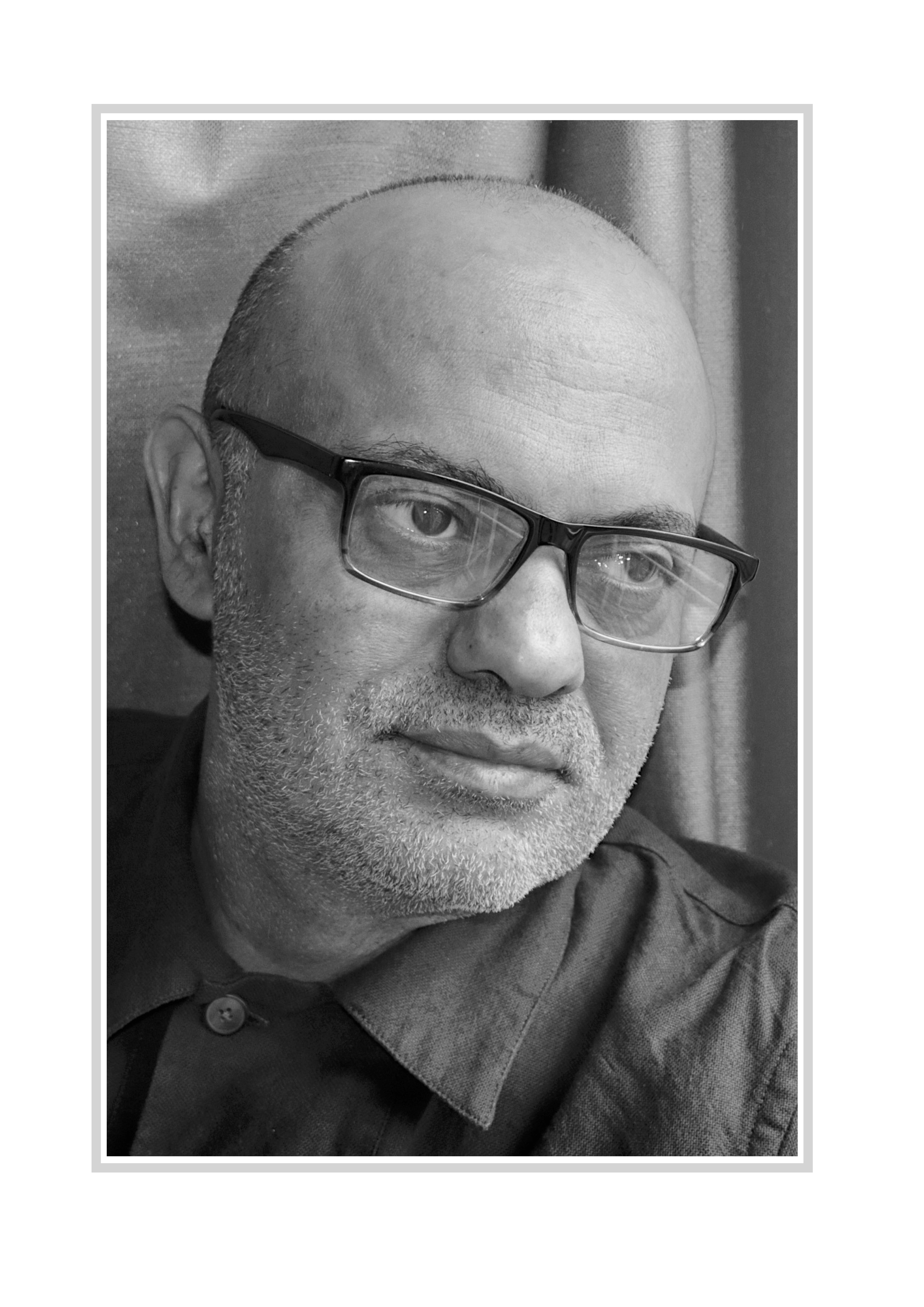
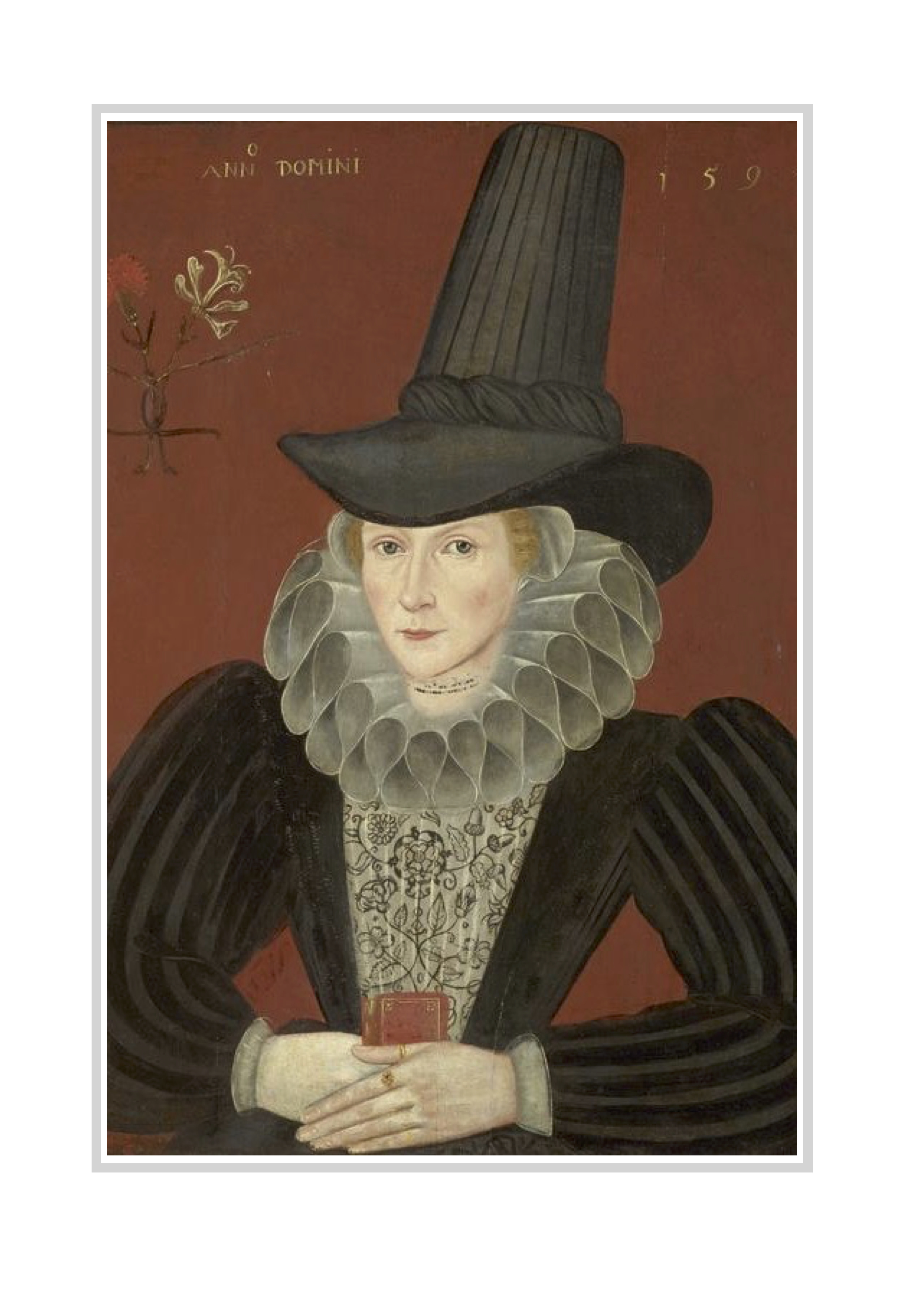
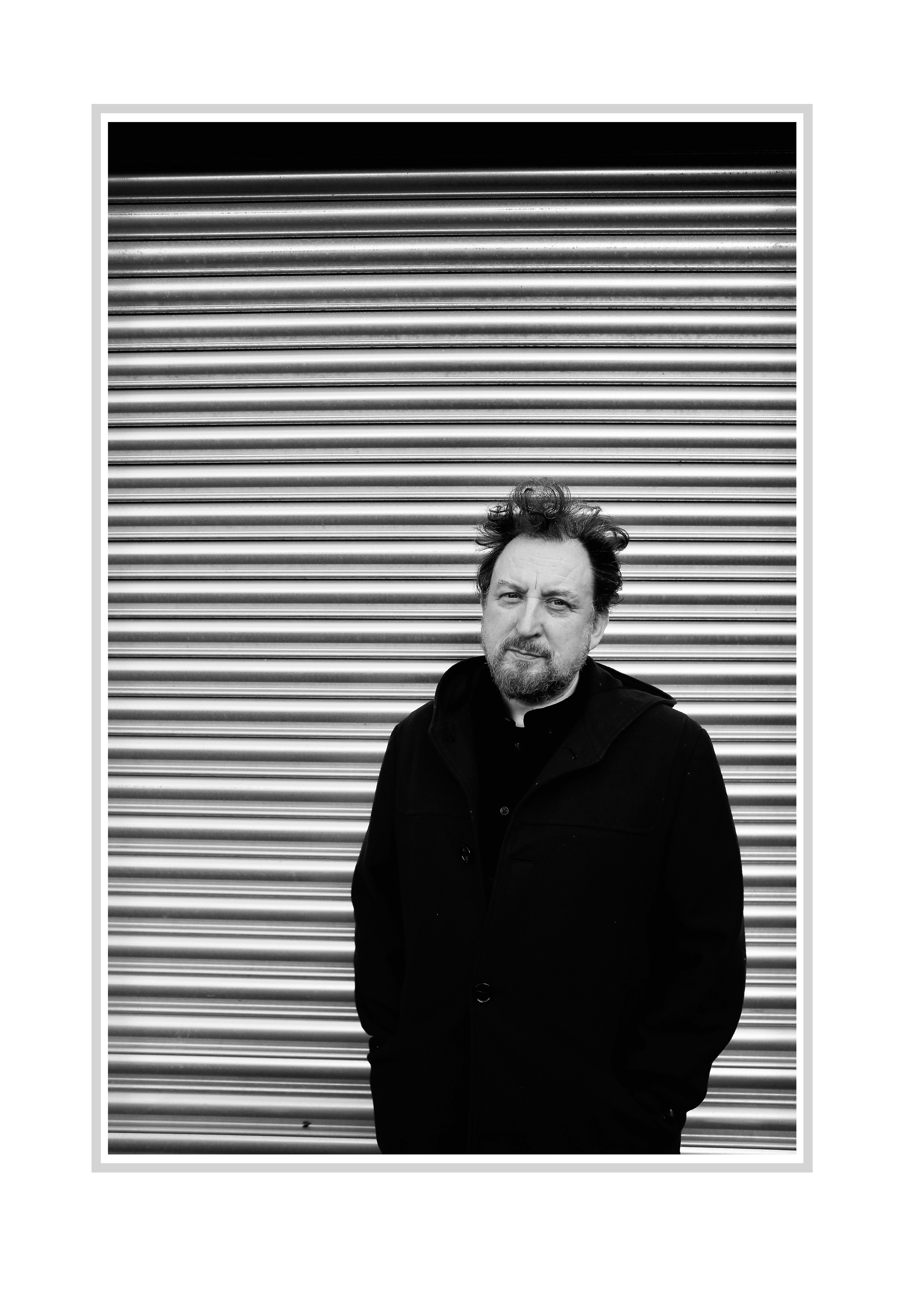
Leave a Reply