Interview by Petra Johana Poncarová
Petr Hruška is one of the Czech Republic’s leading contemporary poets. A selection of his work in English translation, Everything Indicates, has recently been published, and the book was launched during a tour which took Hruška to London, Manchester, Edinburgh and Glasgow, where he performed alongside UK-based poets.

Petra Johana Poncarová (Glasgow Review of Books): A new selection from your work is now available in English. How did it occur – and why Blue Diode, an Edinburgh-based independent publishing enterprise?
Petr Hruška (PH): It’s the same story – at the beginning, there was an attentive person. One is enough, but nothing ever happens without them. In my case, this person was Jan Zikmund from the Czech Literary Centre, a state institution which facilitates contacts between Czech authors and the world of international literature.
Jan, however, is not some complacent little clerk – he is immersed in poetry himself and willing to make sacrifices so that others can become immersed in it too. Jan offered the translations of my poems to the Scottish poet Rob Mackenzie, who runs the publishing house Blue Diode – and that is how I met another precious person for whom the excitement of a poem means more than any profit on the world’s marketplaces.
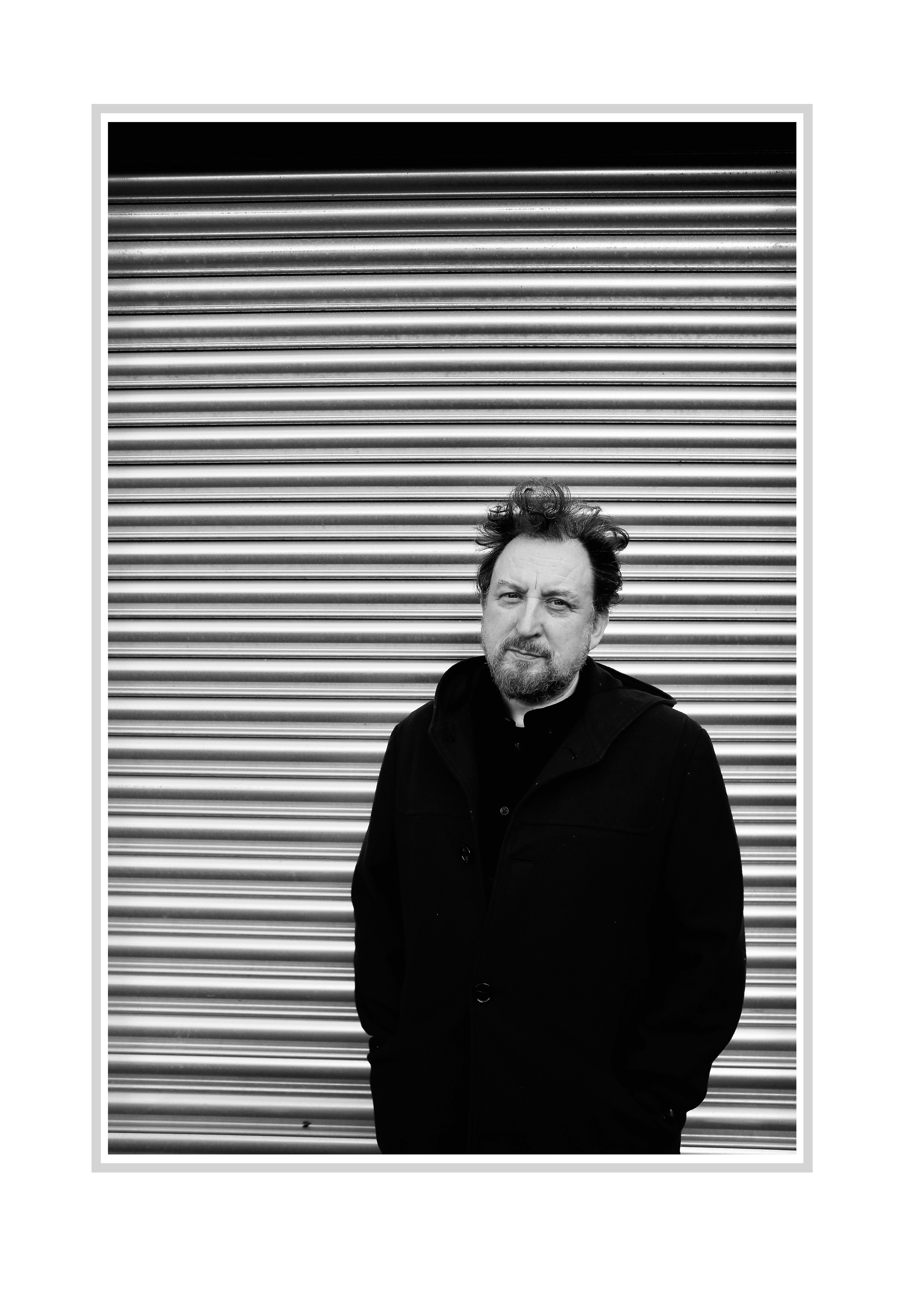
PJP: The translations of your work were made by Jonathan Bolton from Harvard University. How closely were you involved in the selection and in the translation process?
PH: Jonathan Bolton is the third “lunatic” without whom the book would never have become possible. While this professor at Harvard University could easily focus on merely delivering lectures on Czech literature and passing on the knowledge he has accumulated (no doubt impressive alone), he decided to plunge himself into the adventures of translating the poetry by an author living somewhere in Ostrava.
His perceptive and sensitive translations are a creative enterprise in the true sense of the word – I realised this many times when Jonathan was asking me various questions in order to make sure his translations would be apposite. The manner in which he posed those questions was telling me something important: that this person stepped inside my poems and was teaching them, with humility and boldness, to speak in a different language.
Jonathan has been selflessly translating my poetry for many years, long before the chance to publish the book arose. He never thought of publicity – the poems were on his mind first and foremost. Our cooperation was intense and the selection of poems for the book is a result of an agreement between the two of us. I admire these three people whom I have just mentioned for their human sincerity, and I am happy to call them my friends.
PJP: In general, do you prefer to work closely with your translators, or do you give them a free hand?
PH: When it is possible, I do enjoy cooperating with my translations. Perhaps I can be helpful to them in some way – but chiefly I learn a lot about myself and about my poems, about how somebody else reads them. I can experience something I call the “trembling of speech.” I learn of meanings that can be hiding in those texts and about which I didn’t have the faintest idea. I realise the poem does not belong to me, that it is a living space belonging to the person reading it at the moment.
By talking about the poem, both the translator and I find out more about ourselves, going beyond the mere text, and perhaps we end up learning more than we originally intended . We also get to know each other through the poem, which tends to be very exciting. The poem thus becomes an important space of communication. I also discover the laws and mysteries of Czech, and to an extent also the laws and mysteries of the language into which the poems are being translated.
PJP: If you think about Czech literature, which authors and works would, in your opinion, be most worthy of translating and have remained mostly hidden with regard to the Anglophone world so far?
PH: There are many such authors indeed. If somebody managed to translate even part of the work of the poet Karel Šiktanc, who wrote throughout the second half of the twentieth century until his death two years ago, Anglophone readers might be astonished.
However, I am not sure that it is even possible, for Šiktanc’s language is immensely multi-layered, it echoes the oldest strata of Czech and is just as inventive in neologisms. It abounds with linguistic play and tension, which is always hiding in speech [. . . ] It is full of cries, silences, and halts, which sound different in every language.
Then there are the Czech surrealists, Zbyněk Havlíček, Karel Hynek, Karel Šebek, and others. It seems to me their extraordinary imagination is “infectious” enough to produce excitement even in the cultural coordinates of a different language.
And there are also – if we limit ourselves to poetry alone – many contemporary authors whose works would not, as far as my lay ideas about translations go, resist being rendered into English and whose poetry possesses universal power. One would be Pavel Kolmačka, to me a poet in the vein of Gary Snyder (with slight hyperbole). And then there are many women poets, including Alžběta Michalová, Kristina Láníková, and others, who have the ability to “cut” into the living body of the present.
PJP: Apart from writing your own poetry, you also work for the Czech Academy of Sciences and research twentieth-century Czech literature. How do you perceive these two areas of your life – and would you say your research influences your creative work in some way?
PH: I’m enchanted by the way a work of art defies classification, how it resists an exhaustive explanation and every system that would want to describe, define, evaluate, and neatly classify it once and for all.
But I’m also enchanted by the fact that literary theory and literary history do not give up and again and again attempt to bring order into thinking about literature, try to explain its laws and contexts and somehow capture literature as an entity. In the end, both resistance and attempt are exciting thanks to their boldness and presumption, and the conflict between them is very interesting, at least as far as I am concerned.
Literary history and literary creativity are worthy opponents. And when two truly worthy opponents get to grips, the outcome is uplifting. Often it turns out they have more in common than what was apparent at first glance.
PJP: You recently read in Glasgow and Edinburgh alongside a number of poets based in Scotland. What is your impression of the poetry scene in the two cities?
PH: To my own regret and detriment, I know very little of it. But the poets alongside whom I read gave me the impression of being very authentic. They had none of the uncertainty and diffidence, the bashfulness and excessive carefulness which I often encounter at readings in the Czech Republic.
At the same time, they were not ostentatious and refrained from forced big gestures. These poets did not lose the natural strength of their voice simply because poetry matters only to a small percentage of society in Scotland, just as in the Czech Republic and elsewhere.
They knew what they wanted to say and why, and they calmly and firmly stood the ground for their words. They were neither conceited nor timid. As if they were aware of what the great Czech poet Vladimír Holan used to say: that poetry is something for somebody, nothing for everybody.
GRB: What is your sense of Scottish literature in general? Any authors or works that you have come across as a reader and found inspiring?
PH: Whether some people like it or not, Robert Louis Steveson is part of the DNA of world literature. Even as a child reader, I devoured a comic book based on his Jekyll & Hyde and the story stirred me deeply – one does not forget such experiences. It was perhaps Stevenson indeed who for the first time deprived me of the illusion of a world where pure, unproblematic good may be found.
As a teenage reader, I encountered James Macpherson and read his Ossianic poems with fascination. We have an analogous phenomenon from the period of the Czech national revival: the Manuscript of Dvůr Kralove and the Manuscript of Zelená Hora. In these paradoxical events, Scottish and Czech literature do come very close.
Similarly to Macpherson in Scotland, Václav Hanka and Josef Linda in the Czech Lands wanted to prove the greatness of their national literature by inventing ancient literary monuments and presented their works as an ancient proof of the cultural standards of the Czech nation, although Macpherson was actually drawing on existing Gaelic folklore and the parallel cannot be stretched too far. In both cases, a major controversy ensued.
Nonetheless, the authors indeed managed to prove the greatness of their national literature and the cultural standards of their nation – by creating striking and successful works. This paradox does not cease to fascinate me. And as an adult, I was transfixed by James Hogg’s Private Memoirs and Confessions of a Justified Sinner. The spectral obsessiveness of the human character was shocking, even for me, who had been long ago robbed of illusions by Stevenson.
PJP: Ostrava, your city which also plays a significant part in your work, has a reputation of being harsh, intense, troubled by social issues, and still coming to terms with the legacy of its heavily industrial past, so it’s tempting to draw some parallels with Glasgow. Did the two places strike you as in any way similar during your visit?
PH: Yes. My previous appearances took place in London, Manchester, and Edinburgh – all those cities are impressive and specific, but here in Glasgow I came across places with the same atmosphere I know from Ostrava. Those “corners”. Ambiguous places, slightly deserted, with a subtle sadness or fatigue around them, but at the same time pulsing with strong energy left by previous events [. . . ] Places where everything seems to be wavering, in doldrums, places where decisions about yet unclear futures are being made. Places that inadvertently force one to think about what to do with one’s life.
On Renfield Street, when going up the hill from the station, there’s a grey house on the right-hand side. It is deserted and big, with something daring and disarrayed in its architecture, and at the same time it exudes a certain scepticism and temporariness. It was rising against the muddy afternoon sky and impressed with its defiance and futility. It was attracting my attention again and again, unknown but also unmissable. I kept returning to it from different sides, as if to an undecipherable magnet which I could not resist. As a matter of fact, observing this house became one of my most powerful experiences from Glasgow, apart from the reading itself and the following meeting with new friends at the Pot Still bar. A house – with an ordinary secret.

The interview was conducted in Czech and translated into English by the interviewer.
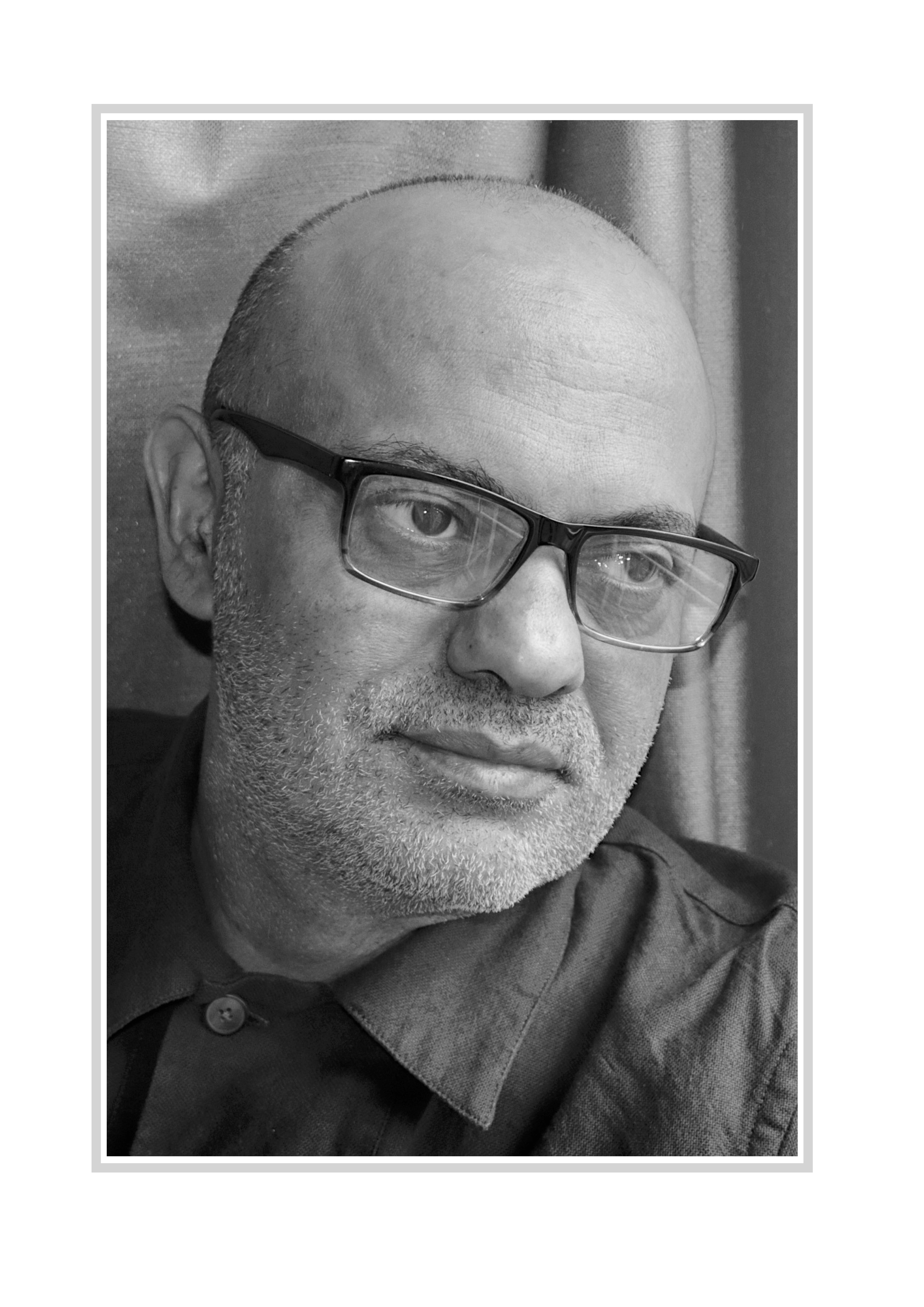
Petr Hruška (1964) is a poet and literary historian who lives in Ostrava. With its environmental devastation and myriad social problems, this industrial city, located above enormous reserves of black coal, has played a major role in Hruška’s poetics. His poetry has won a number of state and international awards, including the Czech State Award for Literature in recognition of his collection Darmata (To No Travail, 2012), and the Magnesia Litera, the most prestigious annual literary award in the Czech Republic, for his newest collection, Spatřil jsem svou tvář (I Caught Sight of My Face, 2022), an extended meditation on Magellan’s voyage around the world. He writes screenplays, publishes a literary magazine, co-organizes literary events and festivals, and participates in civic initiatives for environmental causes and the preservation of cultural monuments in his region. Hruška also writes short stories, columns, and essays, many of which are collected in V závalu (Cave-In, 2020). He works at the Czech Academy of Sciences in Prague, specializing in poetry from the twentieth century to the present, and is the author of scholarly articles and books on Czech poetry.
Leave a Reply to «Enseñar a los poemas a hablar otro lenguaje», fragmentos de una entrevista a Petr Hruška | Jardines en la estepaCancel reply