by Bram E. Gieben
Sololand, the new collection of novellas by author and filmmaker Hassan Blasim’s is a triptych – two of the stories are set in his home country of Iraq, and one in the fictional northern European territory of ‘Sololand’ (perhaps a stand-in for Finland, where the author has lived since 2004).
Blasim’s groundbreaking and critically-acclaimed breakthrough short story collections The Iraqi Christ and The Madman of Freedom Square gave multiple perspectives on the experiences of refugees, victims of war, and the pre-war culture of Iraq.

A tighter focus on Sololand’s three protagonists allows Blasim to explore these themes in greater depth, but with no less of an impact. Each of them is caught up in some way in the devastating consequences of the conflicts and occupations that took place in Iraq in the 1990s and 2000s and their subsequent fallout, including the region’s capture by the forces of ISIS (Islamic State).
Where the shorter vignettes in his earlier collections examined both the consequences of living in a society atomised by war and the experiences of those forced into exile, Sololand shares some DNA with his 2020 novel God 99, which explored multiple narrative viewpoints, often exploding into metatextual stories-within-stories.
The author plays with different kinds of tales and narratives in Sololand, the told and retold stories of survivors and refugees themselves – first-person narration and confession, personal letters and spoken accounts of history, myth, propaganda, prejudice and radicalisation which the characters encounter on their travels in the liminal lands of Iraq, Sololand and beyond.
While his shorter stories offered a picture of his own experiences as a refugee and asylum seeker in snapshots, glimpses and violent tableaux – with Sololand, Blasim returns to the intertextual approach of his novel, weaving together the perspectives of communities like the Yazidi Christian minority in Iraq, the Dominican priests who came to the country centuries ago to spread the Christian gospel, the Iraqi middle-class, caught between Western imperialism and religious fundamentalism as power changes hands, foreign-born ISIS recruits from elsewhere in the Middle East or North Africa, and – in the most blood-soaked of the book’s tales – the resentful and wary occupants of the frozen Northern European town where the protagonist arrives in exile.
Building on the multi-layered, kaleidoscopic approach of God 99, Blasim succeeds in drawing a through-line that unites each of these three powerful and affecting tales, pointing at the importance of shared history, humanity and storytelling across nationalities, cultures, and time itself.
The result is one of his most powerful and affecting collections yet, trading some of the bleak horror of his early work for a tender, often hilarious, and always moving account of the stages of exile, both internal and external.
Beginning in occupied Iraq with a young Yazidi boy working under an ISIS unit in an occupied Dominican church, Blasim switches focus to the story of a refugee trying to find acceptance in a cold and unyielding European winterland, before finishing the trio of stories with a tragi-comic account of a young Iraqi pulled first into the bright lights of media attention, and then the internecine squabbles between different factions within Iraqi politics and public life. Each is crafted with meticulous care and precision to evoke the emotional textures of statelessness; the fragile alchemy of belonging and identity, and the terrifying proximity of chaos and sudden violence to our quiet lives, to which we in the West are often blind.
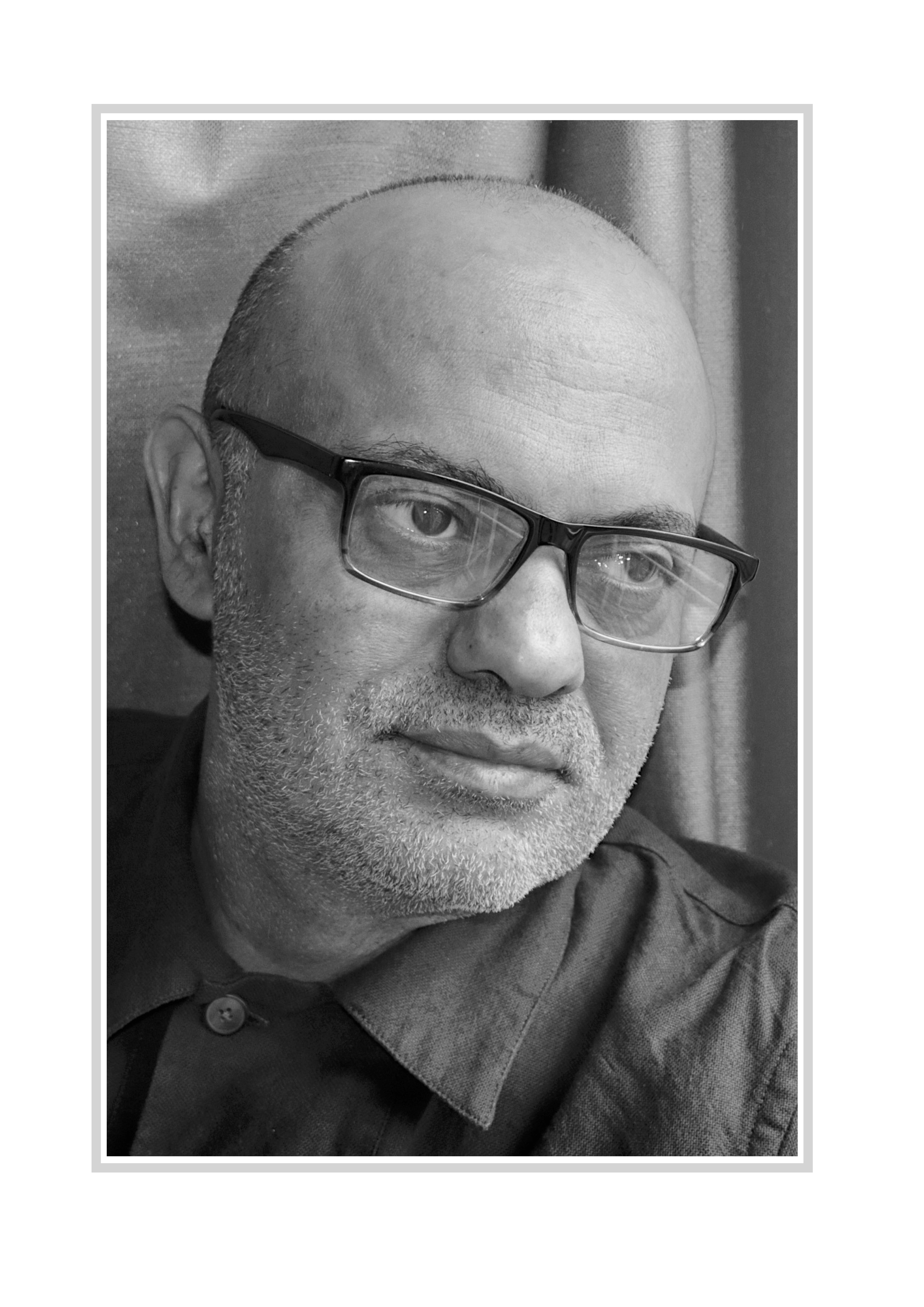
The GRB spoke to Blasim over email about his journey as a writer and chronicler of the Iraqi diaspora, his feelings on being a spokesperson for refugees and exiles, and his approach to storytelling as a central pillar of the human experience – one that binds us together, wherever we happen to be born, and no matter where we end up.
We’re grateful to Hassan for his time, and for the care and thought he gave to this interview.
GRB (Bram E. Gieben): In these stories, you explore the form of storytelling itself, often switching to a new story as a new character or scene emerges, and depicting the telling of tales. What did you set out to say about the act of storytelling?
Hassan Blasim (HB): Usually, I don’t think about techniques or narrative style while writing. For me, narration isn’t just a rational or formal structure, but rather like a virtual camera that moves freely in all directions, and a game that oscillates between order and chaos. I believe that there are techniques and devices that can be learned from literature and art in general, but I don’t put them at the forefront of my thinking while writing.
I sometimes imagine that the narrative style in my stories, in some cases, reflects my personal experience, which was – to a large extent – strange and random. Since high school, I lived a life of almost homelessness in Baghdad, during the harsh years of the economic blockade. And my strangest experience was crossing borders secretly for four years, until I arrived in Finland.
During that period, I was observing the journey (crossing borders) and discovered that it’s not limited to just moving from point A to point B, but it’s an experience shaped by everything around it: characters that appear and disappear, obstacles, the landscape, soldiers, smugglers, fear, stories made up for the sake of survival, and real ones that no one believes . . . . as if the story (the journey) itself shatters and is formed from this mobile chaos.
Therefore, I think that the stories in my works intertwine, and characters suddenly emerge from them, then vanish without prior warning. I say ‘I think‘ because I don’t know exactly how the narrative takes shape in what I write, but I enjoy writing and find deep pleasure in it.
ISIS looms large in the first story, as do their efforts to erase the traces of non-Islamic religious artifacts in Iraq. You’ve written before about the different cultures in Iraq, what drew you to write about the Yazidi, Dominican and other characters in this story?
HB: The brutality of what ISIS did in Mosul and other regions of Iraq cannot easily be described. The greatest price was paid by women, children, and the minorities – Yazidis, Christians and others. I believe that when the situation in the country stabilises, literature – along with cinema and academic studies – will play a pivotal role in reassessing that dark period and exploring the roots of this monster (ISIS), which I don’t say appeared suddenly, for it had roots in the region in general.
This monster killed, displaced, raped, tortured, and kidnapped thousands of the people of Mosul. The city of Mosul, in its composition, resembles my childhood city, Kirkuk, where we lived with a rich diversity that brought together different ethnicities and religions in a kind of fragile harmony. Perhaps for this reason, I felt that I had to write about these characters – Yazidis, Dominicans and others – as part of an attempt to restore life to voices that have been stifled by the rubble of violence and silence, and to remind us of what can happen when this harmony breaks down.

Like your previous collections, there are moments where the effect of your writing is akin to a horror story, but told through facts, observations and memories. Are you at all comfortable to be described as a horror writer?
HB: What I can say is that life in Iraq, and in the Middle East in general, has been subjected to violent upheavals for more than a hundred years: continuous wars, dictatorships, and harsh interventions from the West, led by the United States. All of this has contributed to creating an environment filled with terror and chaos.
On a personal level, I believe that when a writer writes about war, they are writing – in their own way – about peace. And when they write about exile, they are talking about home, and so on. And when they write about terror, they are deep down writing about safety, about that deep human longing for a stable and secure life, even if this longing comes through harsh and dark images.
The western media tends to think of Islam and of Muslims as a homogeneous bloc, with similar beliefs and origins — a lie your fiction does a lot to dismiss. What are the dangers of our tendency to flatten the identity of those we treat as ‘the other’?
HB: Over my last twenty years living in Finland and through my travels around Europe, I have found out more about the lives of immigrants and refugees, both Muslim and non-Muslim. I used to feel disturbed by the constant way in which the issue of Muslims is presented in the media and politics. There is the extreme right that seeks to distort their image and demonize them, and the romantic left that tries to portray them as the ‘angelic victim‘.
I have read and researched over the past years on the subject of identity. It is well known that flattening the identity of the ‘other‘ and turning them into a stereotype is, in itself, an act of soft violence – but it is effective and dangerous.
When a large community such as Muslims is reduced to a single image (whether it is the image of the victim or the extremist), then we not only lose their human complexity but we indirectly justify all forms of discrimination and exclusion against them. This ‘reduction‘ creates a fertile environment for fuelling a discourse of hatred.
Since we spoke in 2013, the ‘decolonial’ approach to thinking about the political divide between oppressor and oppressed has become much more of a mainstream concept, and widely accepted. Is this something you welcome, and do you think it helps those in the West to understand the situation in countries like Iraq, Syria and Palestine?
HB: What I hope is that decolonisation in the West does not turn into just an intellectual and academic fad, without being translated into real attitudes that understand the daily suffering of peoples in countries such as Iraq, Syria, Yemen and Palestine.
Talking about decolonisation is not enough if it is not accompanied by real accountability for current Western policies, which still contribute to destabilising these societies – whether directly, or through supporting repressive regimes, or through silence about the crimes of the Israeli occupation, for example. However, the positives of such a discourse may bear fruit later in understanding the voices coming from the margins.
In ‘The Laws of Sololand’, you never name the country where the action takes place — it’s ‘the North’. What made you decide to make the countries in this story anonymous?
HB: During the Covid period, I wrote ‘The Laws of Sololand‘ as an idea for a film and a crime story, but later I decided to turn it into a novella. In the middle of the story, I deliberately had the narration stop suddenly, and for the main character to begin with something resembling a theatrical monologue that addresses the topic of racism, with a focus on the fragmentation and contradictions of the immigrants themselves.
I was thinking about racism in general in the West, where it differs somewhat from country to country, but I specifically wanted to write about racism in the Nordic countries or Scandinavia. These countries – despite enjoying an advanced education system, a life of affluence and stability – also harbour a disguised racism. Perhaps for this reason, I chose to set the events in ‘the North‘, because these countries are similar in many aspects – in their social character, their environments and the rhythm of their lives, making it sometimes difficult to distinguish between them.
‘The Laws of Sololand’ begins and ends with some very hard truths for Western readers, some of which must be drawn from your own experiences. Was it cathartic to write this story?
HB: Most of what I write is derived from my personal experiences and the experiences of others around me, through imagination of course. Since my teenage years, I have been writing and following art and literature with great passion, and therefore it is difficult for me to reduce literature and art to being merely a form of catharsis or psychological therapy. For me, they are everything.
They are also that serious hobby that has accompanied me throughout my life. And more importantly, I enjoy writing as if it were a clever and mysterious game, full of surprises. I cannot imagine my life without imagination and writing, which I believe is not only an attempt to understand the world, but also a means of survival as well.
White supremacy is a problem many people want to fight, but the fight against it is often ineffective, or unable to challenge underlying racism. Does calling that out carry risk for you as a writer, and how do you feel about that?
HB: If the problem is so serious, then why don’t we talk about it? Although you are right, addressing such issues always opens the door to misunderstanding, and the writer often faces harsh criticism simply for putting their finger directly on the wound. And to confirm what you’re saying: when I was writing about hatred and violence in Iraq, I received some negative responses from the Arab world, not from the West. But when I wrote Sololand and addressed racism (and willful ignorance) in the West, where I currently live, the negative responses came from here.
‘Bulbul’, the final story in this collection, was written in the Arabic dialect of ‘amiyya’, a rarity in Arabic literature. What did taking on this challenge mean to you, and do you have any concerns about it being read in translation?
HB: It was a difficult experience in many ways. On the linguistic level, I had no prior tradition of writing narrative in colloquial Arabic that I could rely on, since Iraqi literature usually limits the use of the spoken language to dialogue only. Therefore, I had to create a special narrative rhythm in the colloquial language that would give the text coherence and beauty. Secondly, I was aware from the beginning that this novel would be met with negative reactions from some literary circles, although many readers welcomed it and interacted with it positively.
As for the content level, the danger of the novel goes beyond the literary framework. Addressing the militias referred to in ‘Bulbul‘ is tantamount to symbolic suicide, or at least it eliminates permanently any possibility of returning to Iraq, given what everyone knows about how brutal these militias are.
The novella ‘Bulbul‘ does not just break the classic taboos known in Arabic literature, such as sex, religion, and politics, but goes further than that: to the language itself, since some people see writing in colloquial Arabic as a blatant violation of the status of standard Arabic as something ‘beautiful and sacred‘, as they see it.
I am currently working on a new collection of short stories, in which I am experimenting with a mix of stories in standard Arabic and others in colloquial Arabic, hoping to find a new balance that expresses the dual identities that we carry.
As for the translation of ‘Bulbul’ into other languages, then yes, I feel concerned about it. Because it will lose the warmth of the dialect and its words that Iraqis understand in a different way. There are words that are like a code, understood only by those who have lived the Iraqi experience.
We spoke a little over ten years ago, and you struck a few hopeful notes about Iraq’s future – that more people would have access to knowledge, education, and the freedom to make and enjoy culture. Have things changed for the better?
HB: True, I was speaking as a comparison with my generation, who lived in the darkness of the dictator’s prison, where there was no internet, no satellite channels except those owned by the government, and only a few newspapers, all of which were just propaganda. There was also no right to travel outside the country.
Today, the new generation is more open, and has tools that enable it to access knowledge to a greater extent. Iraq only needs a few years of peace and stability. The danger today in Iraq is corruption, in addition to the surrounding volatility in the Middle East. Nevertheless, it is not easy to lose hope.
‘Sololand’ by Hassan Blasim is available now from Comma Press and good booksellers.
About our contributor

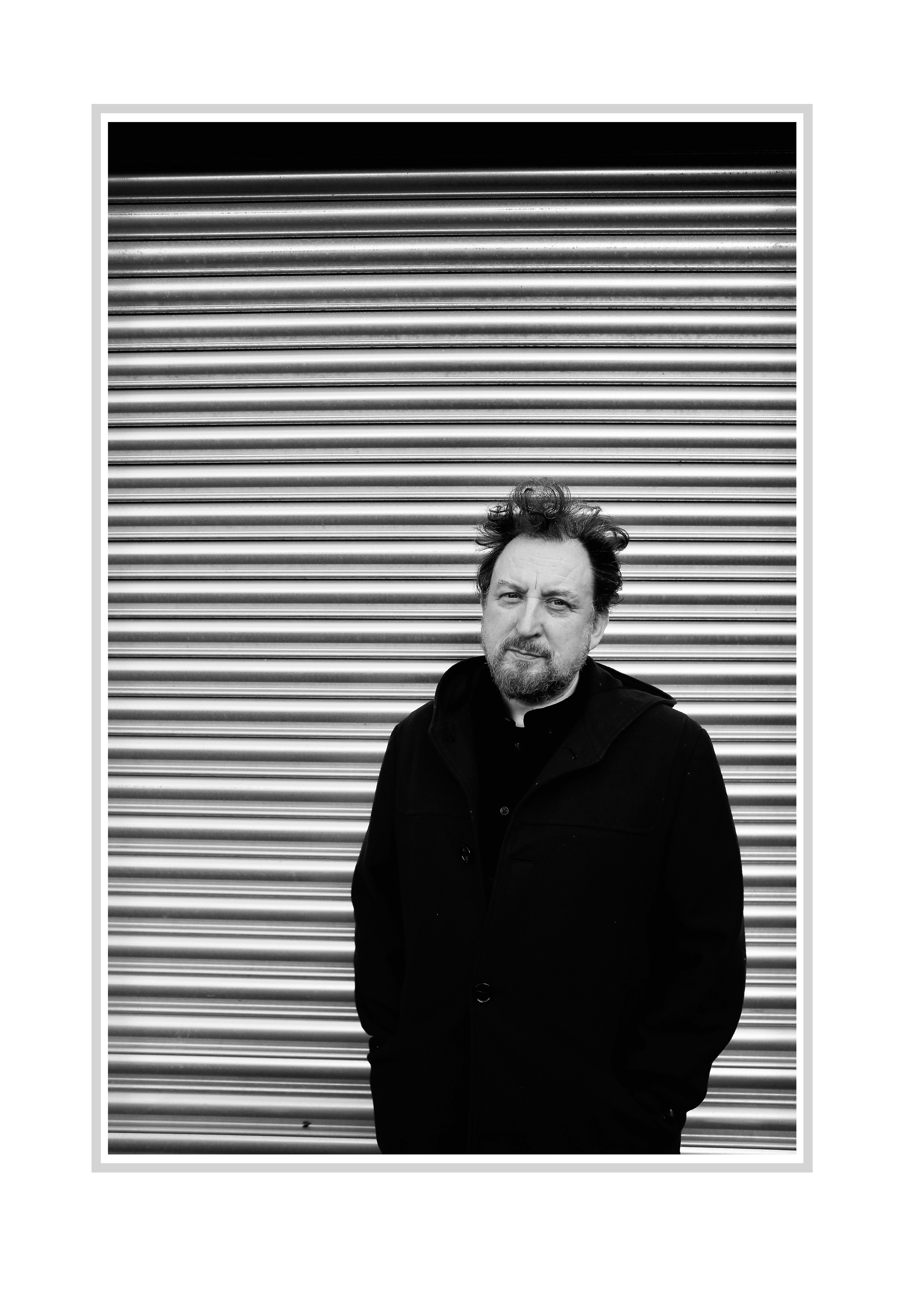
Bram E. Gieben writes about culture and ideas. His book The Darkest Timeline: Living in a World With No Future was published by Revol Press in 2024. He hosts the podcasts Strange Exiles, and Theorize And Be Damned.
Find out more at linktr.ee/bramegieben

Leave a Reply