By Finola Scott
The bright cover image and title declare this book’s intention clearly. It is the story of journey – but not of ‘a journey’, rather a series of journeys revealing powerful stories. Through vivid poems, the reasons behind the crossings emerge.
Dividing the work into two sections – ‘Belfast’ and ‘Baillieston’ heightens the drama, makes it clear the ‘Before’ & ‘After’ of the lives of its protagonists.
That family is at the heart of the collection is emphasised by the placing of author, Charlie Gracie’s family tree at the very beginning. Personal, social, and political histories are woven tight in an intimate way.

The first line of the first poem, ‘They will live lives hardly noticed’, introduces the key players – Gracie’s paternal grandparents. His grandfather emerges as the catalyst for change, the spark that lights this fire. We find ourselves asking why did they leave? What obstacles did they struggle with to achieve new settled lives? Did they find contentment?
This is not one person’s tale and memories, though, but many. A strength of this is that, like all memories, these captured moments are fragmented. We hear the voices of great aunts, aunts, children, grandchildren so are able to look at the events from different angles. There is the feeling that we are not being asked to trust or believe one voice.
In ‘On the Day of Abandonment’ – a short series of poems, near the beginning of the book – a close relationship is portrayed from multiple viewpoints. Mary, Sammy and their father are shown with startling neatness and the extent of the painful abandonment is made clear. We see Mary, joyful on a swing, watched by siblings, engaged with her father:
laughtersqueal
up and down
Dad onehanded
push
push
Then, the abandoning:
Steppin out so he is steppin out
disappears beyond
all of them
stepped out so he did
and that
was bloody that
The spaces, line breaks in this poem subtly underline the emotion, the distance – the gap left by their father.

Deftly told in chronological order, lives in mills, coal mines, steel works are balanced. The reality of work is often found wanting. Social history is laid bare. The brutality of labour is a central theme. The first poems starkly reveals Charlie’s great grandmother who laboured in the Carding Room of a linen mill.
She will die young, coughing blood
The poem ‘Air’ holds nothing back in its depiction of life in these mills:
Air in the mills sickens our lungs ..
Jimmy got the mill fever in his first week ..
the slow beauty of death in the dark wet stench
While many of us know of the hardships of mining, the full horror of the plight of the mill workers at the turn of the 20th century was new to me. I discovered new words – ‘poucey’ and ‘phthis’, which refer to the lung diseases common to workers. I will look in a different way at the linen table clothes I’ve inherited, from now on.
To make the linen fine for the fine folk.
In many of these poems descriptions are interspersed with hard facts, from official documents, which give the truth to the stark reality. In ‘Card Room and Roughing Room’ we learn:
The carder’s average life is 16.8 years (of work) If a girl gets a card at 18 her life is generally terminated at 30,
The Roughing Room has one high window with the sole effect of funnelling dust past the women,
This first section, set in Belfast unravels the reasons for Jimmy’s move to Baillieston. But sadly things there are not much better. The truth of a life underground is made clear in ‘Miner tae Steelman’, and we understand the desperate urge to move to another job:
on his back howkin
coal, breathin dust . . .
. . . in that dreich oul hole
What lifts these descriptions is the deep undercurrent of love that lies behind them. In ‘Thaw’, we see Jimmy’s wife greet him tenderly and matter-of factly on his daily return from the pit:
She peels him, eases the thawing cloth away
. . . she rubs his back
Clearly this is no chore, no married duty. However we’re shown how life in the mines gets worse, with the workers on strike. In ‘Miner tae Steelman’, Jimmy recalls his roots, remembering powerful voices from the past:
James Connolly’s words
– rise and strike for freedom true –
ring in Jimmy’s head
Change is inevitable:
pit tae Parkheid forge
better work than breathin dust
in that dreich oul hole
As the drama continues in Baillieston, we learn that Jimmy has changed religion. This is revealed in measured tones. In ‘A Walk with Ropemakers’, the realities of the consequences of Jimmy’s decision are shown with plain, matter-of-factness. This for me heightened the strength of Jimmy’s love for Mary. (Though, I did wonder if the title obliquely refers to other walks!)
Is this what Scotland’s done to our boys?
. . .
Everything is clear to everyone
once the walk is done. Never again
the door to be darkened, never again
a foot on this soil.
Interestingly modern history is explored mostly in prose – the cover does tell us that this is a pamphlet of poems and prose. The poem ‘View from Cavehill , 1970’ is suffused with love of this place, Belfast:
The steps from ferry to land is felt lie a deep breath of peace inside him . . .
Welcomes him . . . Back to what feels like home.
The chain of generations is connected through the garden
schooled his daughter in the ways of growing, who passed on to her daughter the ways of growing.
The past, Jimmy’s history, which becomes a family’s narrative is told in long sentences, in repetition, piling up the fullness of a life the generations that followed.
And the Troubles aren’t ignored. (How could they be?) But, they are looked at slant. No talk of knee-capping, of hunger strikes. The stories told, including ‘Mutual, 1976’, are of a common people, sharing humanity. The last sentence of this piece sums it up deftly:
We’ve a mutual respect, me and him.
The use of vernacular, both Ulster Scots and Glaswegian, roots these poems firmly in place. They are vivid pictures, snapshots of many lives. We are left satisfied that here is an honest tapestry of generations of a family.
The questions I asked myself at the start, ‘Why did he leave?’, ‘Why did he become a catholic?’, ‘What happened to the others?’ are all answered. I feel I know these people.
Belfast to Ballieston is available now from Red Squirrel Press and good booksellers.
About our contributor

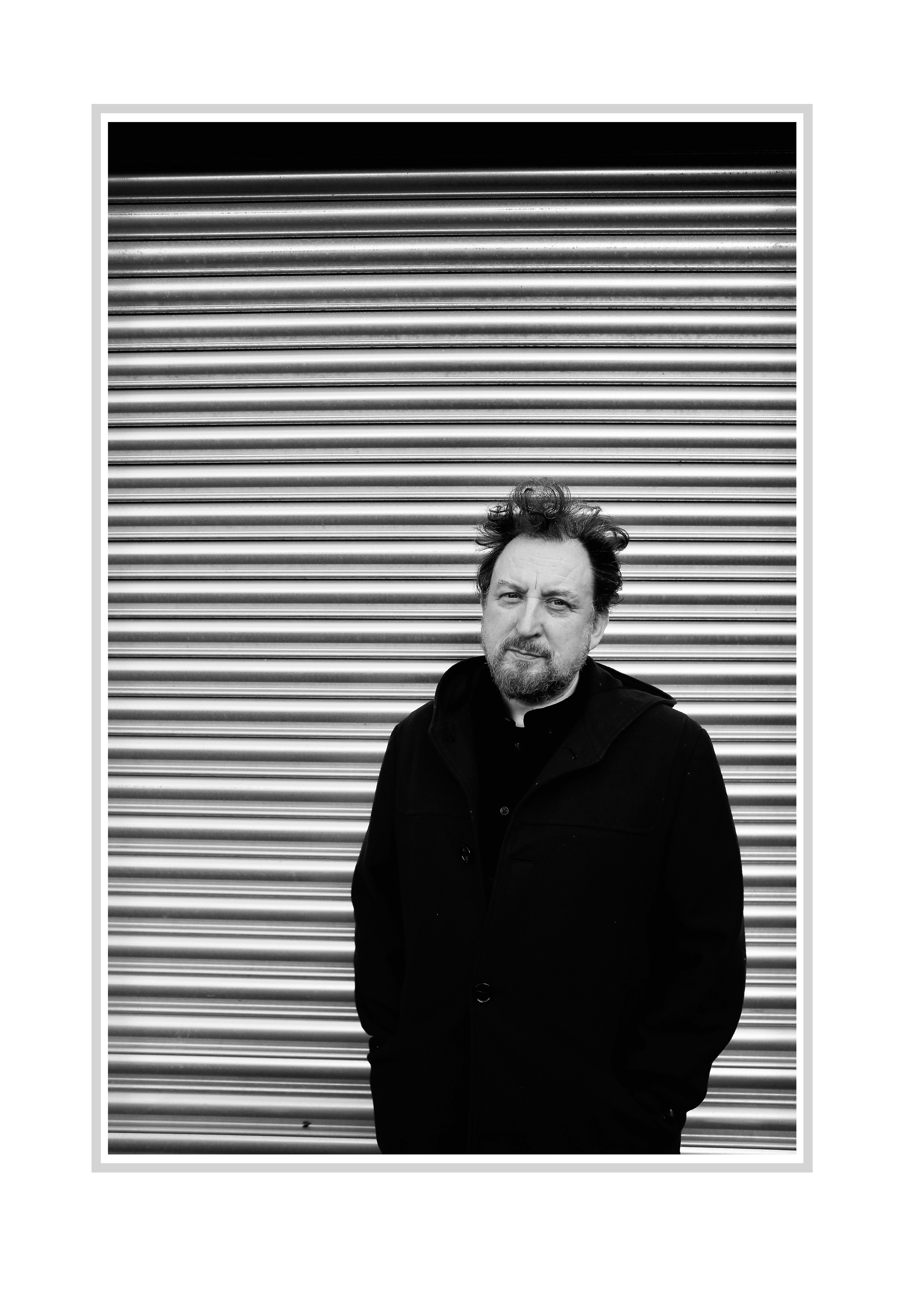
Writing is a compulsion for Finola Scott. Her poems appear widely – in New Writing Scotland, Lighthouse, Gutter. Although she knows poetry won’t change the world, she continues. Winner of the MacDiarmid Tassie, Runner-up in the McLellan (Scots) and Badenoch competitions, to date she has three publications. She welcomes you to Finola Scott Poems, for information and poems.



Leave a Reply