Interview by CD Boyland
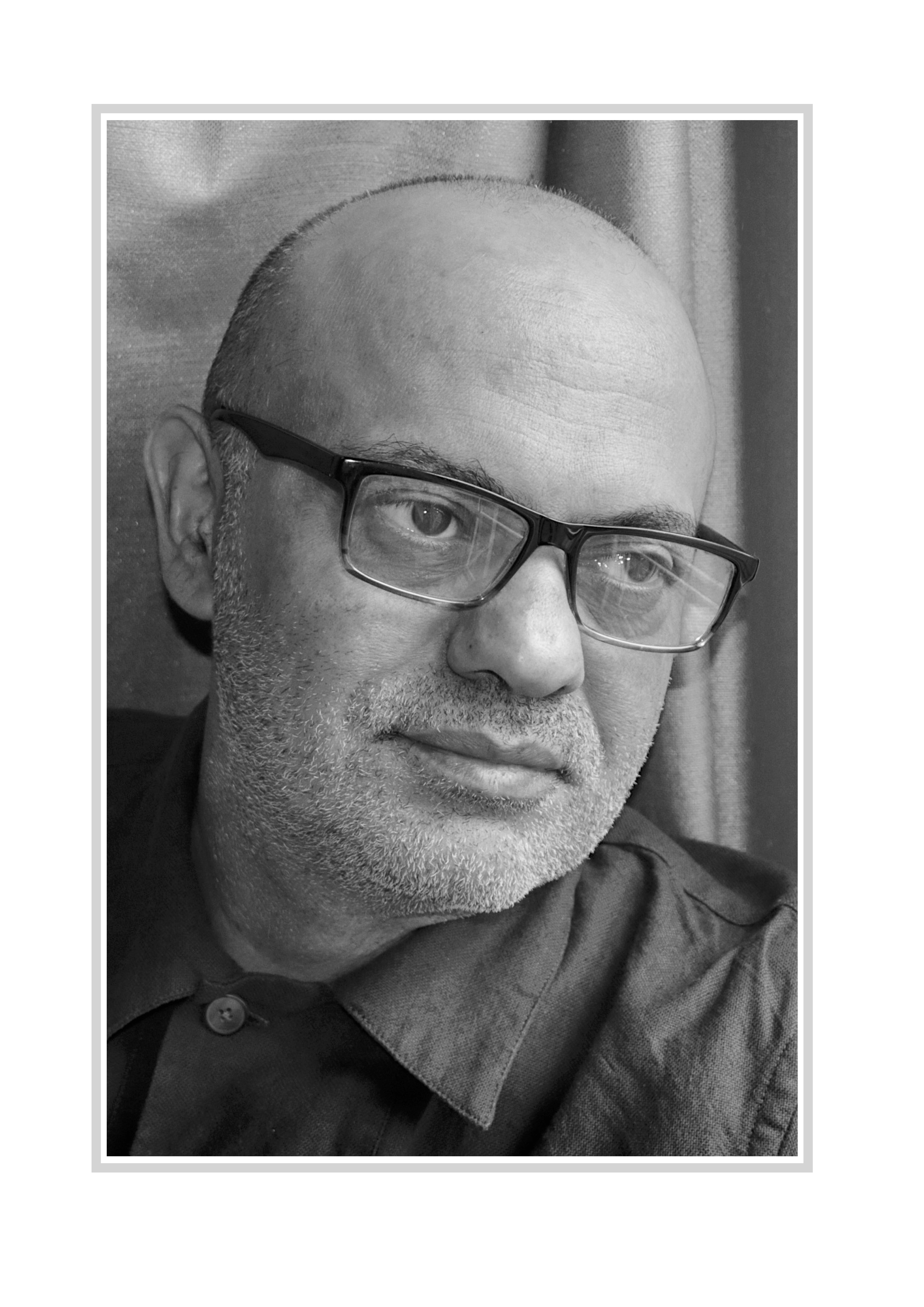
Bram E. Gieben has written about music, film, TV and comics for Sublation Magazine, The Quietus, io9, Mishka NYC and other places. He hosts the philosophical podcast Strange Exiles.
The 2015 Scottish Slam Poetry Champion, Bram has performed his work at venues and festivals worldwide, from the Edinburgh Fringe and Hidden Door festivals to New York’s NuYorican Cafe, and The Kerouac Effect in New Zealand.
Part of the team who set up Scottish culture magazine The Skinny in 2005, he was the curator of cult website Weaponizer from 2007-2012, a home for experimental microfiction which he later launched as a print magazine.
The Glasgow Review of Books is delighted to bring you this exclusive interview with Bram and to share an extract from his new book, The Darkest Timeline.
GRB: Hey Bram, thanks for taking the time to answer some questions. To start with, for readers who maybe aren’t familiar with your work so far, could you tell us a bit about yourself and all the things you do?
Bram E. Gieben (BG): I started out writing music reviews and features in the mid 2000s, strongly influenced by the early work of Mark Fisher in his K-Punk blogs. Around the same time I also started performing hip-hop and spoken word, gaining a little bit of notoriety with an intense stage presence, and eventually winning the 2015 Scottish Slam Championships. I’ve written features for The Quietus, io9, and more recently Sublation Magazine. The stuff I write has gotten progressively more political, as has my music and poetry.

GRB: I’m not sure if there’s a category under which we can group all of the things you do – rapper, musician, podcast host etc. – what are the key drivers, motivations or ideas that most strongly connect all these different aspects of your work?
BG: To me, it’s all of one piece. My writing has always had a dystopian, cyberpunk bent so this book represents something of a culmination and a bringing-together of all of the thematic strands I’ve explored. I think something underestimated by many writers is how long it can take to really find your voice, and even to recognise it when that happens.
I studied for an MLitt in Creative Writing at Glasgow University, and was a member of the SF and horror-themed literary collective Writers Bloc, so I spent a long time trying to write fiction. I haven’t abandoned that goal, but exploring critical theory and philosophy in greater depth led me to a new prose style influenced strongly by Fisher, John Gray and others.
These thinkers helped me articulate things I’d long believed or felt, and in doing so, led me to an approach that flows more naturally than anything I’ve written before. I hope that comes through in the prose, but it’s certainly not the kind of work I set out to specialise in.
The podcast emerged from the lockdown years, when we all wanted a little bit more connection. It’s intended to be a ‘slow podcast’ in contrast to the adversarial, talking heads style you find so often in left wing spaces. It’s also deliberately heterodox, and welcoming to ideas from outwith the mainstream. We’ve had episodes on Eastern spiritual concepts, and a professional ‘combat magician’, as well as authors, artists and philosophers.
GRB: Next, can you tell us how the idea for The Darkest Timeline came about and a bit about the process that led up to the publication?
BG: Given the apocalyptic themes, it may be no surprise to hear that the writing process began from a place of desperation, alienation, and a wish to reject both the dominant narratives and the methods of online communication to which we have become so addicted that we barely question them.
The seeds of some of these essays come from posts on my (very) old Tumblr, or from Facebook posts that died in the algorithm. After taking time away from social media, and throwing myself into reading as much critical theory as I could, they began to germinate. They are also inspired by all of the science fiction I grew up with and continue to be obsessed with, specifically cyberpunk books, films and other media.
GRB: Do you have an idea of the personae (if you will) of the readers you think will be most interested in and engaged with Timeline? How connected do you feel, to your imagined or actual audience and what kind of feedback loops do you rely on, to give you an idea of how your writing will land with them?
BG: The funny thing about this kind of writing is that you directly address the reader. I like to think of an ‘us’ and a ‘we’ as my audience, rather than a ‘you’ listening to ‘me’. The essays are not meant in any way to be didactic, because I am far from being an expert on the scientific questions I explore, nor am I an academic philosopher.
But, as a member of the generation who grew up half-in and half-out of the transition from 20th century history to 21st century cyber-history, I do think I have a unique perspective to share on subjects like hyper-surveillance, online identities and avatars, and the literature of that transitional phase, which is cyberpunk.
I should also say that the essays are intentionally styled as provocations, so they are full of rhetorical flourishes meant to shock, and cause disagreement. I wrote this book to shake people up, not comfort them with solutions.
GRB: On a similar topic – marketing books these days is hard. Fighting for space and notice in the attention-deficit vacuum of social media and massively commercialising online retail platforms must feel painfully Sisyphean, or even like slow, utterly unerotic auto-asphixiation. What kind of strategies or tactics have you found that have helped you face the struggle to push and promote your work?
BG: Working with Revol Press has been amazing, they have helped me make connections across the online left, and have used their leverage as top-echelon socialist meme creators to help me spread the word about the book as far as possible. The reception I’ve had from international podcasts, magazines and blogs has been tremendously encouraging, and I’ve knocked on some of those doors myself, cold. It’s taken weeks of work, but it has paid dividends.
A few key people in Scotland have been incredibly supportive of my work, but getting even a reply from media gatekeepers is an almost impossible task these days – the networks in Scottish media are increasingly a closed loop of interlocking cliques who dominate events, funding, and the media ecosphere. That’s disheartening. A successful writer friend captured this perfectly, he calls it ‘the gauntlet of indifference.’
My early involvement with journalism was focused on supporting emerging Scottish artists, and breaking down barriers for genres that were under-represented, like Scottish hip-hop. Despite (or perhaps because of that) when I’ve been promoting this book, I’ve been left on read a lot. I’ve had emails completely blanked by people I’ve worked with for years, or who’ve slept on my couch, petted my cat, or taken a fee off me for performing at an event. That really cuts deep, and it can feel like everything and everyone involved in the arts in Scotland treats it like a zero-sum game. Social media magnifies that.
That being said, I appreciate all the support I’ve had on and offline from audiences, listeners and followers alike. I’ve built my own audience on Bandcamp and Substack. Being able to poke my head above the battlements of the Scottish media has been inspiring, surprising, and encouraging.

GRB: I’m interested in the way that you have organised the essays in Timeline, is there a narrative thread that runs through the book, from beginning to end, or were the individual pieces sequenced in another way (e.g. in the order they were written)?
The order has been solid for a while, but the short format (the book’s a little over 25k words) was very much a collaboration between myself and my editor, Mike Watson. I’m a massive admirer of his writing, and he was a generous and thoughtful editor. He encouraged me to break down and theme a 90k word manuscript into smaller, more focused collections, of which this is the first.
One of the essays, the one on No Man’s Sky, was written later and published by Sublation Magazine, and the final chapter, on prophecies, was written last. But that input from Mike and Revol was so vital, and was what ended up giving the book its structure and focus.
GRB: Much of Timeline deals with emerging technologies such as AI – but Timeline itself is still a book and, as such, the dissemination of its messages relies on information technology that’s nearly 600 years old. How useful can this ‘old school’ means of communicating be in the age of ever-accelerating digital media? How can books compete, for example, with platforms like Medium and Substack?
BG: I think the simple answer is, they can’t. Douglas Rushkoff has written about this (although my recollection’s a bit dim, and the post’s hard to find). When he announced a book, he published a free essay. One million people or so read it, a few hundred thousand more listened to the audio version and it had brilliant reach on social media. He was invited to speak across the podcast circuit, appearing on a dozen shows or more. There was mainstream media interest in his themes and ideas, and he was asked to pundit on a few news shows. The book sold 15,000 copies.
People do not buy or read books, the books they do buy or read are trash, and the industry is dominated by ghost-written celebrity garbage. The critical deference shown and awards given to indifferent literary fiction is not reflected in sales, people actually buy genre work, but genre writers get very little mainstream media presence unless their work is adapted for film or TV.
Poetry is completely de-professionalised and has been for decades. Journalism will go the same way. The value of everything under late-stage capitalism is trending towards zero – and that’s before you factor in large language models, emergent AI, and the increasing dominance of video over text content.
You can probably point to examples that contradict everything I’m saying, but they are mostly outliers, or were grandfathered into industries that no longer meaningfully exist. Books can’t compete, but I imagine they will always be written and made, just like poetry is. We’ll keep making them, people will keep not reading them.
GRB: I was struck by a sentence in the 2nd essay in Timeline, ‘Transhuman Nostalgia’ which says – “Conservative myths promise to return to the time when “capitalism worked” and everyone had a “fair share” of opportunity”. By the time people read this, the UK will be a couple of weeks away from a General Election and what you’ve written about ‘Conservative myths’ seems equally to apply to the Labour Party’s manifesto during their election campaign. What can we do to push back against the political consensus that’s driving us towards ‘cascading catastrophic collapse’?
BG: In simple terms, I don’t think we can. I think we’re fucked. My suggestion in the book is that we think of these issues less in terms of solutions or even mitigation, let alone participation in the spectacles of democracy and culture. Rather, I think we need to consider what we wish to preserve if and when collapse happens. Technology, and transhumanist ideas about our evolution or transcendence will not save us, nor will it save the billionaires who are its heralds and sponsors. Technology depends on the maintenance of societal infrastructure. It’s as vulnerable as we are.
Many people have learned to live during wartime, under authoritarian or oppressive conditions, through the collapse of states, and even under the threat of extinction. In all these scenarios, we can find the good life if we look for it; or we can choose, somehow, to resist. Those are the choices we face – how to live, how to be happy, how to survive. I do not find a choice between political parties to be meaningful or important. I would love it if that changed for the better, but it would run counter to the patterns I’ve observed.
GRB: The 3rd essay in Timeline, ‘‘Cascading Catastrophic Colony Collapse’ ends with these words – “Other species become extinct when their environment is destroyed, when population pressure causes disease or infertility to increase, or when they are replaced by a better-adapted organism. For human beings standing on the lip of this new century, all of these preconditions are now realities, or soon could be.” – in the face of this (and given the limitations of most forms of currently achievable activism) what kind of responses do you think remain open to people? Isn’t the likely human reaction to the (essentially) unimaginable scale of the coming catastrophe just to shut down and turn away?
BG: Yes, shutting down, feeling despair, grieving, all of these are legitimate responses. It’s heartbreaking that we’re facing the death of entire species and ecosystems, it’s maddening how relatively powerless we are to do anything about it.
To paraphrase a lyric from Manic Street Preachers, we are spectators of the Earth’s suicide by capitalism. To return to my previous answer, I think the only practical actions we can take in this situation are those based in community, in empathy, and in the preservation of culture, art, and literature.
The kind of solution-based thinking across both sides of the political spectrum feels increasingly divisive, delusory and destructive. We’re arguing over the wrong things, letting some people burn while others survive and thrive. Inequality is getting worse, not better. I have no solutions to these problems, but I intend to live through them in any pragmatic way I can. Human beings are adapting machines. We cannot give in to despair, nor can we be naive. It’s a massive cognitive challenge that many people simply ignore, for understandable reasons.
GRB: In her recent interview with The Herald, the current Scottish Makar, Kathleen Jamie, “laments the state of intellectual culture in Scotland” and states that “We’ve no public intellectuals”. Now, I would disagree with this, citing yourself and Darren (McGarvey) as examples. But what do you think this says about people’s idea of the role of ‘public intellectual’ and, in particular, the extent to which it includes or excludes voices from outwith the institutional sphere of ‘intellectual’ discourse?
BG: I’d agree with her that the role of the public intellectual has been devalued and diminished, and I’d lay the blame squarely at the rampant anti-intellectualism of the Thatcher years. Her policies corroded, corrupted and undermined our public and social institutions. Is it any wonder we don’t have public intellectuals?
I also agree with you, that Darren is one of the most important voices in Scottish politics and discourse. But he’s only one man, one in a small handful of working class people with a realistic idea of what the fuck’s happening in the world who have been allowed through the door of the middle-class dominated media, and into public life.
Most people have no idea of the intense levels of discrimination, gatekeeping and outright abuse Darren had to navigate to get where he is – only to see the very people who tried to keep him out attempt to adopt him as a symbol of their own so-called progressive values. Which is a long winded way of saying, Darren has a tough job, which he does very, very well.
We need more Darrens and, arguably, fewer folks like me who come from traditionally middle class, conventionally academic backgrounds. I consider myself an outsider to that system by disposition and by ideological standpoint. I’d rather be considered a public annoyance than a public intellectual. Either way it doesn’t matter – if there’s anything we as a society hate these days, it’s someone who’s too clever by half, and makes us feel as stupid as we often are. Dumb is good. Dumb sells. Dumb works.
GRB: Following on from that, one of the ways in which I found Timeline both revelatory and (if I’m being honest) slightly intimidating was in the breadth and depth of reading that underpins it. Was this evidence of years of auto-didacticism, that you gathered and organised into these essays. Or did you have a plan as part of your development of the book – e.g. ‘I need to read up on [x] for this essay, and [y] for that one?
BG: I have spent the last five years devouring as much critical theory and philosophy as I could in order to write this book, and the next couple I have planned. Honestly, theory and nonfiction is all I read. I am also massively addicted to Substack, which I think is where the most interesting political and critical discourse is happening these days – the era of Twitter is over.
The thing about reading theory is that it is an ongoing and interlinked conversation between great minds and theorists. Theory isn’t meant to be followed or dogmatised, it’s meant to be applied and then problematised. My contribution’s minimal, in the grand scheme. I’m working backwards. I’m at the 1960s, obsessed with Hannah Arendt at the moment, but eventually, no doubt, I’ll reach Plato. I hope I have enough time.
GRB: In the penultimate essay in Timeline, ‘Liminal City of the Spotless Brand’, you reference “traces of weirdness and eccentricity’ which can still be found in places around the UK including “the dive bars and sweaty clubs of my beloved Glasgow”. To what extent has Glasgow (it’s people, its socio-geography, its animus) influenced you as an artist, and are their particular ways in which this is apparent in your writing?
BG: I moved to Glasgow just over a decade ago to escape what felt like a very stagnant cultural scene in Edinburgh, mainly due to the closure of all the venues that supported independent art outside of the Fringe and Festival. Edinburgh’s improved a bit now, but those venues, like Summerhall, are always under threat, mainly because making a profit from worthwhile art projects isn’t always a sure bet. Glasgow has more infrastructure for artists, and it’s a little less cold, hostile, and dominated by the middle classes than Edinburgh. I feel at home here.
Sometimes, sitting in Nice N Sleazy, it already feels like you’re sitting in the past – the graffiti, the scarred up tables and mismatched seats, the menchied-up bathroom mirrors . . . it’s there, I’m there, but it already feels like a lost world. I hope Glasgow doesn’t drown under metal, chrome, and the constant pursuit of tourist money. I feel like it’ll fight that march to a bland, corporate future tooth and nail. But on the evidence of Edinburgh? It’ll lose, eventually.
GRB: In what way[s] do you think Timeline reflects you as a person? Are there character traits that carry across from you, to the book? If you had written it ten years ago, or in five years’ time, how would it be different?
BG: I’m a cynic, always have been. I’ve always been this angry and this sad. It’s hugely influenced by my experiences with mental health and addiction, which in the past have seen me at my most vulnerable. And I definitely couldn’t have written it five years ago, I lacked the knowledge and I lacked the context. Now that I’ve written it, I feel like I have a path forward. And I don’t intend to stop writing.
GRB: Lastly, can you tell us anything about your plans for the immediate future? What are you working on now, or hoping to do next?
BG: My next book explores the topic of masculinity. I hope to find a home for it in the next year or so. I’ll keep making Strange Exiles, which is growing steadily, with a small but dedicated audience. I also hope to make it overseas to talk about these ideas, but those plans are in their infancy just now. I’m trying not to look too far over the horizon – that tends to work best for me. The future’s a treacherous beast, it’s movements hard to predict.
Our thanks to Bram E. Gieben for taking the time to answer our questions. Now read on for an exclusive extract from The Darkest Timeline . . .

GENERATION TICK-TOCK
To the often-heard question ‘Who are they, this new generation?’ one is tempted to answer, ‘Those who hear the ticking.’ And to the other question, ‘Who are they who utterly deny them?’ the answer may well be, ‘Those who do not know, or refuse to face, things as they really are.
Hannah Arendt: On Violence (Harvest Books / Houghton Mifflin Harcourt, 1970), p18.
What does it mean to live in a world with no future? In 2024, techno-optimist hopes for space travel, transhumanism and the ‘singularity’ have already begun to collide with the realities of climate collapse, democratic decline, widespread conflict, political disinformation and algorithmic distortion. How do we imagine a way through these challenges? How do we navigate a discourse about the future that is laden with ideology, propaganda, spectacle, and unrealistic utopianism? How do we squarely face the idea of collapse when the ‘apocalypse’ dominates our imaginations? For years, in lieu of answers, I lost myself in disaster fiction. Now, I believe we must explore our dystopian present.
Alan Moore’s 1986 graphic novel Watchmen begins with the tick of the so-called Doomsday Clock. Maintained since 1947 by members of the board who publish the Bulletin of the Atomic Scientists, a group set up by Albert Einstein and others in the wake of the second world war and the bombing of Nagasaki, the time the clock displays is a metaphor for how close the world is to nuclear holocaust. Hannah Arendt would have been aware of the ticking of the Doomsday Clock by the time she wrote the passage above. Despite her scepticism over their tactics, she gave a small concession to doom-fixated 1960s radicals. They were the first generation to have to consider a threat as existential as nuclear holocaust. Before the Cold War concept of ‘mutually assured destruction’ entered the popular imagination in the wake of the Nagasaki blast, and the revelation of the horrors of the Nazi holocaust, the possibility of humanity’s complete erasure and extinction was one few contemplated seriously in anything but the abstract.
My generation are the children of the 1960s and 70s radicals Arendt criticised. Our parents learned to live with Cold War bomb drills, we learned from terrifying TV shows like 1984’s Threads. We also learned to live with the emerging threat of climate collapse. After the fall of the Berlin Wall in 1989 and the end of the USSR, both the possibility of nuclear annihilation and the prospect of some future climate catastrophe would come to be seen as challenges that could be met by the victorious paradigm of neoliberal democracy and economics, embodied in steady technological and scientific progress. Francis Fukuyama’s comforting 1992 prediction that liberal democracy would become the global norm became a pillar of government policy in the UK and US. The Doomsday Clock was set back to seventeen minutes to midnight in the early 1990s following the success of international nuclear non-proliferation treaties. In the decades since, it has swung towards twelve again, and now stands at 90 seconds from oblivion, the closest it has ever been to midnight.
At the historical locus of so much change and instability, it can be difficult to understand why such a cacophony of disaster vies for our attention, that it drowns out even the ticking of the clock. Perhaps it is easier today to speak of a roar; a blood-dimmed tide that can be sensed or felt, just out of earshot, off in the near distance. This current generation are not ‘Those who hear the ticking.’ We are those for whom the ticking is drowned out by a roar; those so close to the final tick that we can already sense screams and suffering. We wonder, often, if the tick counts out not how much time we have left, but how late we already are. We are no more or less prone to catastrophism or naivety than generations that have gone before, but we are uniquely informed about the chaos of the world, as no others before us have been.
In my book The Darkest Timeline, I set out to explore the aesthetics, ideologies, technologies and dangers that shape how we think about our possible futures, or lack of them. From an analysis of the escapist aesthetics of apocalypse fiction to the truths inherent in cyberpunk, I argue that ifour world is burning, we cannot retreat to the future via a ‘post-human’ singularity, because our technologies share our vulnerabilities, our flaws, and our psychopathologies.
Recent scientific studies into collapse, and the fragility of our societal, political, economic and cultural systems pose difficult questions about why we should survive as a species, and what a future beyond collapse might look like for those that endure. I explore the narratives we tell about collapse, and the fragility of our societal, political, economic and cultural systems. I attempt to answer why we should survive as a species, and what a future beyond collapse might look like for those that endure. I look at the coming confluence of drone technology, artificial intelligence and the total surveillance of the ‘Digital Panopticon’, and explore the enduring power of Nick Bostrom’s ‘Simulation Argument’. Finally, I look at the tradition of prophecy itself, from the Greek myths of Pandora and Cassandra to so-called ‘scientific’ prediction systems like Effective Altruism, Longtermism and Cliodynamics.
I have long been captivated by the dilemma posed by Mark Fisher in 2009’s Capitalist Realism. How do we imagine ourselves out of, not just the end of the world, but the end of capitalism? I believe we must begin with a full and frank engagement with the worst case scenarios that could proceed from our precarious present. At such historical moments of the greatest threat and possibility, we can neither give in to absolute pessimism, nor flinch from the truth. We need a paradigm shift that changes how we look at culture, technology, ideology and society. To confront the possibility that we have no future is also to demand that the future be reimagined anew.
The Darkest Timeline is available now from Revol Press and good booksellers.


Leave a Reply