By Jim Ferguson
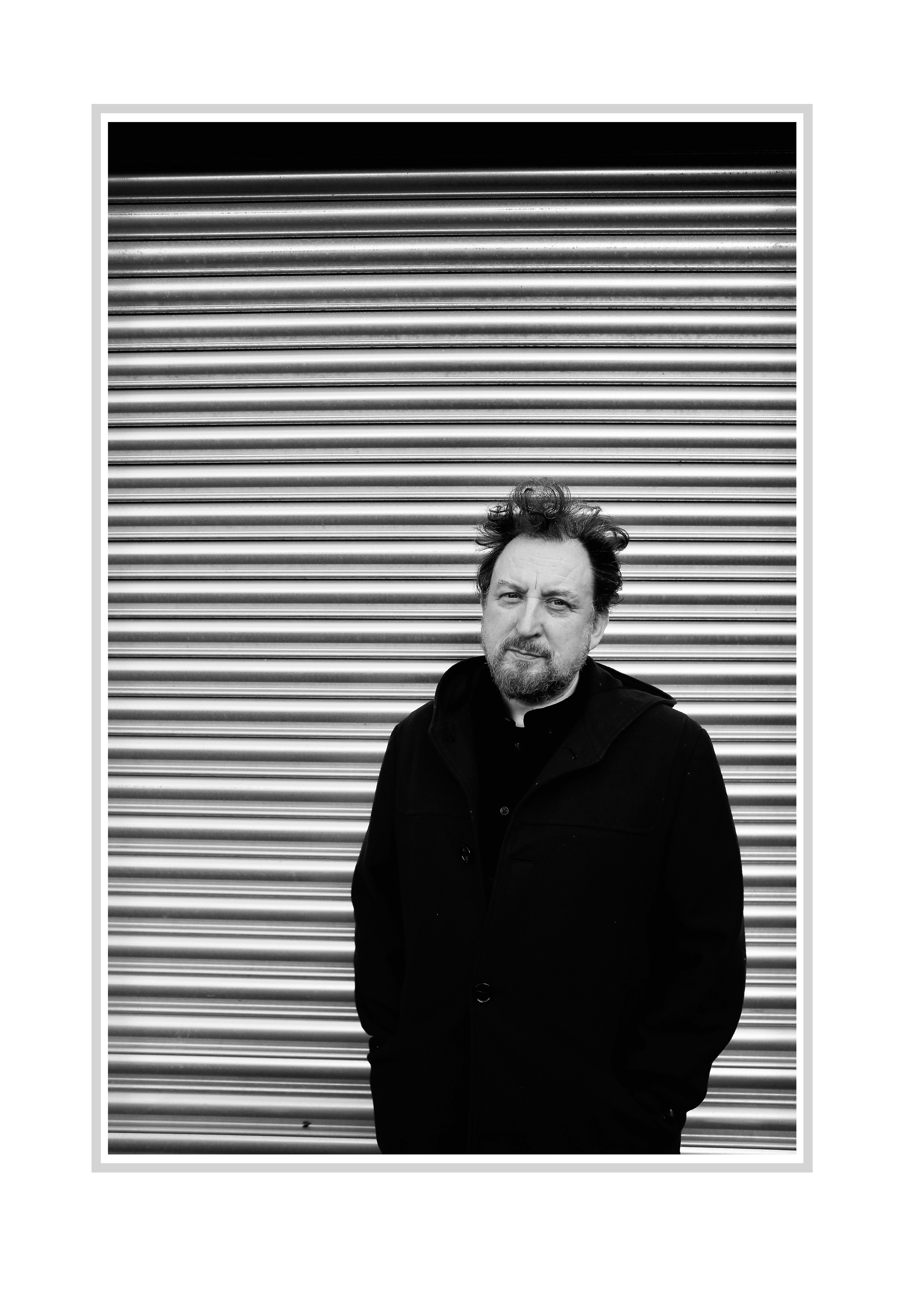
Aaron Kent‘s much-anticipated poetry collection, The Working Classic, is a seriously playful look at the impact of class on poetry and poets in a Literary World that is dominated by privileged voices: public (meaning Private) school types and them that can speak proper England English; set within a neoliberal ideological landscape that has dominated political life since the election of Thatcher in the UK (1979) and Ronnie Reagan in the US (1980).
It is appropriate this collection is reviewed here. Glasgow is a post-industrial winterland with a strong residual left-leaning class consciousness, while other parts of the UK, most notably Southern England, seem to have embraced Thatcherism and its neoliberal offspring as a parent might rescue a child from the path of an oncoming truck.

Back in 2014, Glasgow’s citizens voted 53.5% in favour of leaving the UK, against 46.5% who voted to remain in the UK. That was a 7% margin in favour of Scottish independence and, by most accounts, that margin is higher now.
The good citizens of Dundee voted to leave the UK by a 14% margin, with 57% voting to leave the UK and 43% preferring the status quo. These are traditionally the two most ‘working-class’ cities in Scotland.
Of course, the rest of Scotland did not follow the bold leadership in voting patterns illustrated by Dundee and Glasgow or we’d be out the UK and, most probably, still in the EU. Rather, we are now living in the political entity known as ‘the post-Brexit UK’. Which, given the global success of the neoliberal right since 1979/80, has led to some deep shit in terms of huge rises in inequality and huge cuts in public spending. This very last point being something that has not escaped Aaron Kent in his wonderful wee banger of a poem:
Guess What? I Hate Thatcher
The news says
she was a great
woman, they bullshit
her as a visionary,
a leader, a force
to be reckoned with,
and I, a working-class
scumbag, live with the
wreckage of her hate.
Need one say more? . . . Well, aye. The UK’s idiotic class boundaries and moronic Daily Mail-addiction to the aristocracy, topped by an infantile royalism, has a long, long history that goes back well beyond Thatcher and her chum Ronnie Reagan.
Daily we are, indeed, told that we are scum. We are the dispossessed, the othered, the less-than-human, the working masses, those who own next to nothing – that’s who I am and possibly who you are too, dear reader . . .
And, most of the time, if you go along quietly with such deranged ideological programming, you can live a largely uneventful life, all the while being robbed of the fruits of your labour via minimum wage employment. Alternatively, if you aren’t fit enough for the working grind, you can survive fairly miserably on the pittance ridden welfare system.
There is a global ruling class, the capitalist class, and foremost amongst their necessary labours is the task of keeping the rest of humanity poor. This is how they keep the whole shooting-tooting match ticking-over – divide and rule, encouraging a fear of every fucking thing, until your mind melts and you either knuckle down, take it on the chin, and work tae ye drap, or undergo some kind of mental and/or physical collapse. In which case it’s onto the pittance ridden benefits again. Universal fuckin Credit, indeed!

To return to what ‘The news says’, Tom Leonard in his 1976 sequence ‘Unrelated Incidents’ pointed out much of what Kent reminds us of. And those who know Leonard’s work will find Kent’s book agreeable and disturbingly refreshing!
Kent has a wee bee in his bunnet with reference to watered down neo-romanticism, or possibly, The Romanticism of Wordsworth and subsequent fetishization of his poem aboot the D-flooir.
One might see early 19th-century Romanticism as a necessarily humane revolt against the worst values of the Enlightenment – values we might find expressed in Edmund Burke rather than in William Blake. Blake was heavily anti-imperialist, Rupert Brooke’s ‘corner of a foreign field’ would probably not have been the kind of place countenanced as worthy by Blake.
However, where Kent becomes deeply interesting, and occasionally problematic, is when he explores the idea of being foreign to oneself: of the whole global set-up producing a thoroughly atomised individual who is alien to her or his own self. How both life and language are so weirdly contorted that you don’t know which way is up. And you end internalising the trivialisation of the mass of humanity, consumed by self-hatred and narcissism.
This is ambiguous territory: where the moral compass can be thrown away in a fit of rage more petulant and hubristic than Freddie Nietzsche on his worst-tempered day . . . It’s either that or you find ways to struggle against the alienation and self-loathing engendered by the overarching mores of capitalist individualism: all of which means a kind of living death in a recurring, necrotic, psycho-political wasteland, or a struggle against the dominant ideologies of our time.
Needless to say, Kent is not without a sense of humour: he interviews himself and reviews his own poems while you read them. And who is to know better the real meaning of his poems than the author himself? Perhaps a Jungian psycho-analyst!
Alas, capitalist ideologues trivialise and demean the humanity of those who labour, often making folk ill to the point of suicidal ideation. For those who own and manage capital but produce little else of value, this book has such a lot to offer :
“Interview with Aaron Kent”
The Duck Egg Review
…
Q. To what extent do you consider yourself to be a working-class poet?
A. I mean, to what extent do you consider yourself to be a middle-class journalist? It depends, I guess, on how much you define yourself by your class. Am I a working-class teacher? Am I a working-class father? Am I a working-class pedestrian when I walk down the street? I think ‘probably’ is the answer to those questions, but I don’t think that works for other classes. The working-class, from my perspective, are continually defined in negative terms, as if to remind people that they are in fact the other, the thing to avoid. It’s easier not define yourself as working-class because it can shut a lot of doors and open a lot of stereotypes. Which is why I decided to go for it, “to define myself before someone else defines me”.
‘To define myself before someone else defines me’, that’s where the struggle begins, and we should heed the John MacLean epigraph beginning Kent’s book because it offers a means to help us through this struggle: ‘Rise with your class, not out of it.’
About our contributor

Jim Ferguson is a Glasgow-based writer and performance poet, practising literary art since 1986. He is the author of two novels and several poetry collections and pamphlets. Ferguson is an experienced performer, and has published work in numerous literary magazines, as well as criticism and academic essays. He completed a PhD thesis on Paisley poet Robert Tannahill (1774-1810) at the University of Glasgow in 2011.



Leave a Reply